Best Silk Sarees to Wear for Bhai Dooj: Traditional Looks for a Special Family Day
The thali is ready before anyone else is up: roli, a few grains of rice, a diya, a small bowl of sweets. Your brother will sit on a low stool, a little embarrassed, while you put the tilak on his forehead and circle the aarti three times. It takes five minutes. The photographs from those five minutes will be on the family group for years.
That is why so many sisters reach for silk. This guide covers six silk sarees for Bhai Dooj, what each one suits on the day, and how to style it from the morning tilak to the long lunch that follows.
Short on time?
Pick red or yellow silk with a woven border for the tilak, a lighter soft silk if you are cooking and hosting, and keep heavy zari for an evening family dinner.
Bhai Dooj falls on Wednesday, 11 November 2026 in most of India. Check your local panchang for the muhurat.
What Bhai Dooj Asks of a Saree
Bhai Dooj closes the Diwali days. A sister applies tilak to her brother's forehead, performs aarti and prays for his long life; he gives her a gift and a promise to look out for her. In Bengal the day is Bhai Phonta, in Maharashtra Bhau Beej, and in Nepal Bhai Tika. The legend behind it is Yama, god of death, visiting his sister Yamuna, which is why the day is also called Yama Dwitiya. Every family keeps the day its own way, but most share three moments.
| Moment | What happens | What the saree needs |
|---|---|---|
| Morning tilak | Tilak, aarti and sweets, often before the sister has eaten | Colour that reads auspicious in photographs; a pallu you can pin out of the diya's way |
| Family lunch | Long hours at the table, cooking, serving, children underfoot | Silk that sits comfortably for four or five hours and does not crush easily |
| Evening visits | Cousins, in-laws, the brother who lives across town | A little more zari and a heavier blouse, if you plan to change |
Traditional silk sarees suit all three because silk holds its colour under tubelight, sunlight and diya light alike. The question is weight. A dense, zari-heavy silk is beautiful for an hour; a softer silk is what you will still be comfortable in at four in the afternoon.
Six Silk Sarees for the Day
For the Tilak: Red Maheshwari with a Striped Pallu
A red pure silk from Maheshwar, woven with fine lines across the body and finished with a pallu striped in red, blue and violet that ends in tassels. Red is the colour most families reach for at a tilak, and this one keeps the zari to a slim border, so it looks festive without feeling formal. Maheshwari silk is light for its look, which helps when you are sitting on the floor with the thali. See more Maheshwari sarees.
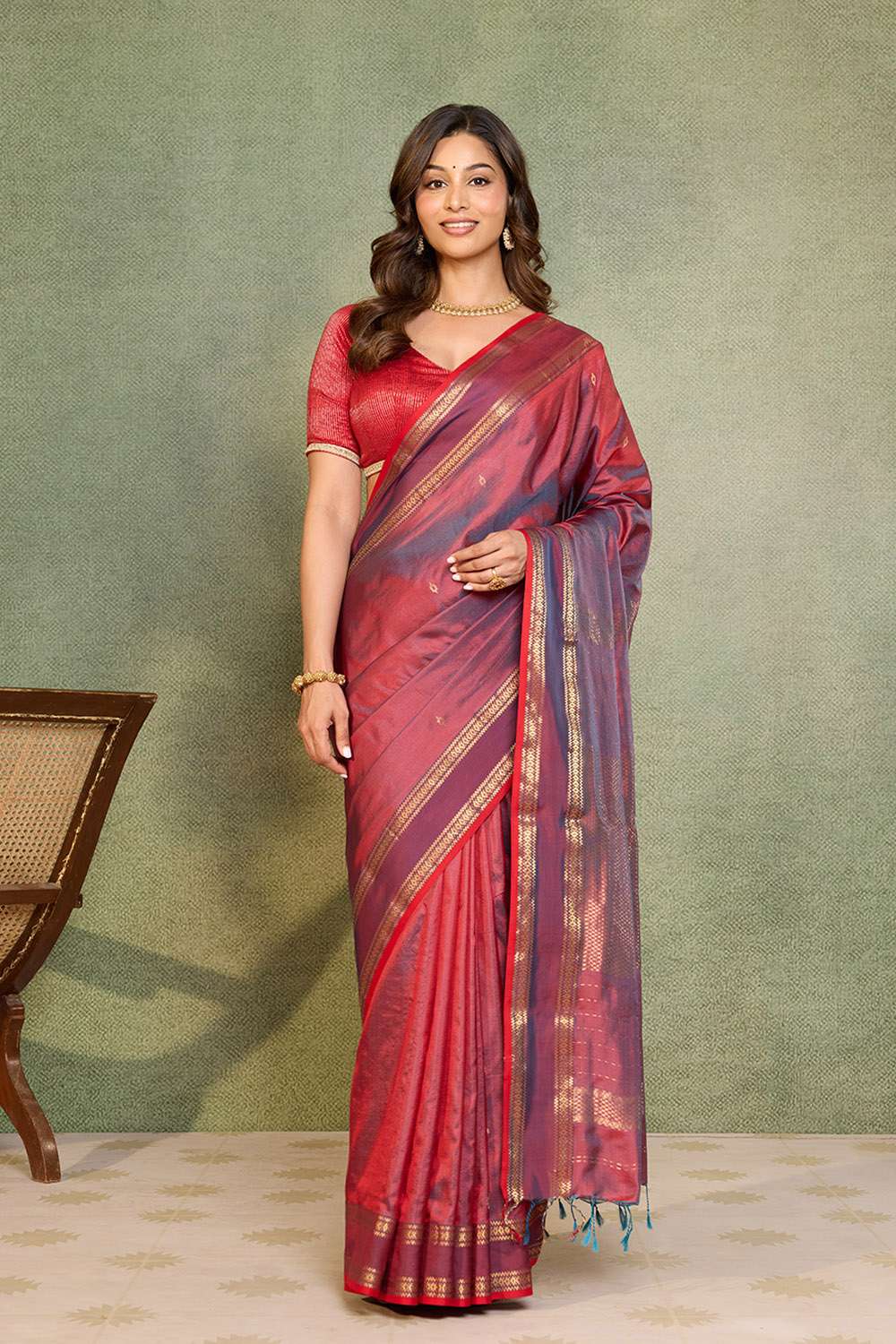
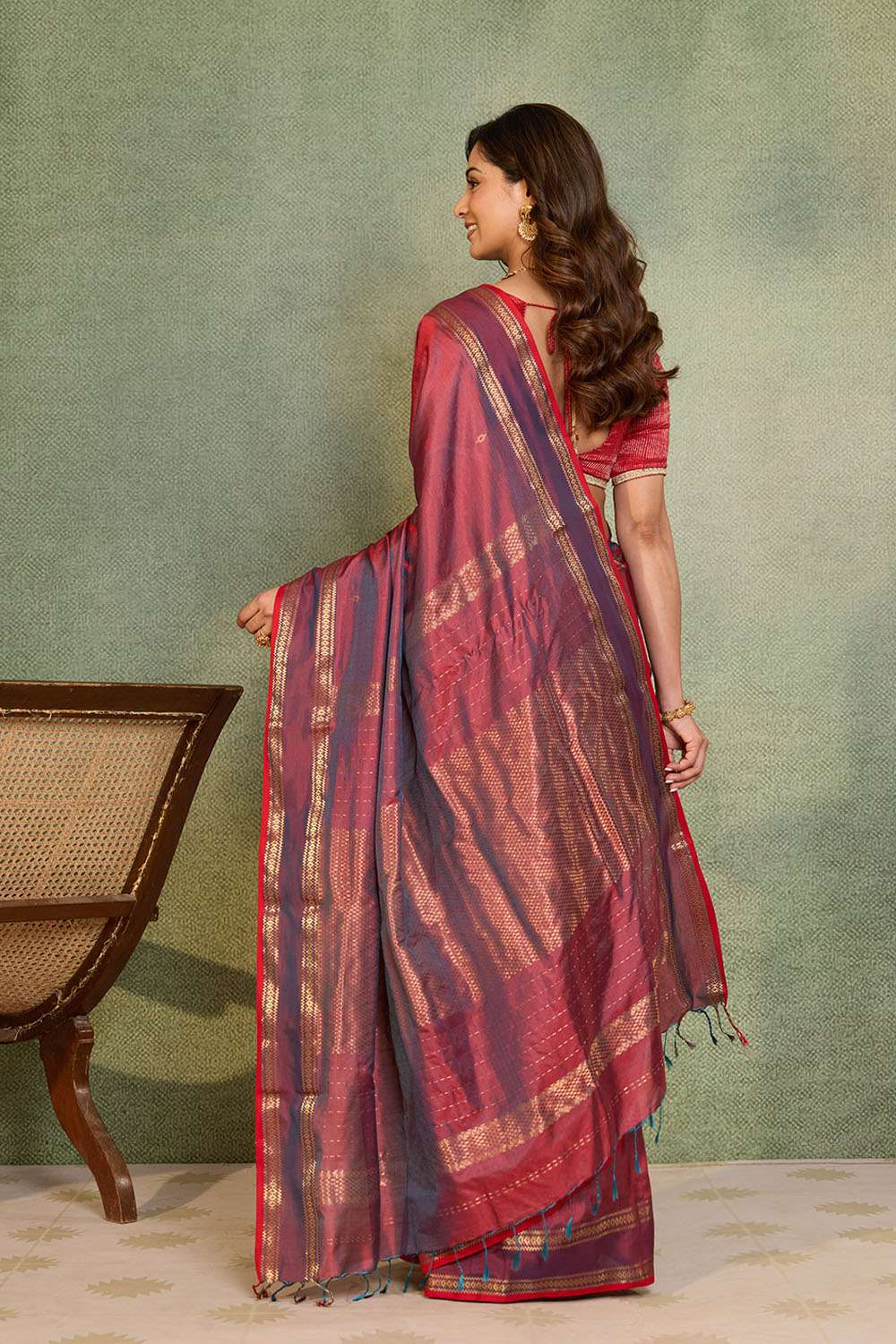
Wear it with the red blouse piece and gold jhumkas, and add a red bindi and a stack of glass bangles. Pin the pallu at the shoulder so the tassels stay clear of the diya.
For the Sister Who Hosts: Olive Green Soft Silk with a Magenta Pallu
Olive green with small gold buttis across the body, and a magenta pallu woven with gold that changes the whole saree when it falls over your shoulder. It is a soft silk, so it drapes close to the body and moves easily when you are in and out of the kitchen. Taneira's soft silk sarees are the ones to look at if you want silk for a full day on your feet.
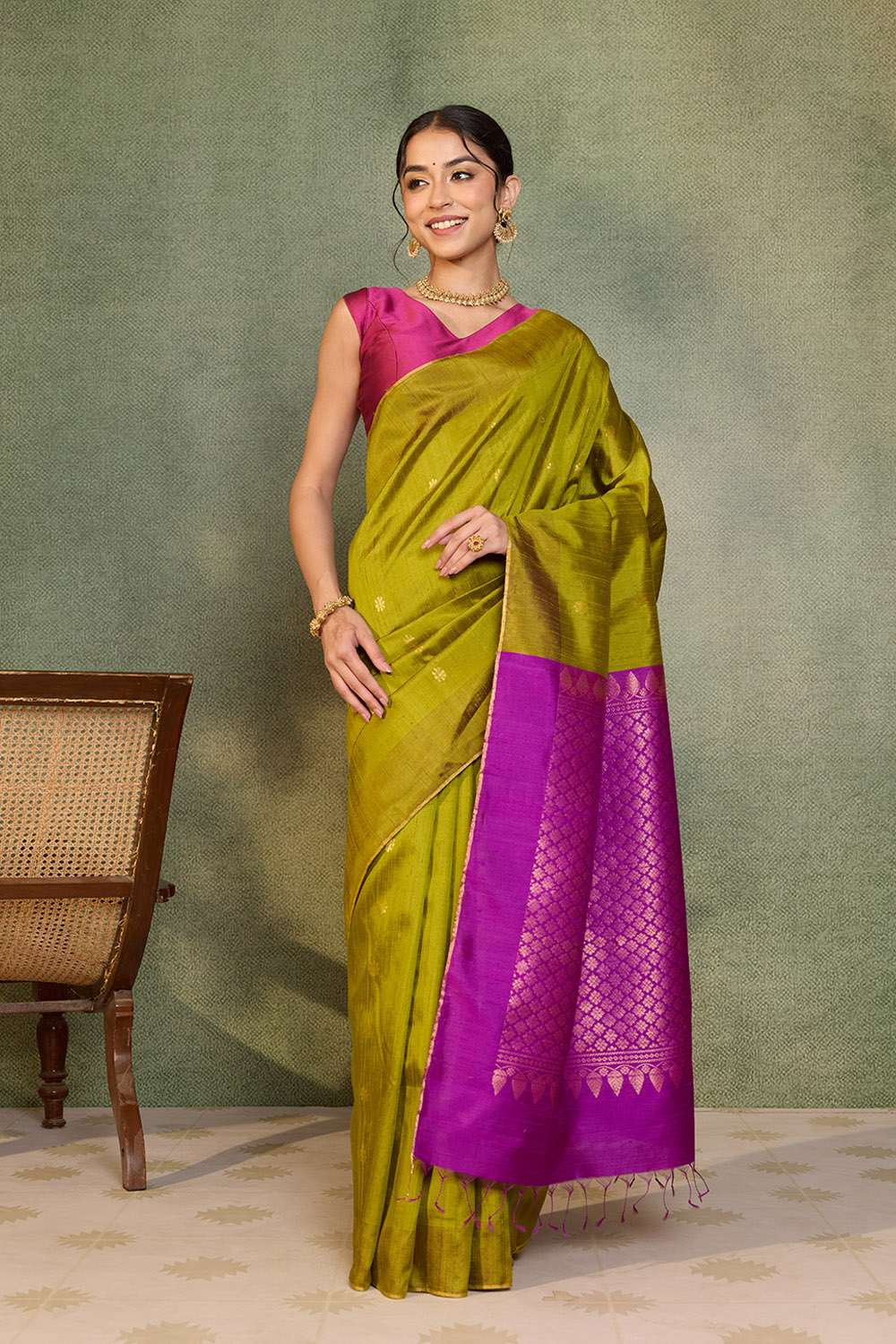
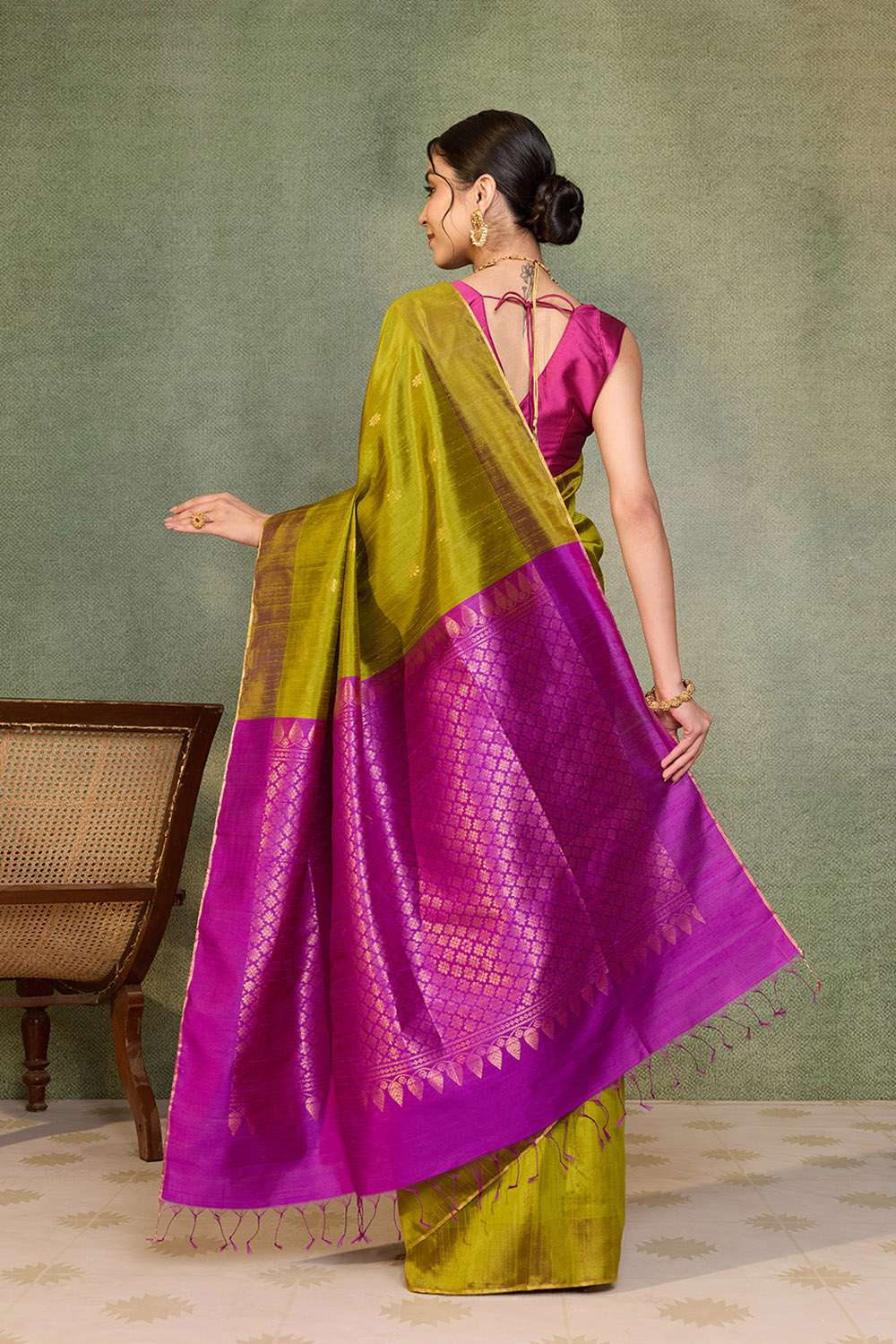
The pink blouse piece picks up the pallu. Keep the jewellery to a gold chain and studs while you cook, then add a choker before the tilak.
For a Bengali Bhai Phonta: Dark Green Bishnupur Silk
A deep green silk from Bishnupur, the West Bengal weaving town, with a body of fine stripes and a pallu in wide bands of pale green and gold. In Bengal the sister puts a phonta of sandalwood paste on her brother's forehead, and many families keep the day more relaxed than a puja. A rich green suits that mood: festive, a little quieter than red.
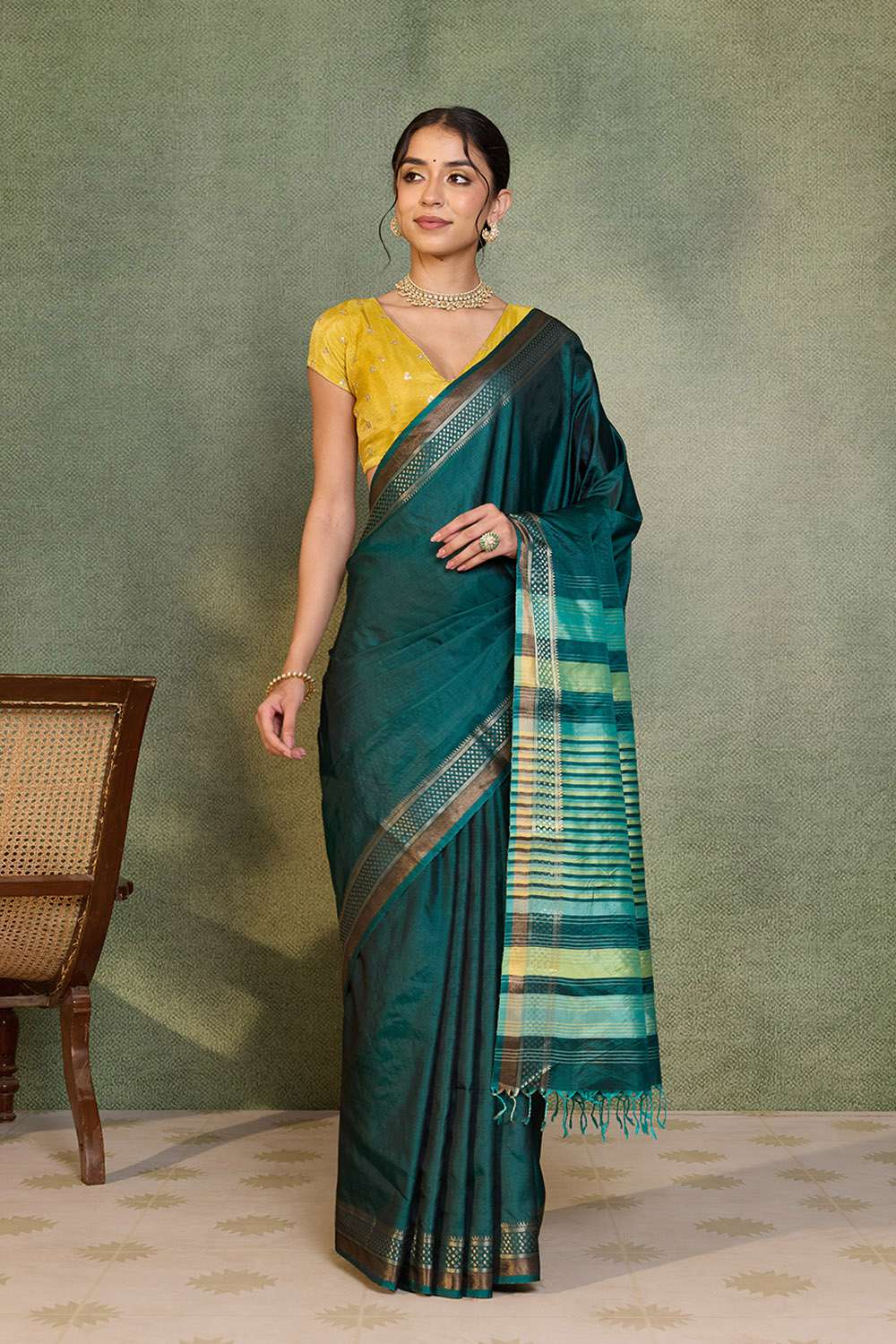
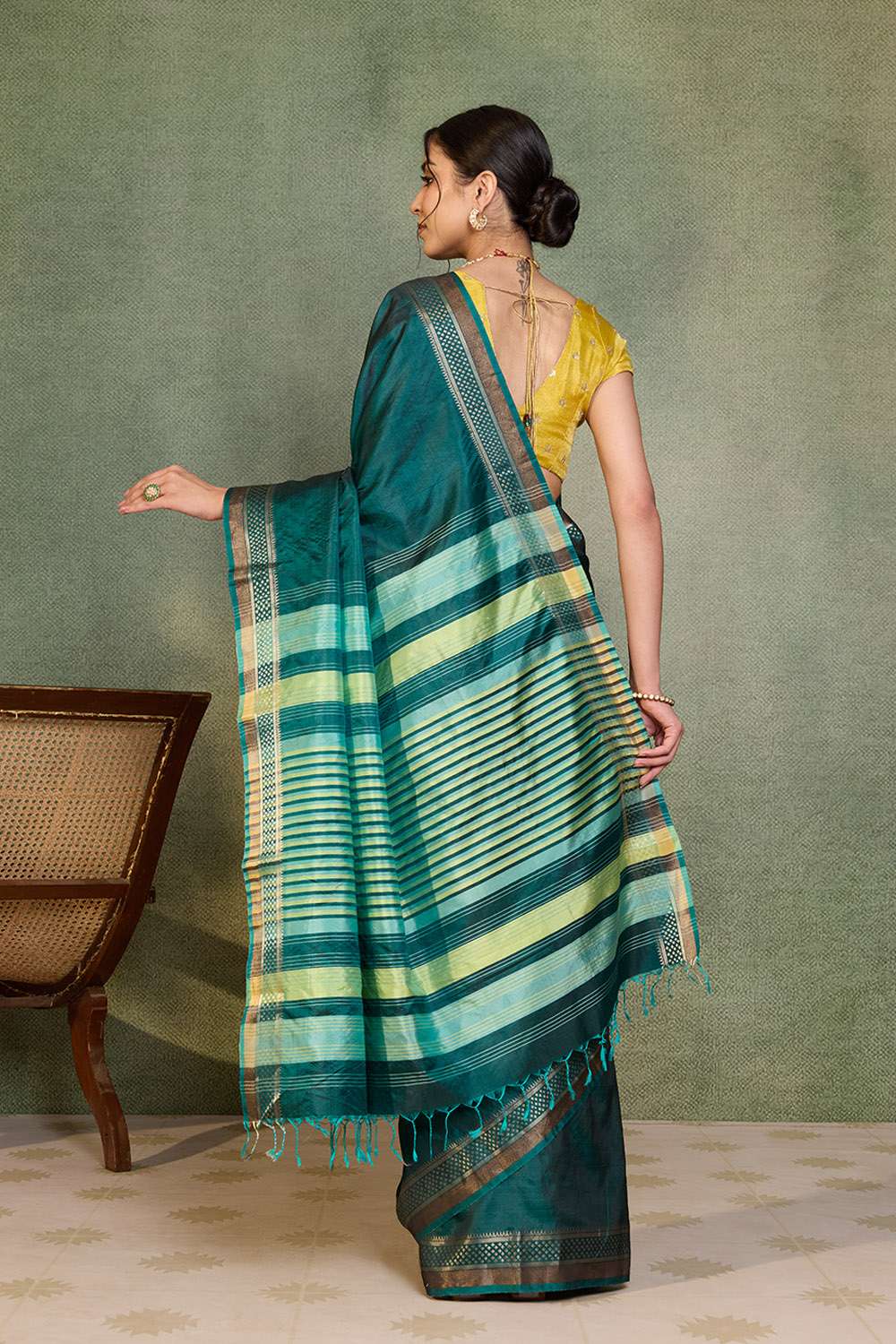
Wear it with a mustard or yellow blouse, gold earrings and a small round bindi. A simple Bengali-style drape, with the pallu brought over the left shoulder, shows off the striped pallu best.
For the Photographs: Orange Silk Shading into Lime
An orange silk with a gold-striped border and a pallu that shades from orange into lime green with a flash of pink. Bright, warm colours photograph well indoors, and this one will hold its own against the marigolds on the thali. The pallu does most of the work, so the rest of the look can stay simple.
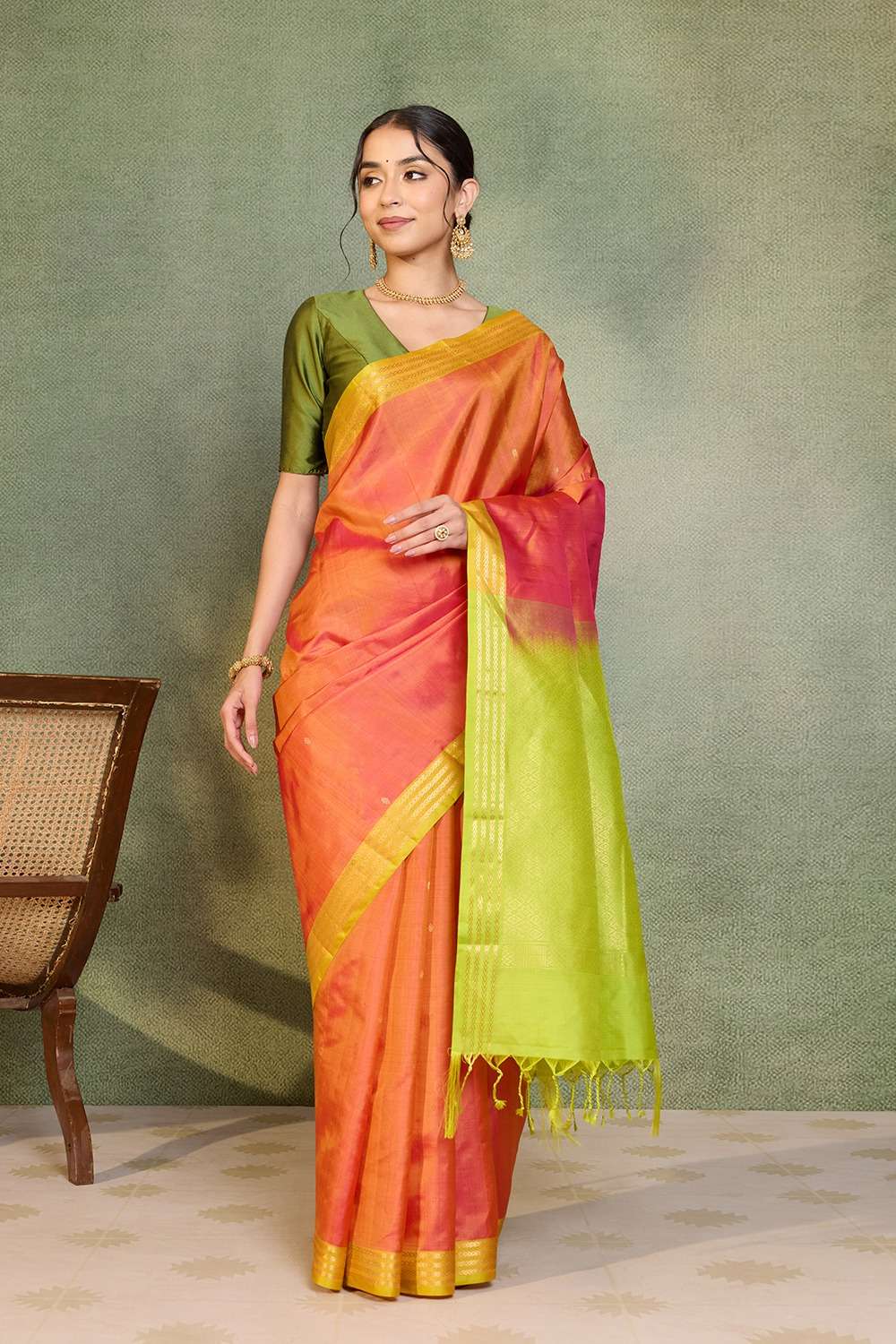
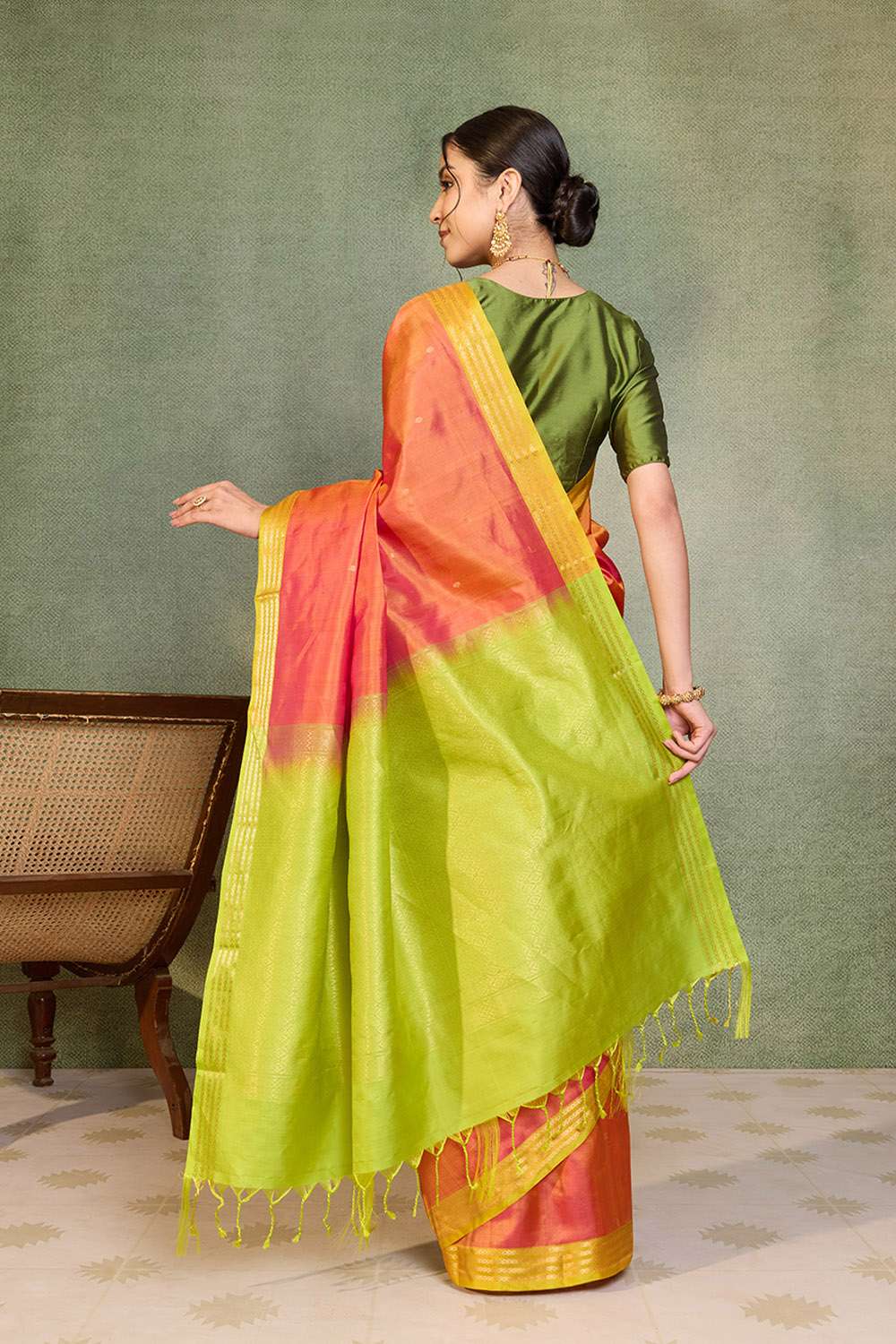
A green blouse ties the pallu in, as in the product photos. Gold jhumkas and a thin gold chain are plenty. Wear your hair in a low bun so the pallu stays the focus.
For the Younger Sister: Dark Pink Silk with Embroidered Motifs
Magenta pink silk with a green border and embroidered motifs on the pallu, made without zari. It is the lightest-looking of the six, which makes it a good choice for a college-age sister, or anyone who finds zari scratchy against the arms. Pink and green is also an old festive pairing that looks fresh today.
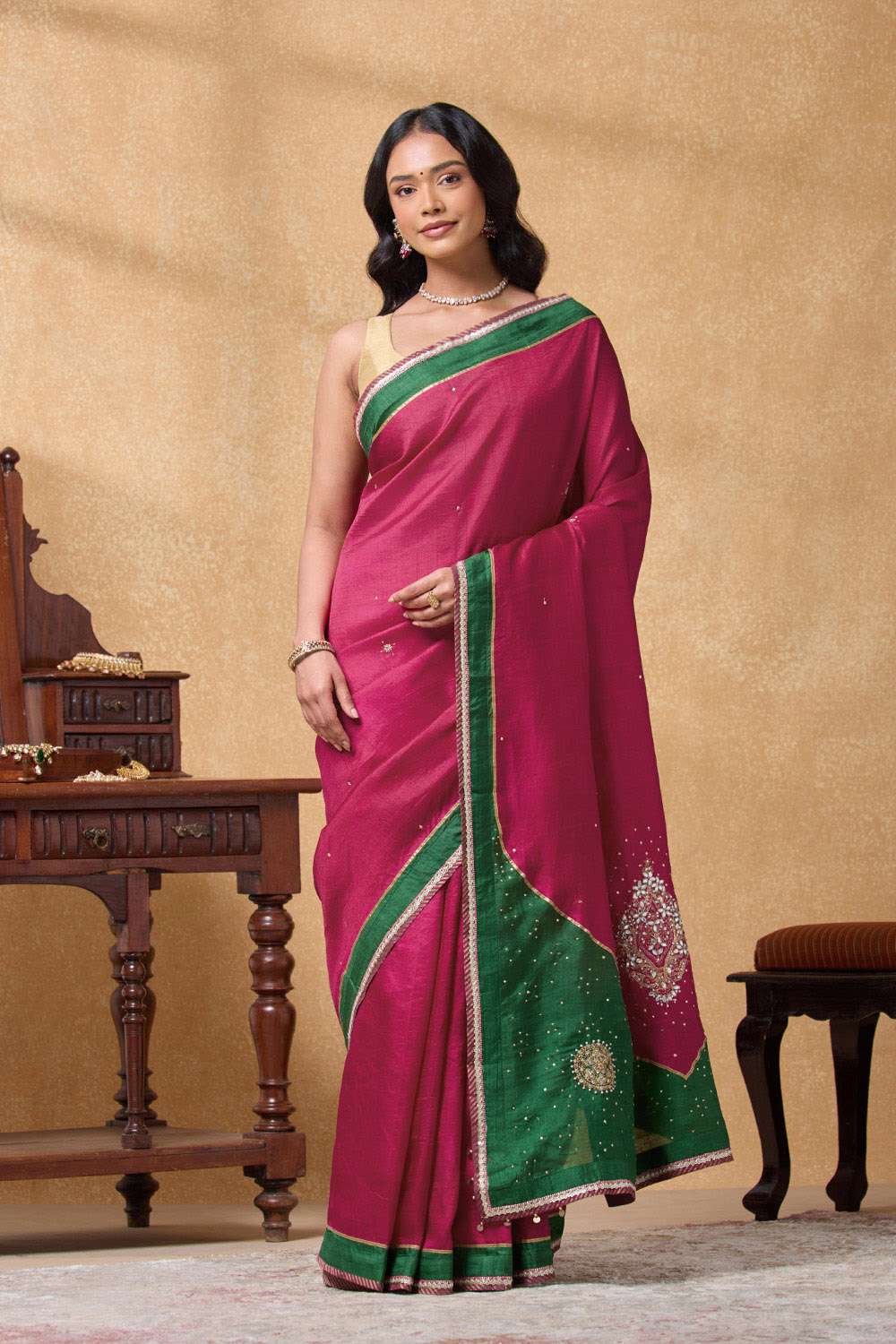
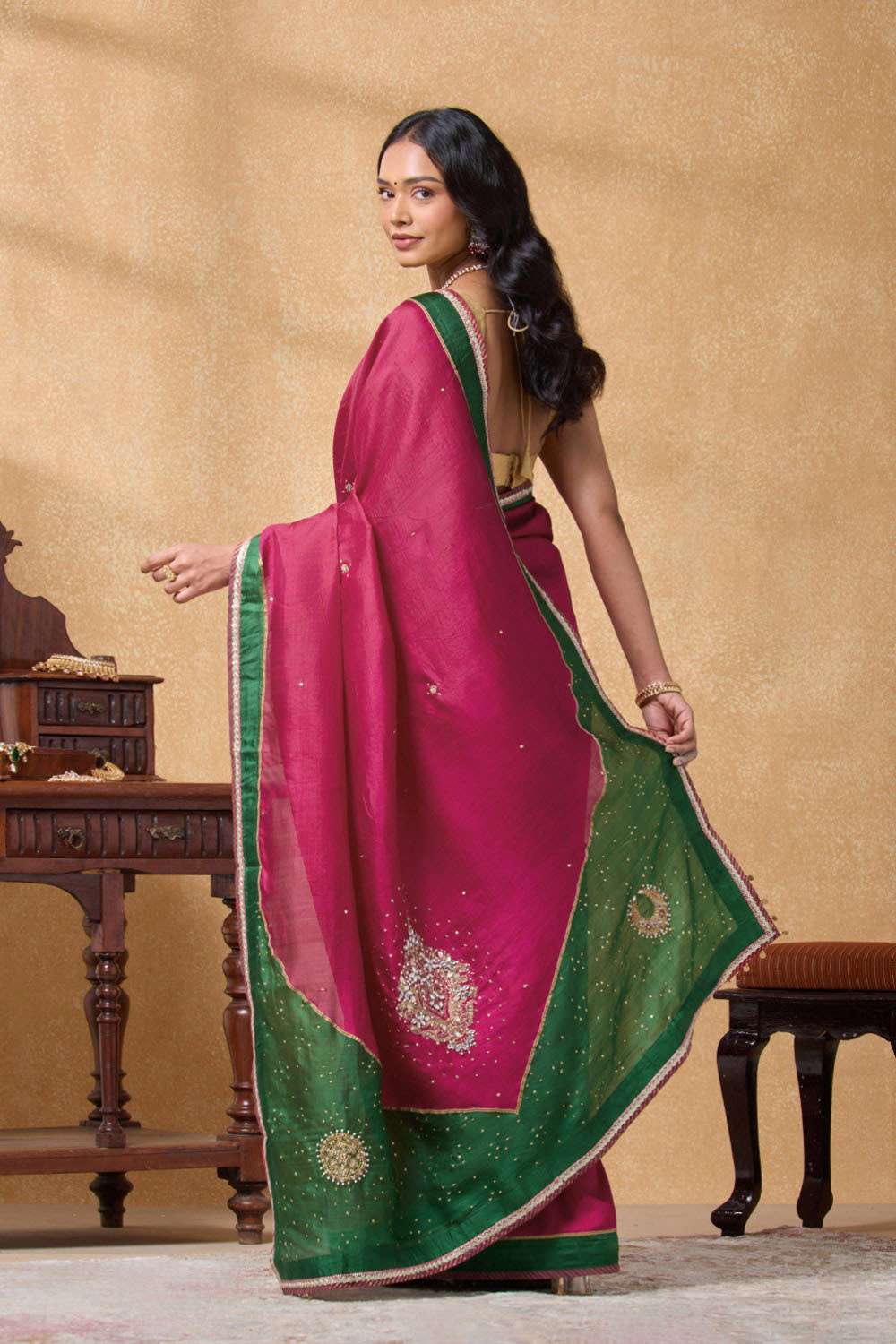
Pair it with the pink blouse piece, silver or oxidised jhumkas and a pair of kolhapuri sandals. The same saree will come out again for a friend's mehendi.
For the Family Lunch: Yellow Maheshwari with a Maroon Border
Bright yellow silk from Maheshwar, with a maroon and gold striped border and pallu. Yellow is auspicious in most Hindu homes and looks warm in daylight, which suits a long afternoon lunch. Browse more yellow sarees if this is your colour.
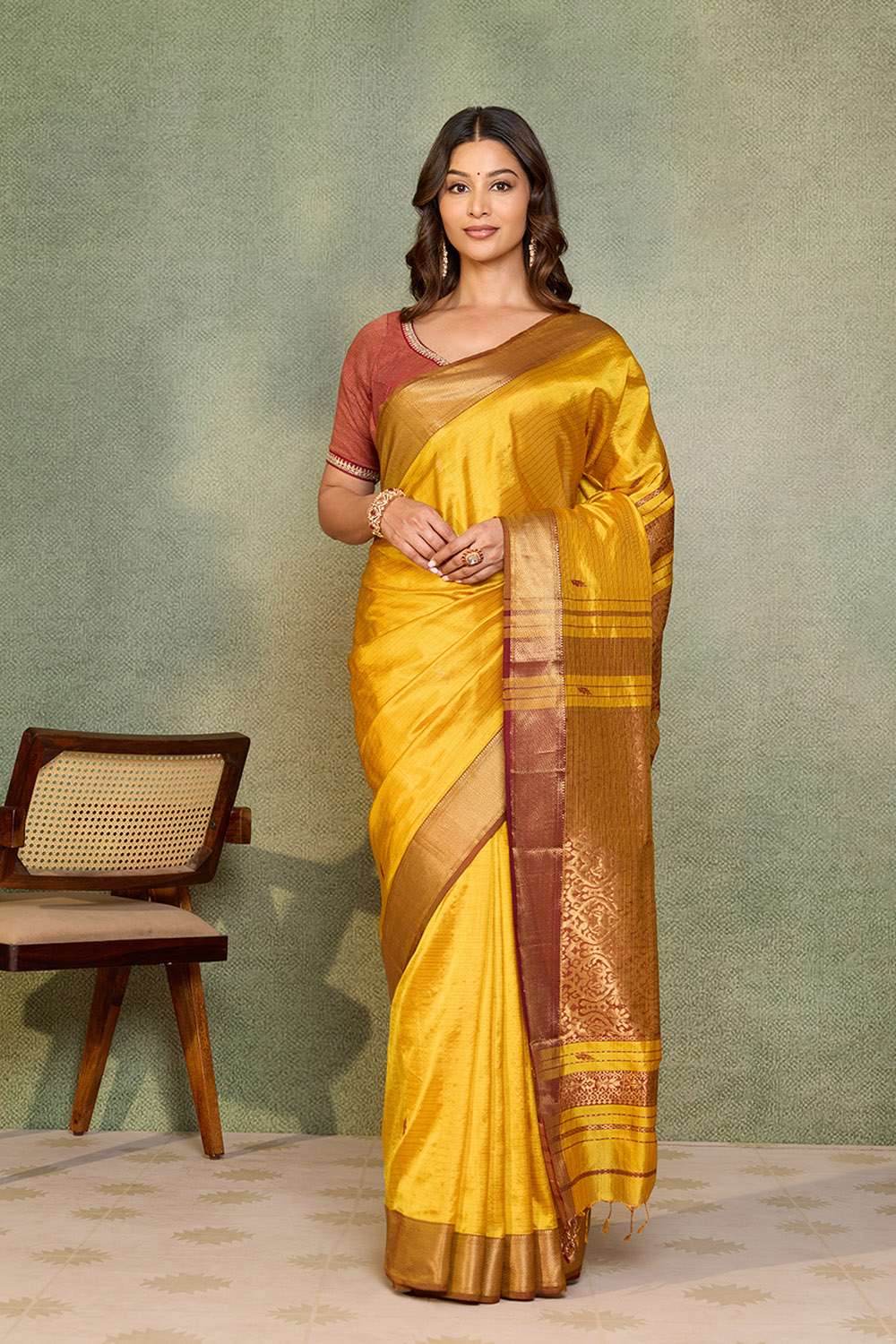
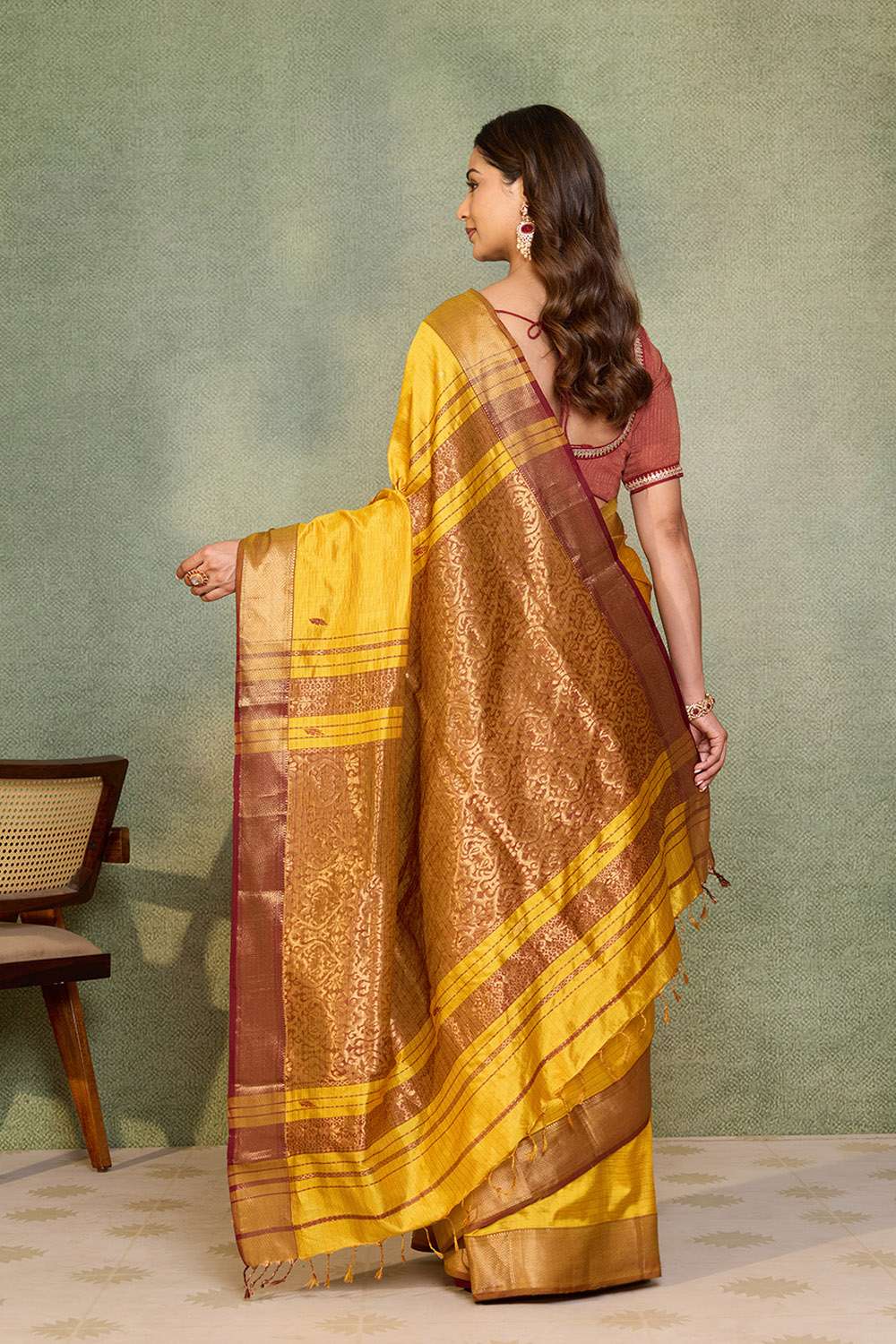
Wear it with the red blouse piece, temple jewellery and a gajra. If you are serving food, fold the pallu in narrow pleats and pin it so it does not slip into the dal.
Shop Festive Sarees
Silks, Banarasis and Chanderis for every day of the Diwali season, from Dhanteras to Bhai Dooj.
Pick by the Part of the Day You Care About Most
| If your day is about... | Choose | Why |
|---|---|---|
| The tilak photographs | Red Maheshwari | Red reads as auspicious and festive on camera |
| Hosting and cooking | Olive soft silk | Soft silk moves with you and crushes less |
| A Bengali Bhai Phonta | Bishnupur green | A rich, quieter colour for a relaxed family day |
| A big family gathering | Orange and lime silk | Bright colour that holds its own in a crowded room |
| Comfort with no zari | Pink embroidered silk | Embroidery with no metallic thread against the skin |
| A long lunch | Yellow Maheshwari | Warm in daylight and light enough for hours |
Red is the safest choice for the tilak itself, and most families will see it as the traditional one. Browse Taneira's red sarees if you want a choice of weaves in that one colour. If you will be in front of the stove all morning, choose the lighter silk and save the heavier saree for the evening.
How to Style Silk Sarees for Women at Every Age
Bhai Dooj is one of the few festivals where three generations of women often dress together: the mother who once did the tilak for her own brothers, the sisters, and the young nieces watching. A few ways to make the silk work for each.
- For the mother. A Maheshwari or Bishnupur silk in a deep colour, gold bangles she has worn for years, and the pallu worn open over the shoulder.
- For the sisters. Brighter colours and a contrast blouse. This is the moment for the pink, orange or yellow silks.
- For a teenager. The embroidered silk, worn with a sleeveless blouse and light jewellery. Pre-pleat it the night before so she can drape it in ten minutes.
- For a new bride in the family. Her first Bhai Dooj after the wedding is often a big occasion. A red or deep pink silk with fuller jewellery suits it.
Get the Blouse and Jewellery Right
The blouse matters more than people expect, because the tilak photographs are usually taken from the waist up. A contrast blouse in a solid colour lifts a plain silk; a blouse that matches the border looks more traditional. If you are short on time, buy a ready blouse from Taneira's blouse collection and keep the saree's blouse piece for later.
- Jhumkas over studs. They frame the face in close-up photographs.
- Bangles on both wrists. Glass or gold. The sound is part of the aarti.
- A bindi that matches the border. Red with red, maroon with maroon.
- Flowers in your hair. A string of jasmine or marigold, pinned the morning of.
- Flat footwear. You will be standing, sitting on the floor and walking between rooms all day.
Care for Festive Silk Sarees After the Day
Tilak and turmeric stains are the risk with festive silk sarees. Blot a roli mark immediately with a dry tissue, never water, and take the saree for dry cleaning, as the care labels on these sarees advise. Air it on a hanger for a few hours before folding, wrap it in a soft cotton cloth and refold it along different lines every few months so the zari does not crack.
Silk sarees for festivals are an investment, and the best ones come out again: for weddings, for Karwa Chauth next year, for a niece's naming ceremony. That is part of what makes silk Indian festive wear worth choosing for a day like this. Still deciding between fabrics? Read how to choose between silk, Banarasi and Kanjivaram for Bhai Dooj, or see what to wear on each of the five days of Diwali.
Find Your Saree for Bhai Dooj
Maheshwari, Bishnupur and soft silks in red, yellow, green and pink for the tilak, the lunch and the evening after.
Frequently Asked Questions
Which saree is best for Bhai Dooj?
A red or yellow silk saree with a woven border is the traditional choice for the tilak. A red Maheshwari silk is light enough to wear all day.
What colour should a sister wear on Bhai Dooj?
Red, yellow, orange and pink are the colours most families see as auspicious. Green is a good choice for a relaxed family day. Many families avoid black for the puja.
Can I wear a silk saree all day on Bhai Dooj?
Yes, if you pick a lighter silk. Soft silk and Maheshwari silk are comfortable for long hours. Keep heavy zari silks for the evening. An olive green soft silk is a comfortable pick for hosting.
When is Bhai Dooj in 2026?
Bhai Dooj falls on Wednesday, 11 November 2026 in most of India. Some calendars give 10 November, so check your local panchang for the muhurat.
What is Bhai Phonta?
Bhai Phonta is the Bengali name for Bhai Dooj. The sister puts a phonta, a mark of sandalwood paste, on her brother's forehead and prays for his long life.
How do I remove a tilak stain from a silk saree?
Blot it straight away with a dry tissue and do not rub or wet it. Take the saree for dry cleaning as soon as you can.

