The Connoisseur's Kurta: Why Craft-Led Cotton Kurta Sets Outlast Fast Fashion
There is a kurta in most wardrobes that has been worn for ten years and still gets compliments. It is rarely the one bought in a hurry on a sale weekend. More often it is a cotton with a print that was pressed onto the cloth by hand, or a little embroidery someone took hours over, and it has only grown softer with every wash.
That is the case for craft-led kurtas: they are made with more care, so they are worth wearing for longer. Here is what sets them apart from fast fashion, how to recognise the crafts, and how to make them last, with five pieces from Taneira's kurtas and kurta sets.
Craft-Led and Mass-Produced, Side by Side
| Craft-led cotton kurta | Fast-fashion kurta | |
|---|---|---|
| The fabric | Pure cotton, breathable and soft | Often synthetic blends that trap heat |
| The pattern | Hand block printing, resist dyeing, applique or embroidery | Digital or screen prints applied in bulk |
| How it ages | Softens and fades gently; looks lived-in | Pills, loses shape, or the print cracks |
| Repair | Can be mended and altered | Rarely worth repairing |
| Cost per wear | Higher price, worn for years | Lower price, worn for a season |
Think in cost per wear. A kurta set you wear thirty times a year for five years costs less per wear than one you wear twice and give away.
The Crafts Behind the Kurtas
- Dabu. A mud-resist printing craft from Rajasthan. A paste of mud is pressed onto the cloth with a wooden block before dyeing, so the pattern stays in the original colour.
- Ajrakh. A resist and block-printing craft from Kutch and Sindh, known for deep indigo, red and black patterns built up over many stages.
- Applique. Shaped pieces of fabric stitched onto the kurta to form a pattern or a neckline detail.
- Embroidery. Thread work at the yoke, cuffs or across the body, from fine outlines to dense florals.
- Screen printing. Colour pushed through a fine screen. It allows soft, detailed florals at an everyday price.
Five Kurtas Worth Keeping
For Festive Lunches: Red Dabu Cotton with Striped Pants
A red cotton kurta with a shirt collar, printed with tall white flowers in dabu, worn with red-and-white striped pants. The listing includes a dupatta. The shirt collar makes it feel fresh and modern; the dabu flowers, printed by hand through mud resist, give it the warmth of craft. Browse more block printed kurtas.
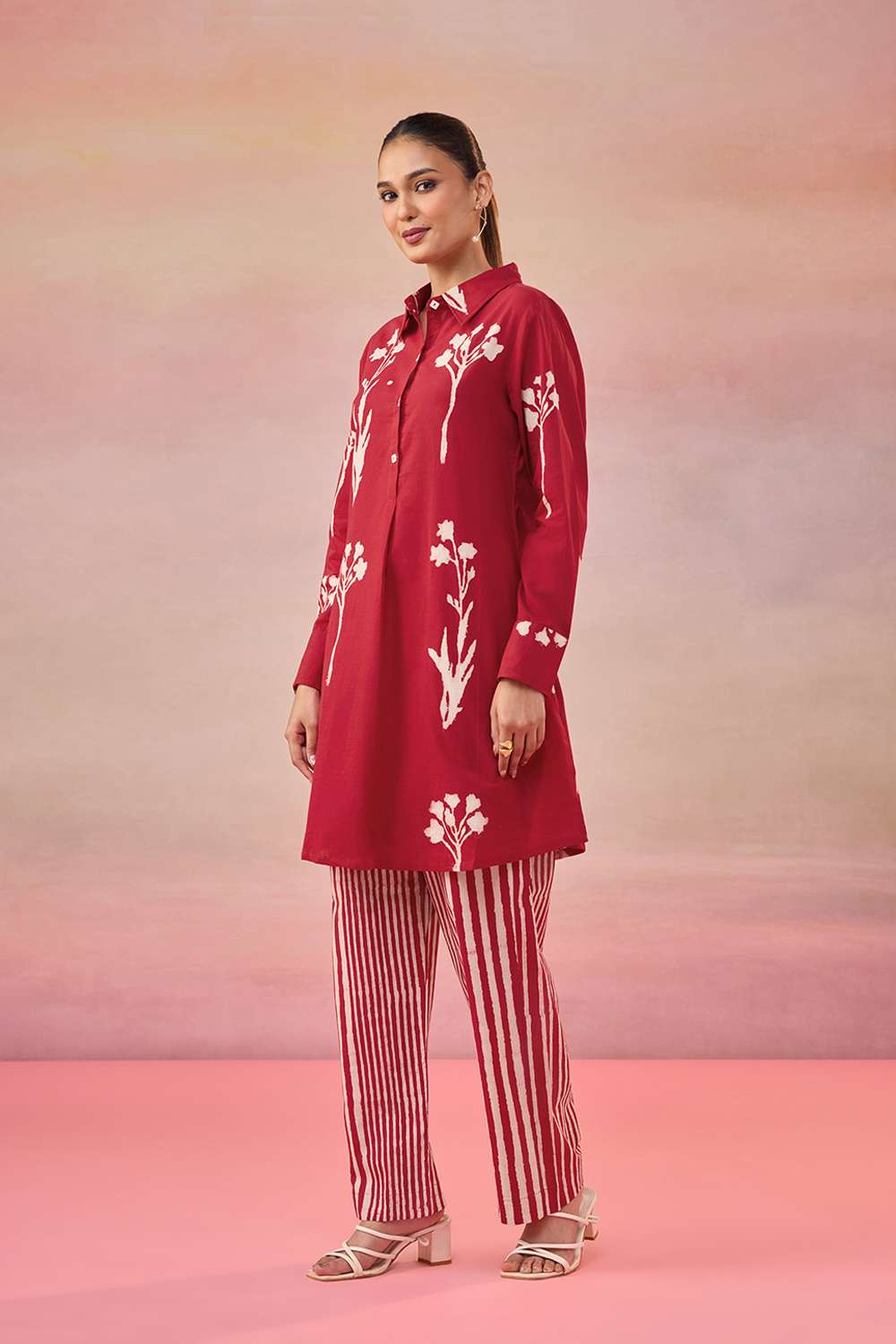
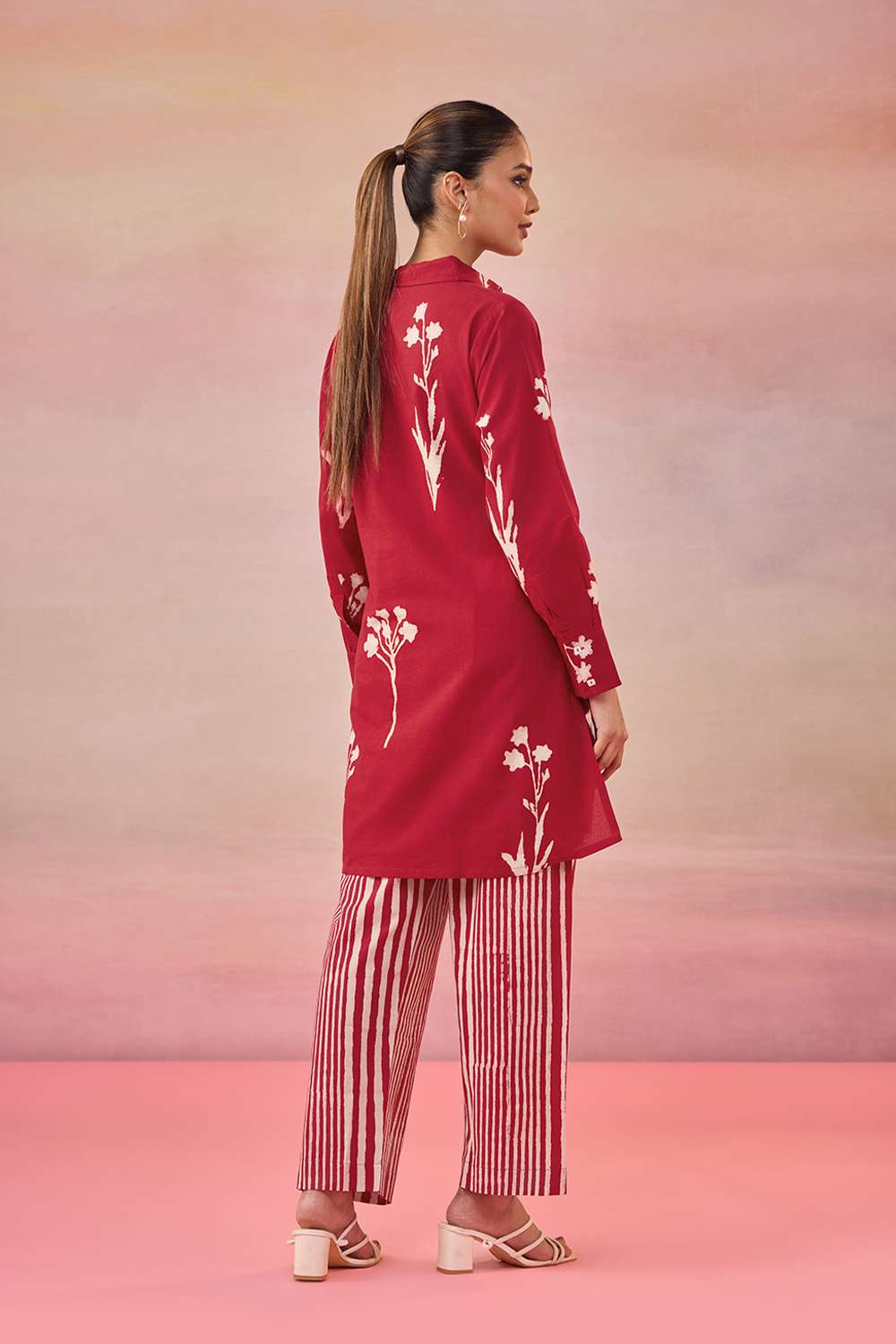
White block heels and silver earrings. Roll the sleeves for a lunch; add the dupatta and gold jhumkas for a festive afternoon.
For Every Day and Evenings Out: Black Ajrakh Cotton
A black cotton kurta in an A-line cut, printed with ajrakh florals in indigo, grey and rust, with a round neckline and three-quarter sleeves. Sold as a kurta on its own. Ajrakh's depth of colour looks rich in daylight and lamplight, and black never goes out of date. See more black kurtas.
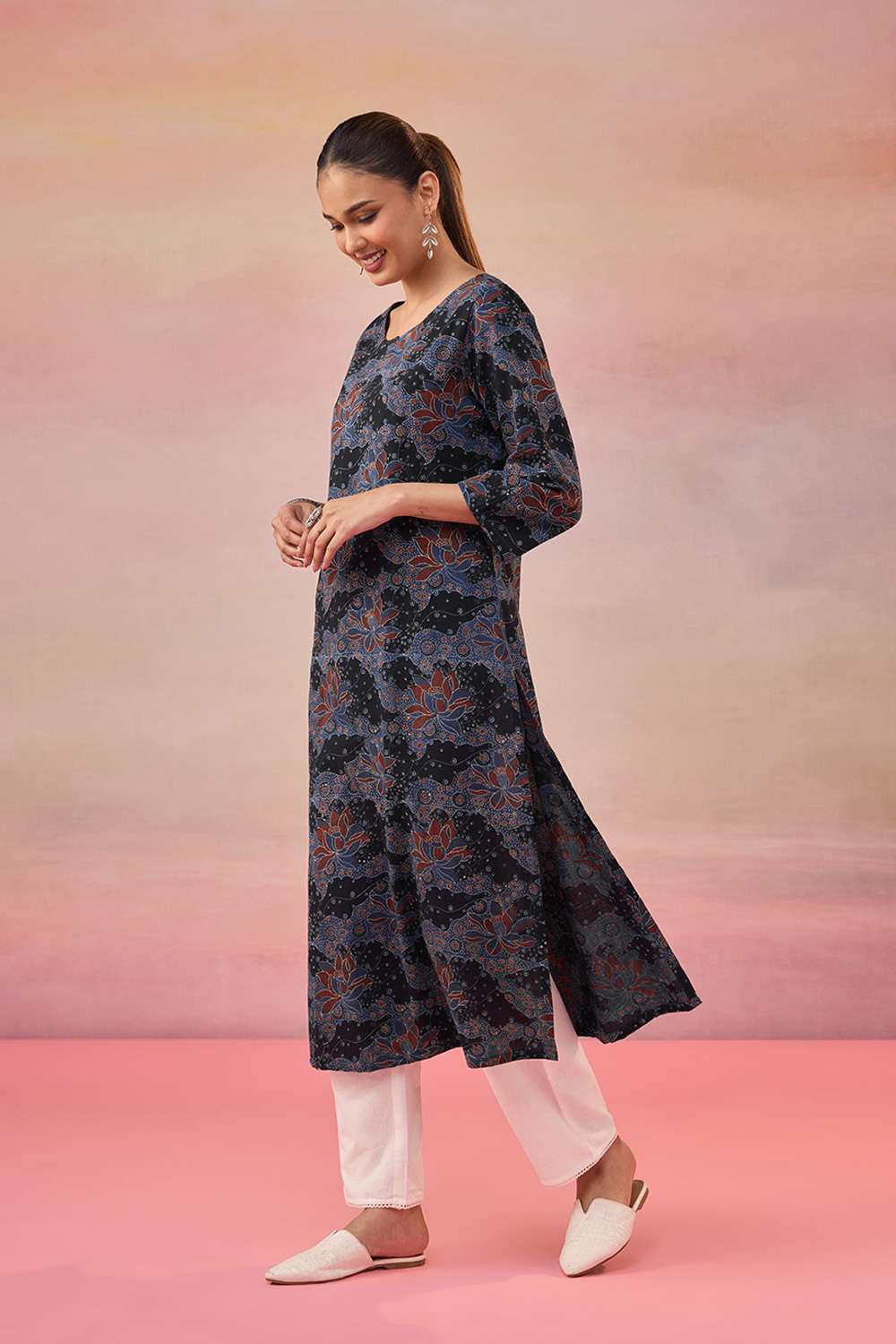
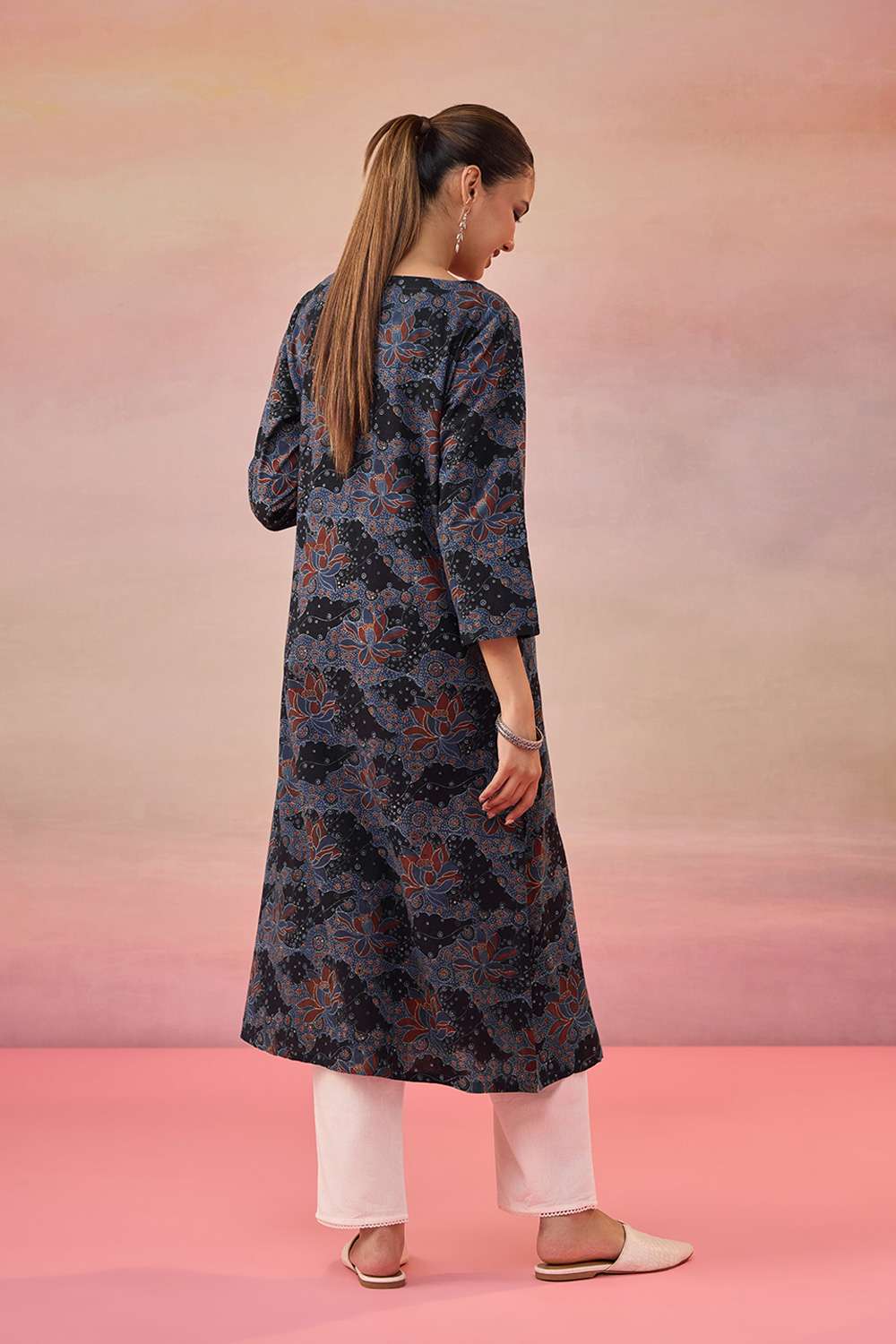
White pants and white flats for the day, as in the product images; black pants, silver jhumkas and a red lip for the evening.
For Summer Weekdays: Light Pink Floral Cotton
A light pink cotton kurta screen printed with dense pink and green florals, with a V-neck and three-quarter sleeves with a contrast cuff. Sold as a kurta. It is light, cheerful and easy to wear to work through the hottest months.
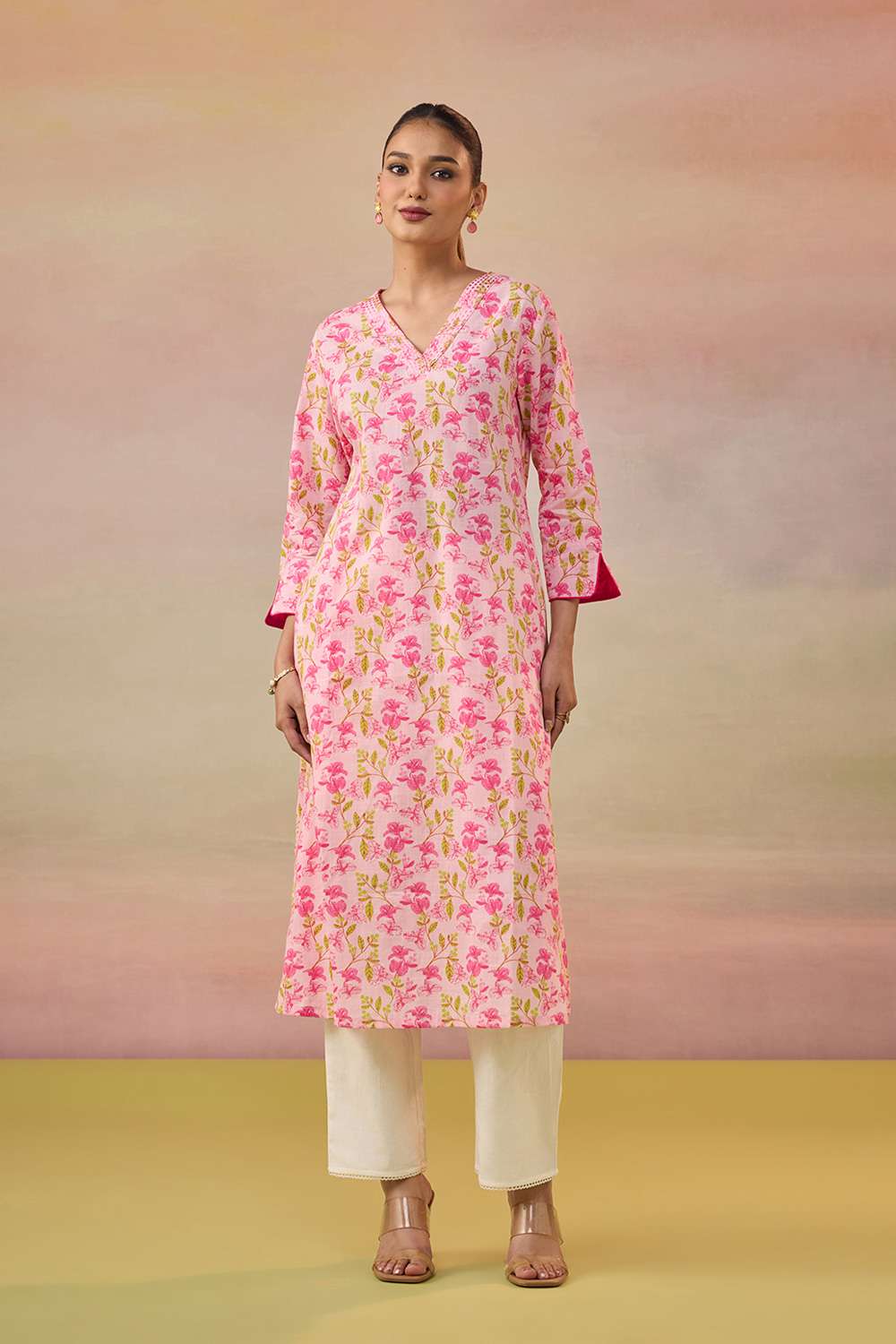
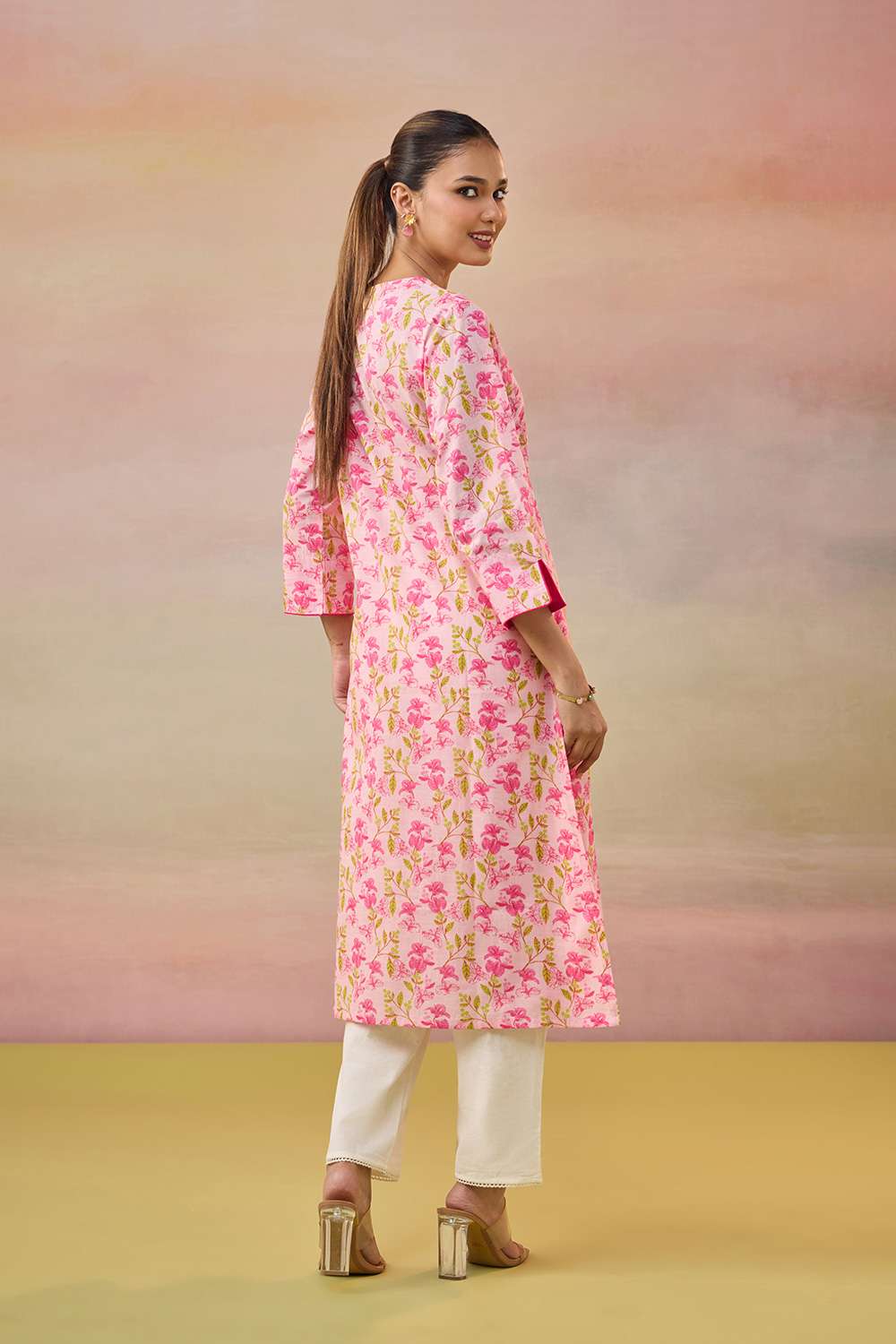
White straight pants and tan flats. A pearl stud and a slim watch are all it needs.
For a Smart-Casual Day: Chartreuse Cotton with Applique
A chartreuse cotton kurta with applique detailing at the keyhole neckline and cuffs, worn with olive pants in a small print. It is quietly unusual: a colour few people wear, made interesting by a craft detail at the neck. For more everyday cotton, browse Taneira's cotton kurtas.
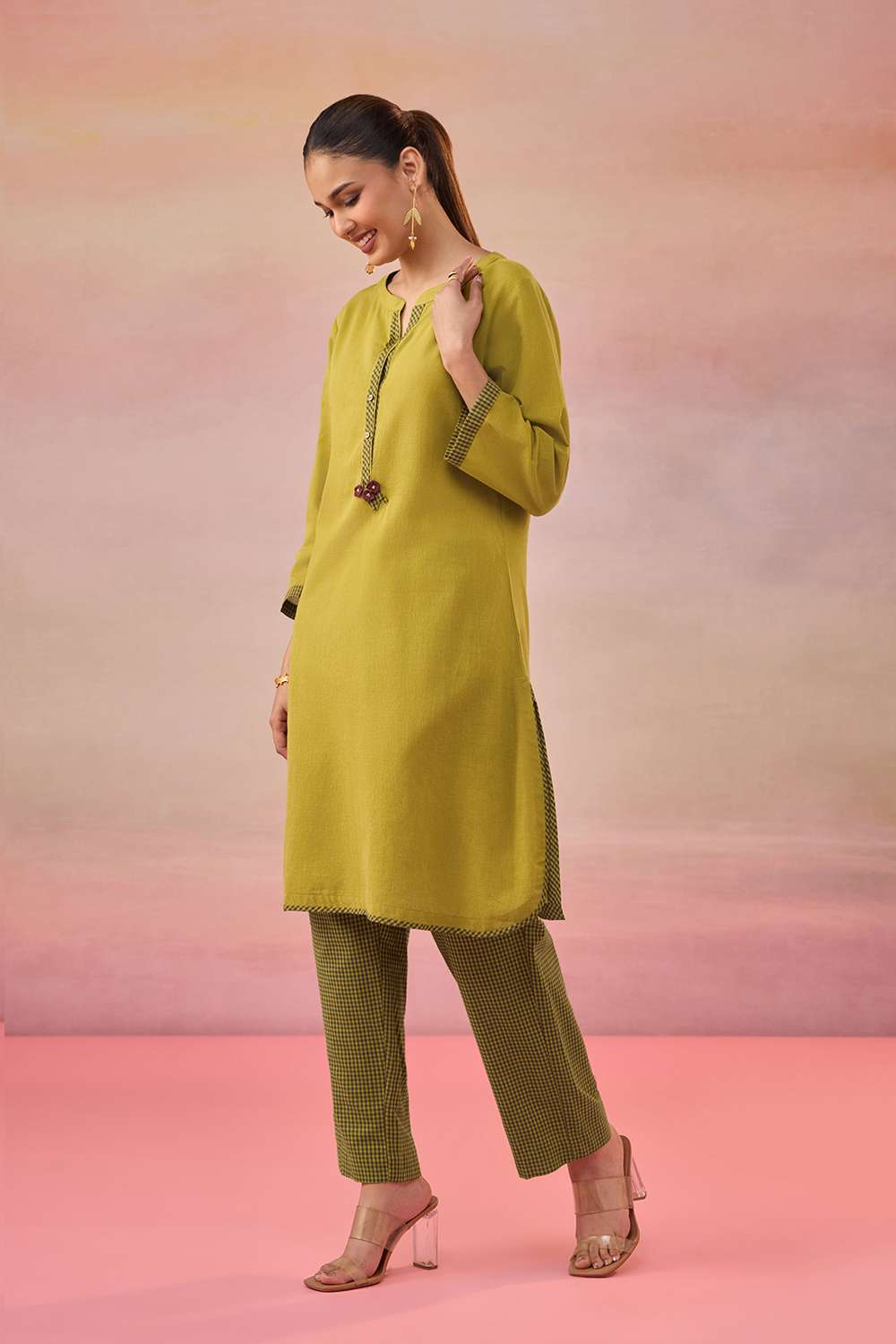
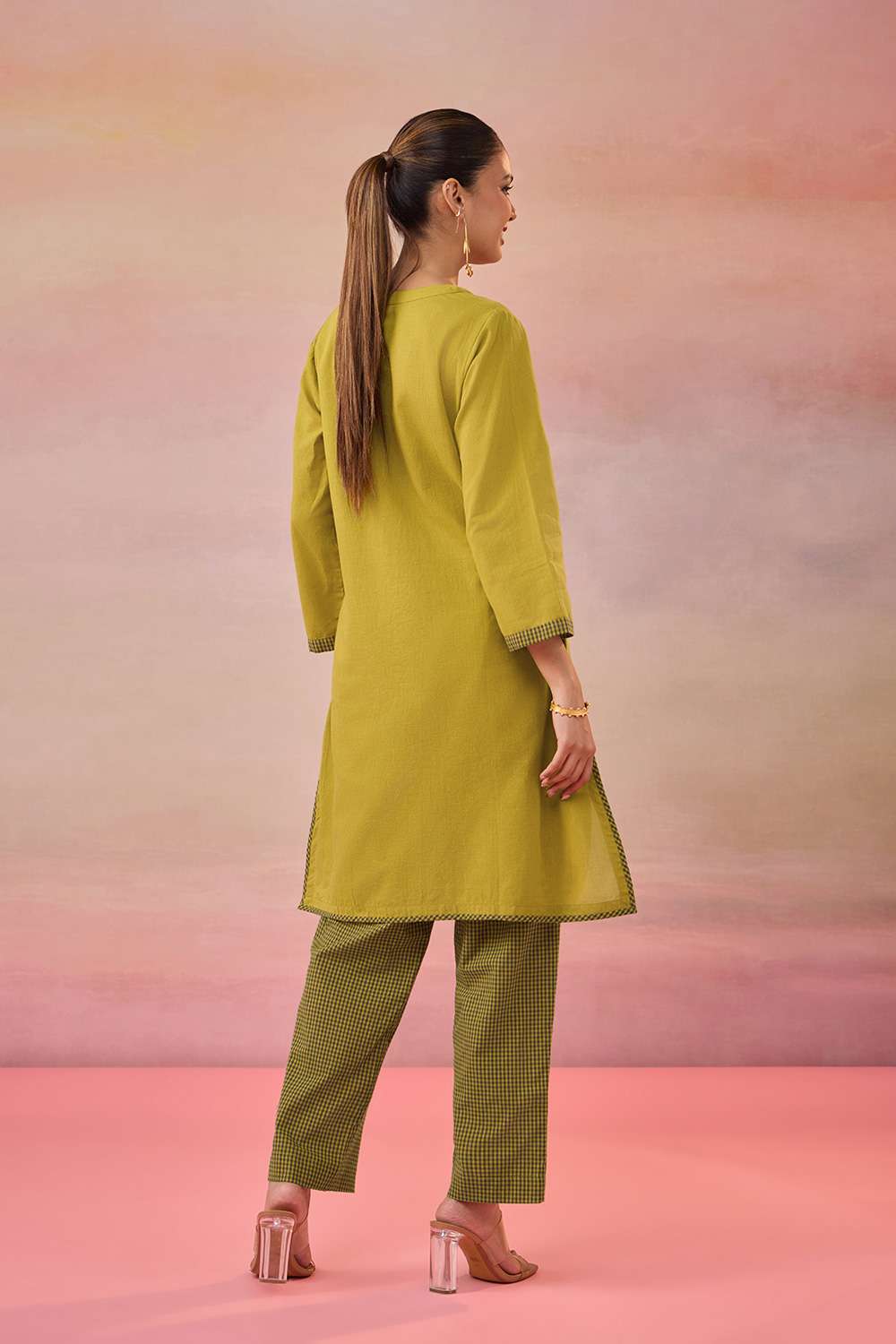
Gold drops and nude heels. It suits an office day, an exhibition or a long lunch.
For a Festive Evening: Red Cotton with an Embroidered Yoke
A red cotton kurta with embroidery at the notched neckline and cuffs, matching red pants and a red dupatta with fine white dots and a gold border. It is the festive member of the group, and cotton keeps it comfortable through a long evening. See more red kurtas.
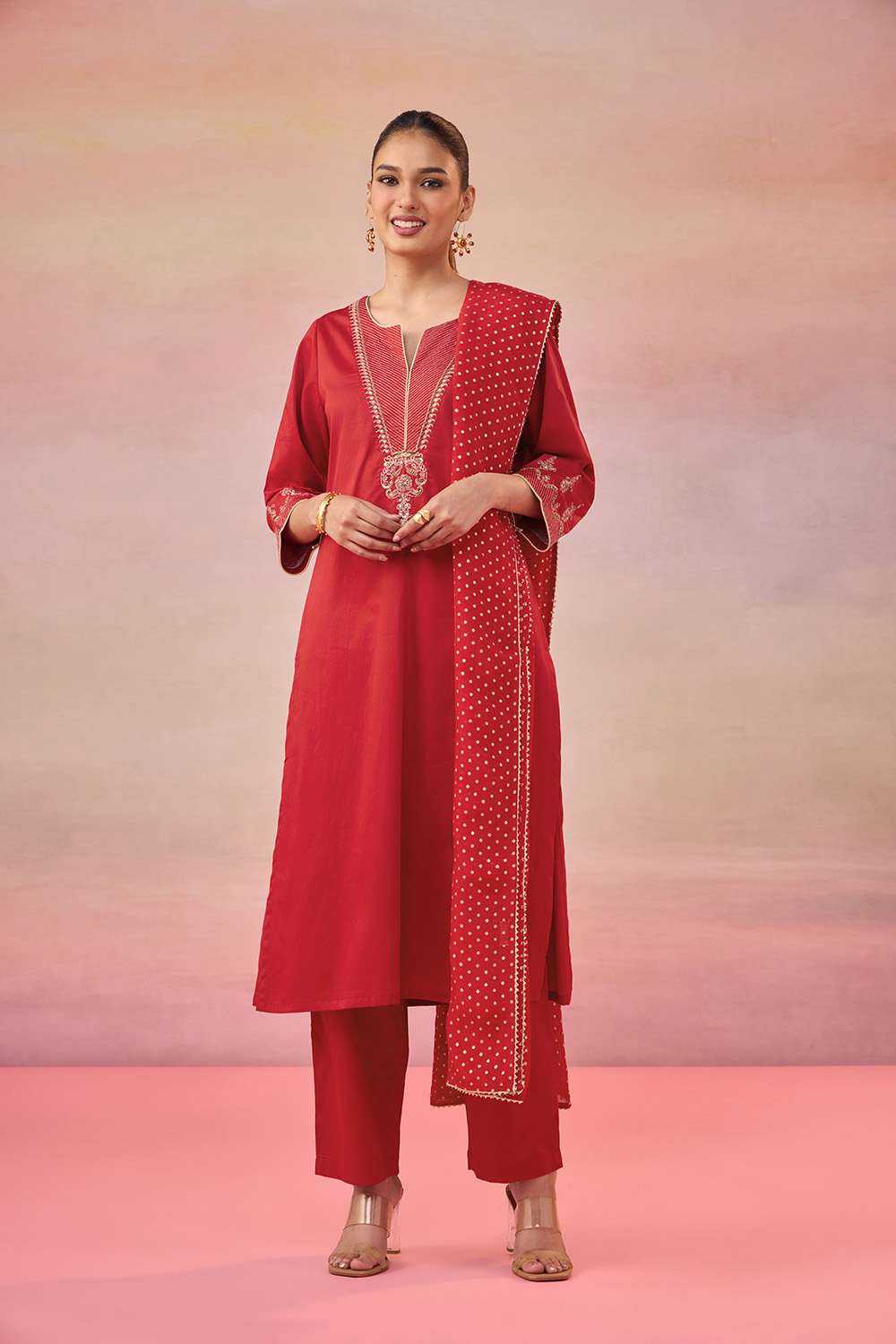
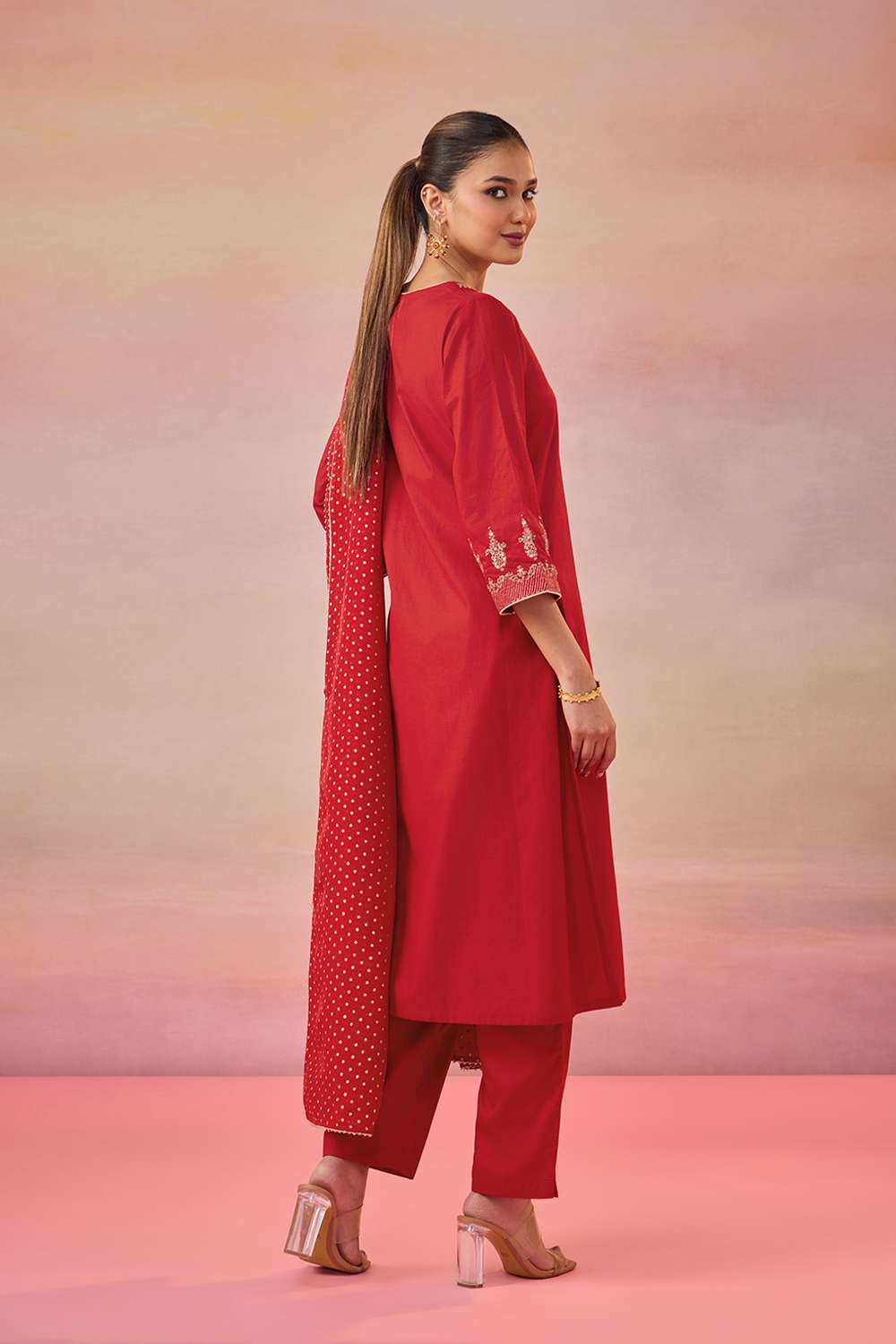
Gold jhumkas, a bangle stack and gold heels. Drape the dupatta over one shoulder and pin it once.
Explore Embroidered Kurtas
Festive cotton, silk cotton and viscose kurtas with embroidered yokes and cuffs.
How a Dabu Print Is Made
- Carving. A craftsperson carves the motif into a block of wood.
- The resist. A paste of mud, often mixed with gum and lime, is pressed onto the cloth with the block, wherever the colour should not go.
- Drying. Sawdust is sprinkled over the wet paste to help it set, and the cloth dries in the sun.
- Dyeing. The cloth goes into the dye bath; the mud keeps the printed areas from taking colour.
- Washing. The mud is washed away, revealing the pattern in the original colour, with the soft, slightly cracked edges dabu is known for.
Every stage is done by hand, which is why no two dabu kurtas are quite alike.
How to Recognise Real Craft
- Look for the hand in a block print. Small overlaps where two impressions meet, and slight variations in colour depth.
- Check resist prints. Dabu and ajrakh often show a soft crackle or bleed at the edge of the pattern, a sign of the resist and dye.
- Turn embroidery over. Hand embroidery has small, slightly uneven stitches on the back; machine embroidery is very regular.
- Read the craft field. Taneira's product pages list the craft, such as dabu, ajrakh, applique or embroidered, along with the fabric.
Why Craft Is Worth Choosing
Every craft kurta carries the work of people who have spent years learning one skill: carving a block, mixing a mud resist, cutting and stitching an applique. When you choose craft over a mass-produced print, you are choosing a garment that took longer to make and was made with more attention, and you are keeping those skills in use. That is the quiet satisfaction of a connoisseur's wardrobe: fewer pieces, each with a story you can tell.
It also changes how you shop. Instead of buying five kurtas for a season, you buy one or two you will wear for years. The wardrobe gets smaller and better at the same time, and getting dressed gets easier, because everything in it is something you love wearing.
And When You Want Silk
Cotton is the craft kurta's natural home, but for festive days silk and silk cotton bring a gentle sheen and a fluid drape. A silk cotton kurta with an embroidered yoke moves from a puja to a dinner without looking overdressed. Browse Taneira's silk kurtas for those occasions.
Why Cotton Ages Better
Pure cotton softens with every wash, while synthetic blends tend to pill and lose their shape. Natural dyes fade gently into softer versions of themselves instead of cracking. A craft cotton kurta in its fifth year often feels better than it did on the day you bought it, which is the opposite of how fast fashion behaves.
One Kurta, Three Ways
| Occasion | Pair with | Finish with |
|---|---|---|
| Office | White or black straight pants | Flats, studs, a structured tote |
| Weekend | Jeans or palazzos | Kolhapuris, oxidised silver, a cloth bag |
| Festive | Matching pants and a dupatta | Jhumkas, bangles, embroidered juttis |
Building a Craft Wardrobe
| Piece | Craft | Wear it to |
|---|---|---|
| An everyday print | Screen or block print in cotton | Work, weekends, travel |
| A statement craft piece | Ajrakh or dabu | Lunches, exhibitions, evenings out |
| A smart-casual set | Applique or fine embroidery | Office days, family visits |
| A festive set | Embroidered yoke, matching dupatta | Festivals, dinners, pujas |
Four pieces, chosen well, cover most of a year. Add a pair of white and a pair of black pants, and each kurta has two more outfits in it.
Questions to Ask Before You Buy
- What is the craft? Dabu, ajrakh, applique, embroidery or a print; each has its own care.
- Is it pure cotton? Check the fabric field; blends feel and age differently.
- Does the set include a dupatta? The description says so; some kurtas are sold alone.
- Can it be returned? Some sets are not eligible for return; know before you buy.
Caring for Craft Cottons
| Craft | Wash | Dry and store |
|---|---|---|
| Block print, dabu, ajrakh | Cold water, inside out, on its own the first few times | In the shade; strong sun fades natural dyes |
| Embroidered and applique | Follow the label; many advise dry cleaning | Fold with the embroidery inside |
| Screen printed cotton | Cold, gentle wash, inside out | Iron on the reverse while slightly damp |
For the right cut, read our guide to kurta silhouettes, and for a full day in a block print, see From Desk to Dinner.
Find Your Craft Kurta
Dabu, ajrakh, applique and embroidered cotton kurtas, made to be worn for years.
Frequently Asked Questions
Why are craft kurtas more expensive than fast fashion?
Crafts such as dabu, ajrakh and hand embroidery take time and skill, and they are made in pure cotton. They last for years and soften with wear, so the cost per wear is often lower.
What is dabu print?
A mud-resist block-printing craft from Rajasthan. Mud paste is pressed onto the cloth before dyeing, leaving the pattern in the original colour.
What is ajrakh print?
A resist and block-printing craft from Kutch and Sindh, known for deep indigo, red and black geometric and floral patterns built up over many stages.
How do I know if a kurta is hand block printed?
Look for small overlaps where block impressions meet and slight variations in colour. Taneira's product pages also list the craft.
How should I wash a block printed cotton kurta?
Wash it in cold water, inside out and on its own for the first few washes, and dry it in the shade so the colours stay bright.
Are silk kurtas better than cotton for festive wear?
Silk and silk cotton have more sheen and drape, which suits festive evenings. Cotton is more breathable and easier to care for, and embroidered cotton still looks festive.

