


Bridal Sarees and Styling with Kausalya and Sithara – Royal Banarasi Collection
25 April, 25
 5 min read
25
Apr, 25


Sarees and Weddings – A match made in Heaven! Globally considered a traditional Indian attire, it’s no wonder sarees are a popular and cultural preference for bridal wear. In India, Banarasi Silk Sarees have been a prominent choice, especially among the mid and Northern states. Passed down through generations, these sarees transcend time with immense heritage and tradition.
In a special collaboration for Taneira, we had Celebrity Bridal Stylist, Sithara Kudige come together with Kausalya Satyakumar, our in-house Senior Designer, to talk about bridal sarees! As a stylist, Sithara comes with a wide range of interesting styling options for both the Traditional and Modern bride, and as a Senior Designer, Kausalya comes with immense knowledge and understanding of the crafts. And we couldn’t have thought of a better duo to talk about our bridal collection!
So, without further ado, let’s dive right in!
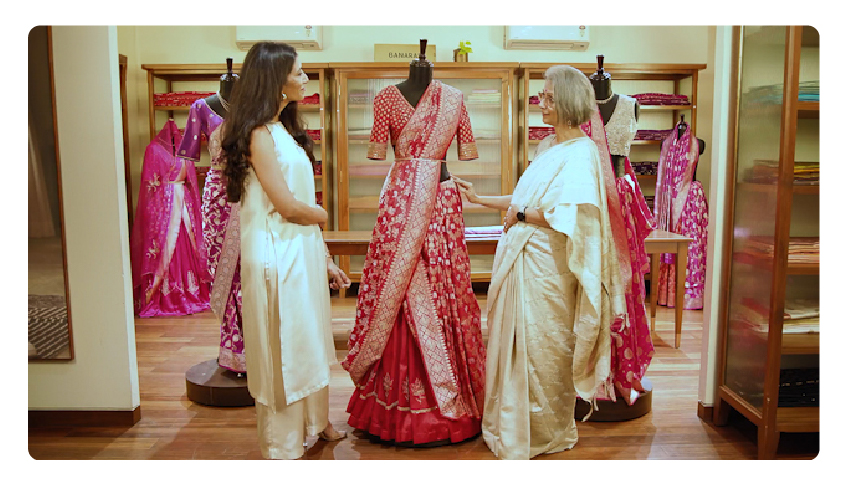
Starting off with the ever-radiant Banarasi Sarees, Kausalya and Sithara have chosen five beautiful sarees:
-
Classic Red Banarasi Saree:
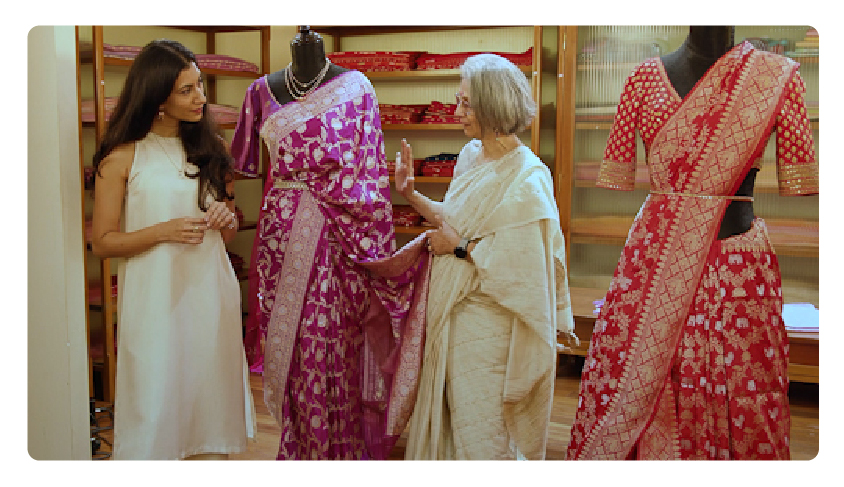
A true bridal classic, this saree features Sona Roopa Kadwa motifs woven with influences from Shikargarh—a design style that depicts traditional hunting scenes. Look closely and you’ll spot motifs like elephants and peacocks, lending the saree an air of grandeur. Shikargarh is the only type of Banarasi sarees that are present with animal motifs and there are only a few masterweavers in Banaras who are skilled in the craft, especially using the Kadwa weaving technique. Each motif is individually woven, allowing for intricacy and making sure there are no loose threads on the underside. This makes Shikargarh sarees a heritage masterpiece!
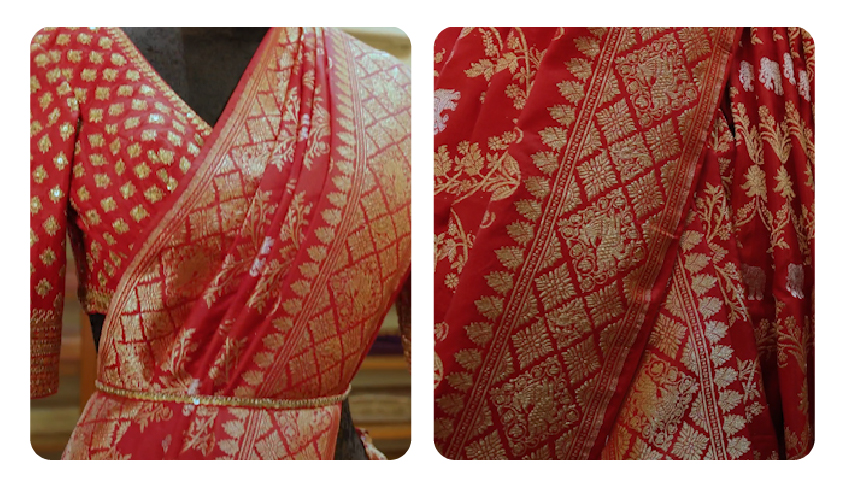
Styling: Sithara suggests a traditional drape for wedding ceremonies to bring out its elegance, as a traditional Banarasi saree, with such intricacy and grandeur. On the contrary, for a fun and contemporary style, it can be draped over a skirt with a lovely take on a half-saree. This classic saree would go beautifully well with a red embroidered blouse, for the red-on-red effect, and a belt for just the right amount of pop!
-
Traditional Pink Banarasi Saree:
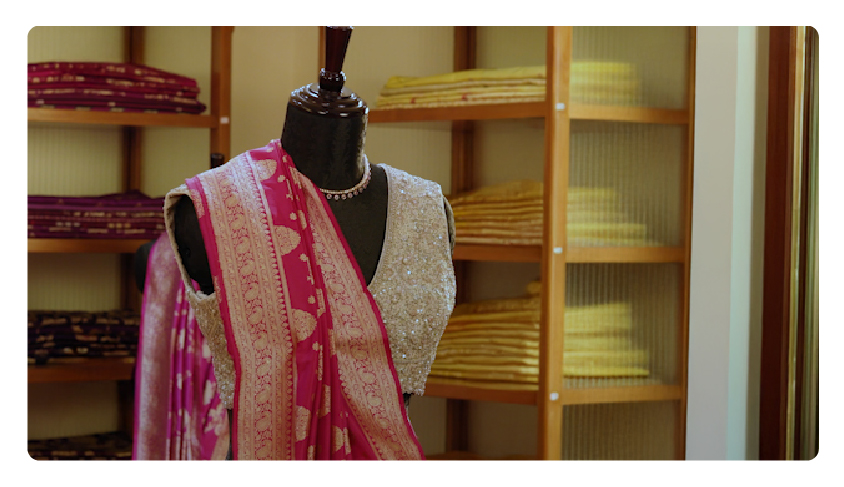
This vibrant shade is a classic in its own right. With an all-over Buttidar, this timeless piece has a beautiful palla with a traditionally woven ‘Konia Ambi’. The mango motif, in this saree is called ‘Konia’ as it is diagonally woven into the corners of the pallu and is considered a difficult craft to produce. The beauty of the Konia motif comes from the intricacy and the craft of the kadwa weaving technique.
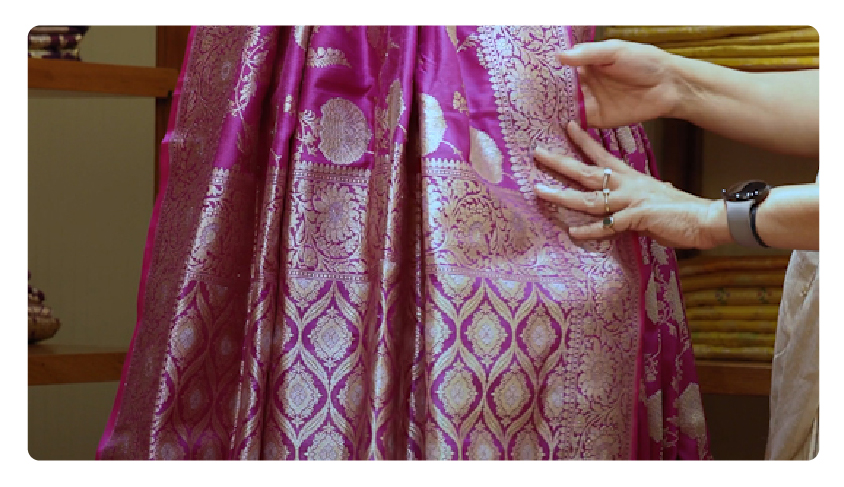
Styling: Showcasing the beautiful palla in the front, pair with a sleeveless blouse in contrasting ivory for a playful yet refined appearance or opt for a pink-on-pink combination for a more traditional bridal ensemble.
-
Royal Baingani Banarasi Saree:
This brinjal purple saree, exuding regality from every angle, is crafted from pure Katan Silk. Noting every detail, the all-over Jaangla Jaal in Sona Roopa, woven with the Kadwa weave, results in the intricately resplendent motifs all over the body. The floral creeper patterns in the gold and silver zari add regal richness to the saree. A finely spun Mulberry silk fabric, Katan silk is primarily used only in Banarasi sarees.
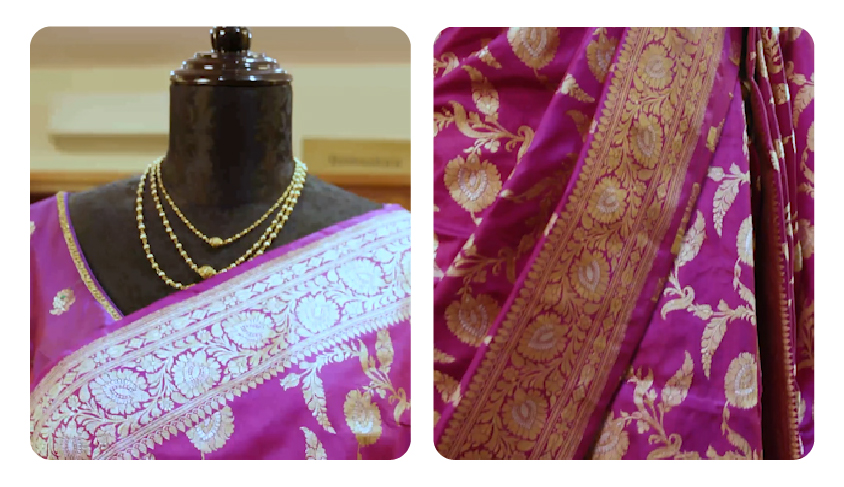
Styling: Perfect for day-to-evening transition, this saree can be styled for a traditional day event or a rich evening reception. The Sona Roopa gives the saree the versatility to be accessorised with either gold or diamond jewellery.
-
Magenta and Red Banarasi Sarees:
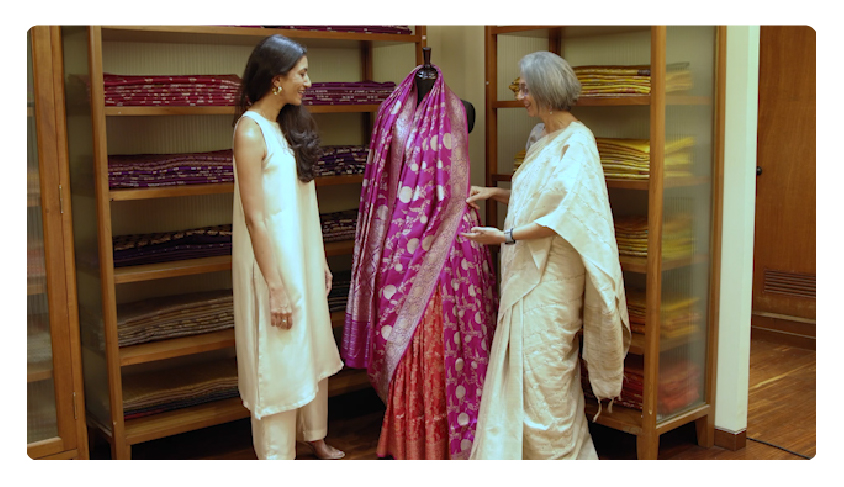
Taking in the sarees draped on the mannequin, Kausalya compliments the style as one draped by queens! Both inspired by the British era in India, the sarees behold Victorian influenced flowers like roses in a jaal. The magenta saree showcases a special pallu in twill weave with intricate kadwa woven motifs, adding to the regal depth of the saree. The Meena work and roses in gold and silver add to the grandeur of the red saree. Meenakari work is where pops of colour are added to the motifs, giving them artistic vibrance. It is said to be of immense value due to the time-consuming nature and sometimes also the usage of gold and silver.
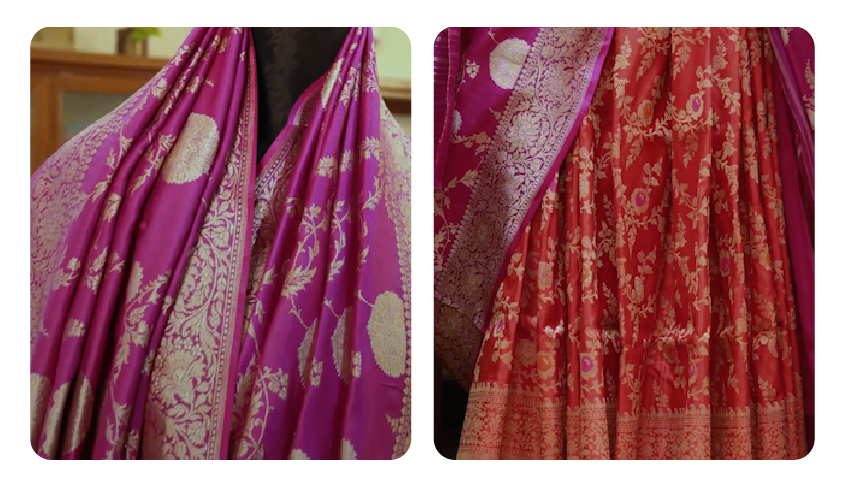
Styling: Referring to it as a Queen’s drape, Sithara has styled the red saree as a ghagra, or heavy skirt and the magenta saree as a dupatta or a half saree. Both the sarees complement each other so well in terms of the colour and the intricacy of the gold and silver motifs make it fit for royalty! Again, the gold and silver elements make it perfectly versatile for a differentiated jewellery pairing.
Being a staple in North Indian weddings, Banarasi sarees are boundless when it comes to craft, and the work put in by the artisans are always breathtaking! These are just some of the picks from Taneira’s vast range of Bridal Banarasi Sarees and every saree offers a wide variety of styling options that you can try. As Sithara and Kausalya rightfully mention, your wedding is your big day! Styling yourself on your wedding day is all about resonating your values, heritage, beliefs and everything that makes you ‘YOU’. Go with a vibe that suits you best. Be unique. Be different.
To watch the full episode, Click Here

