


The art of Eid attire: exploring Zari and embroidery in sarees
14 May, 25
 5 min read
14
May, 25


Eid is a sacred celebration of faith, gratitude, and togetherness. It is a day that embodies spiritual renewal and the bonds of community. Across India, the festival’s grandeur finds expression not just in feasts and prayers but in the elegance of traditional attire. Among the many garments worn on this auspicious day, the saree holds a special place. A six-yard canvas that carries centuries of artistry, symbolism, and sophistication.
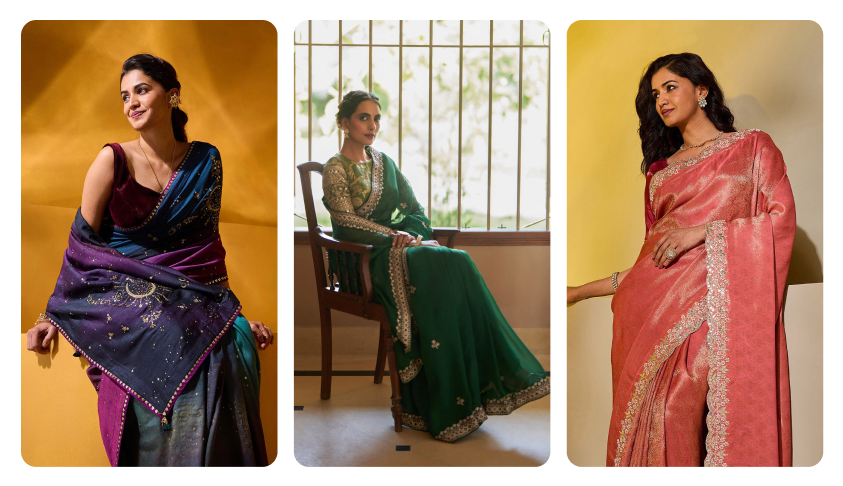
The allure of an Eid saree is elevated by its embellishments, and none capture the spirit of the occasion quite like zari and intricate embroidery. These techniques, steeped in history and craftsmanship, transform fabric into heirlooms, each stitch reflecting centuries-old heritage and the way it’s evolved to the tastes of today’s time.
The legacy of Zari: weaving gold into tradition
Zari, the art of metallic threadwork, has long been synonymous with royalty. Originating from Persia and flourishing in India under the patronage of the Mughals, this technique involves weaving fine threads of gold or silver into silk to create motifs that shimmer with majestic grandeur. Over time, real gold and silver threads have been replaced by copper and polyester alternatives, making zari-adorned sarees more accessible while preserving their visual splendour.
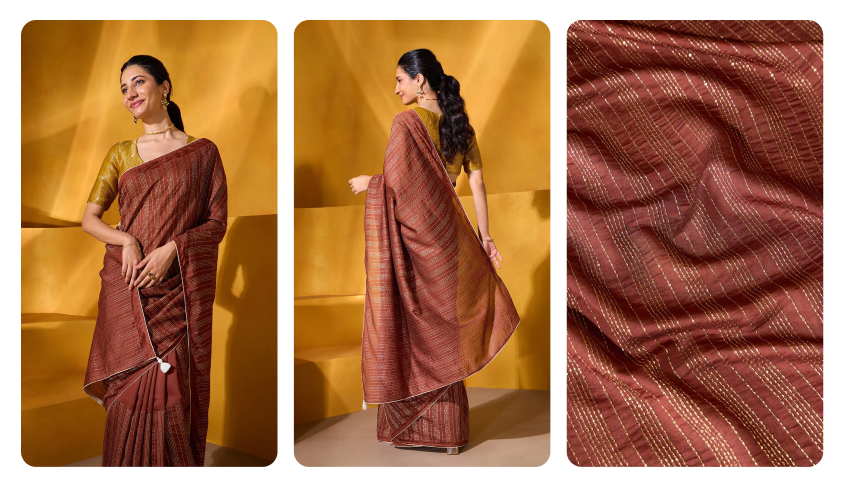
For Eid, zari work takes on a particularly auspicious role. Gold, symbolizing prosperity and festivity, is intricately woven into luxurious fabrics like Banarasi silk, Kanjivaram, Chanderi, and even cottons, transforming them into garments worthy of celebration. A Banarasi saree, for instance, with its heavy brocade zari work and Mughal-inspired floral or paisley motifs, brings out an old-world charm, while a Chanderi saree, with its delicate gold-threaded patterns on a gossamer base, is a vision of ethereal grace.
Embroidery: A tapestry of craftsmanship
While zari brings the shimmer, embroidery adds depth and character. India’s embroidery traditions are as diverse as its regions, each boasting distinct styles and techniques that turn fabric into art. During Eid, embroidered sarees become a preferred choice, their rich textures reflecting the celebratory spirit of the occasion.
Chikankari: The poetic thread work of Lucknow
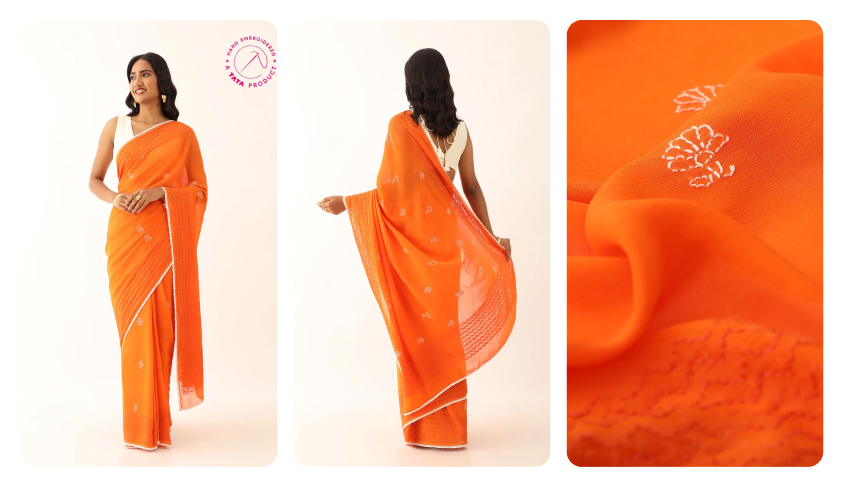
Chikankari, a craft that originated in the courts of Lucknow is delicate hand embroidery, traditionally done in white on fine muslin, chiffon, or georgette. It is a symphony of floral and paisley motifs, lace-like jaali work, and intricate stitches. The modern reinterpretation of Chikankari sees soft pastels and even metallic threads, making it a timeless choice for Eid—subtle, elegant, and steeped in heritage. The Orange Pure Silk Georgette Lucknow Chikankari Saree beautifully represents this tradition, with fine needlework that enhances the smooth drape of silk georgette, and makes it a stunning option for Eid festivities.
Gota-patti: The gleam of Rajasthani grandeur
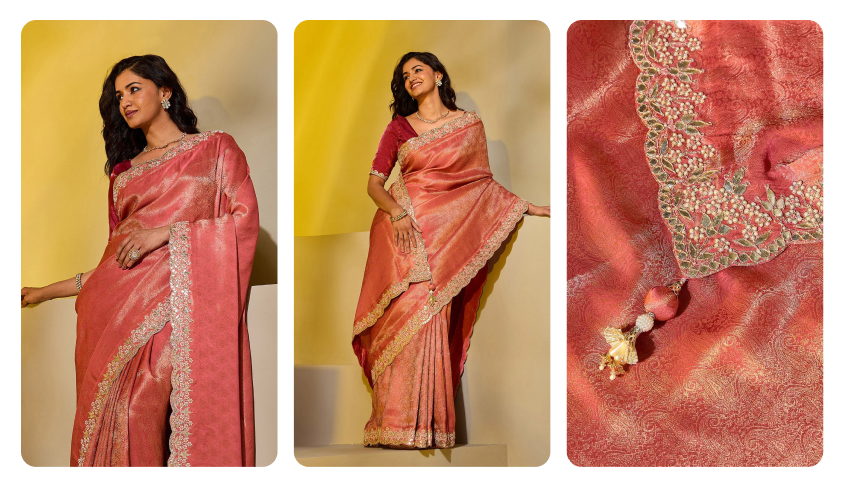
Gotapati, a Rajasthani specialty, transforms fabric into a tapestry of light and opulence. Thin ribbons of gold and silver are appliquéd onto silk, georgette, or chiffon to form elaborate patterns, lending a three-dimensional brilliance to the fabric. This embroidery, often seen on vibrant sarees, makes for a striking Eid ensemble— regal yet festive, a celebration of India’s royal textile traditions. The Light Pink Viscose Tissue Gotapati Saree is a graceful example of this artistry, with its shimmering motifs that reflect the joyous spirit of Eid.
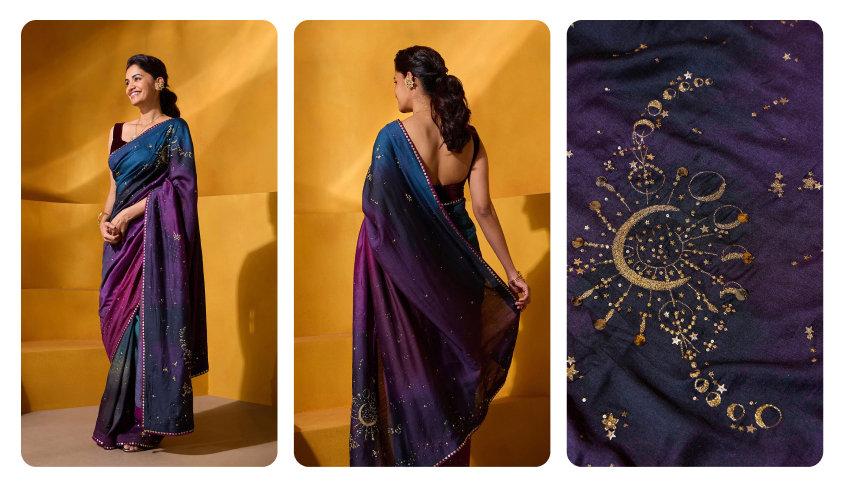
Choosing the perfect Eid saree: A balance of tradition and personal style
While zari and embroidery are cornerstones of Eid sarees, selecting the right one requires a balance of tradition, comfort, and personal style. Some may gravitate toward the opulence of a Zardozi-laden Banarasi, while others may prefer the delicate allure of a Chikankari drape.
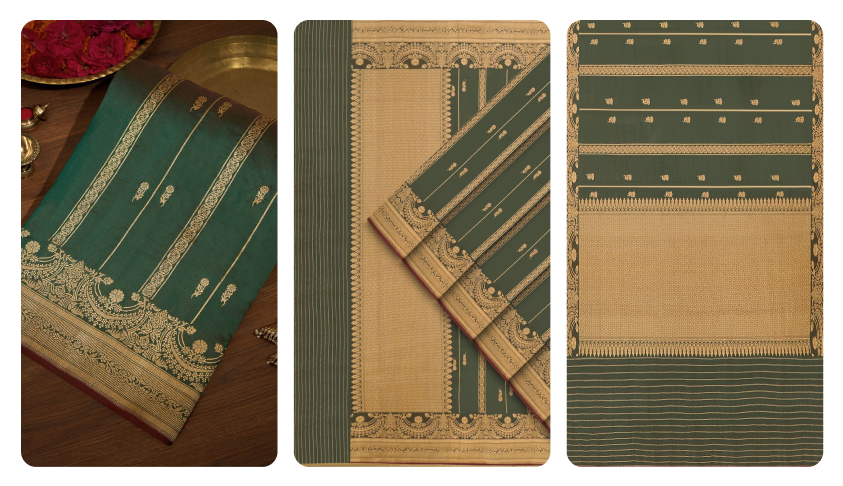
For those who seek a regal touch, the Dark Green Pure Silk Kadwa Banarasi Saree offers a breathtaking combination of heritage and grandeur, with its intricate gold zari work set against a deep, rich hue— perfect for making an elegant statement. The Black Pure Silk Kadwa Banarasi Saree, with its timeless black-and-gold contrast and zari work, embodies sophistication suited for evening Eid celebrations.
Colour also plays a crucial role. Rich jewel tones like emerald green, deep maroon, and royal blue are shades that are eternally in style, while pastels and neutrals reflect a contemporary elegance.
Preserving the craft: A commitment to handwoven heritage
While Eid sarees celebrate beauty, they also carry a responsibility. To preserve the crafts and artisans who bring them to life. Handloom and handcrafted textiles require patronage to thrive in a world increasingly driven by mass production. Investing in an authentic zari-woven Banarasi or a hand-embroidered organza saree is not merely a fashion choice; it is a nod to centuries of heritage and the artisans who sustain these traditions.
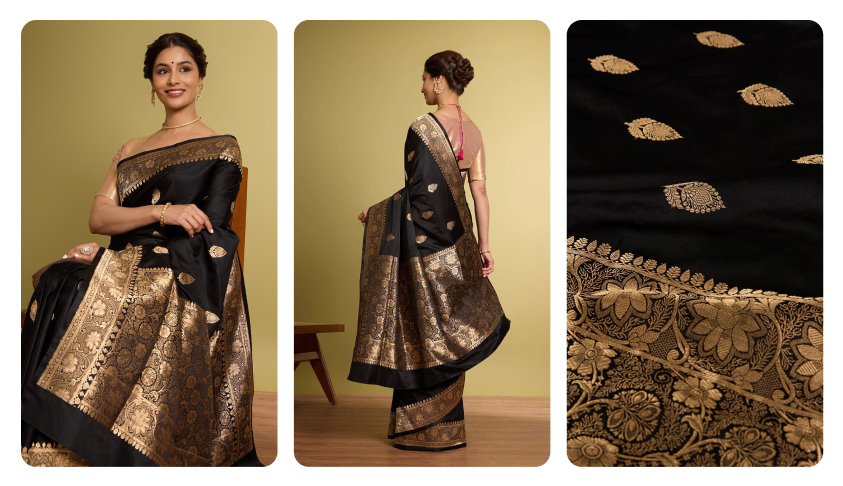
An Eid saree is more than fabric. It is history, artistry, and festivity woven into one. Whether shimmering in zari’s golden embrace or adorned with the intricate strokes of embroidery, each saree tells a story of cultural splendour. This Eid, as you drape yourself in a six-yard masterpiece, remember, you don’t just wear an outfit; you carry forward a legacy— one woven with threads of devotion, celebration, and timeless elegance.
Discover the perfect saree for this special occasion at www.taneira.com or visit your nearest Taneira store to experience the richness of handwoven craftsmanship in person!

