Ethnic Wear for Beginners: How Kurta Sets Solve the 4 Biggest Styling Struggles
You have a festival coming up, a colleague's wedding, or simply a wish to wear more Indian clothes. Then you stand in front of the mirror and the questions start. Which pants go with this? What do I do with the dupatta? Why does this look so different on me?
Almost everyone starts here, and almost every problem has a simple answer. Here are the four struggles that trip up beginners, why they happen and how a well-made kurta set solves each one, with five pieces from Taneira's kurtas and kurta sets to start with.
Starting with a set is the quickest way to learn. Once you have worn a few, you will notice which colours you reach for, which necklines suit you and how long you like a kurta to be. Those lessons make every single kurta you buy afterwards easier to style, and you will stop buying pieces that never leave the hanger.
The Four Struggles at a Glance
| Struggle | Why it happens | How a kurta set solves it |
|---|---|---|
| Matching the pieces | Kurta, bottoms and dupatta bought separately rarely agree in colour or proportion | The pieces are designed together |
| Managing the dupatta | It slips, tangles or feels like one more thing to hold | Sets come with a dupatta chosen for the outfit, and some come without one |
| Getting the proportions right | Kurta length and bottom width fight each other | Bottoms are cut for the kurta's length |
| Knowing what suits the occasion | It is hard to judge what is too casual or too dressy | Fabric and craft signal the occasion clearly |
1. Matching the Pieces
The most common beginner mistake is a kurta, pants and dupatta that each look lovely and never quite agree. A set removes the guesswork: the colours are chosen together, and contrasts, such as a pink dupatta on a yellow kurta, are deliberate.
Your First Set: Sunshine Yellow Cotton with a Pink Dupatta
A bright yellow cotton kurta with pintucks at the yoke and small woven buttis, matching yellow pants and a pink dupatta finished with tassels. The yellow-and-pink pairing is a classic, and seeing it put together for you is the quickest way to learn how contrast works.
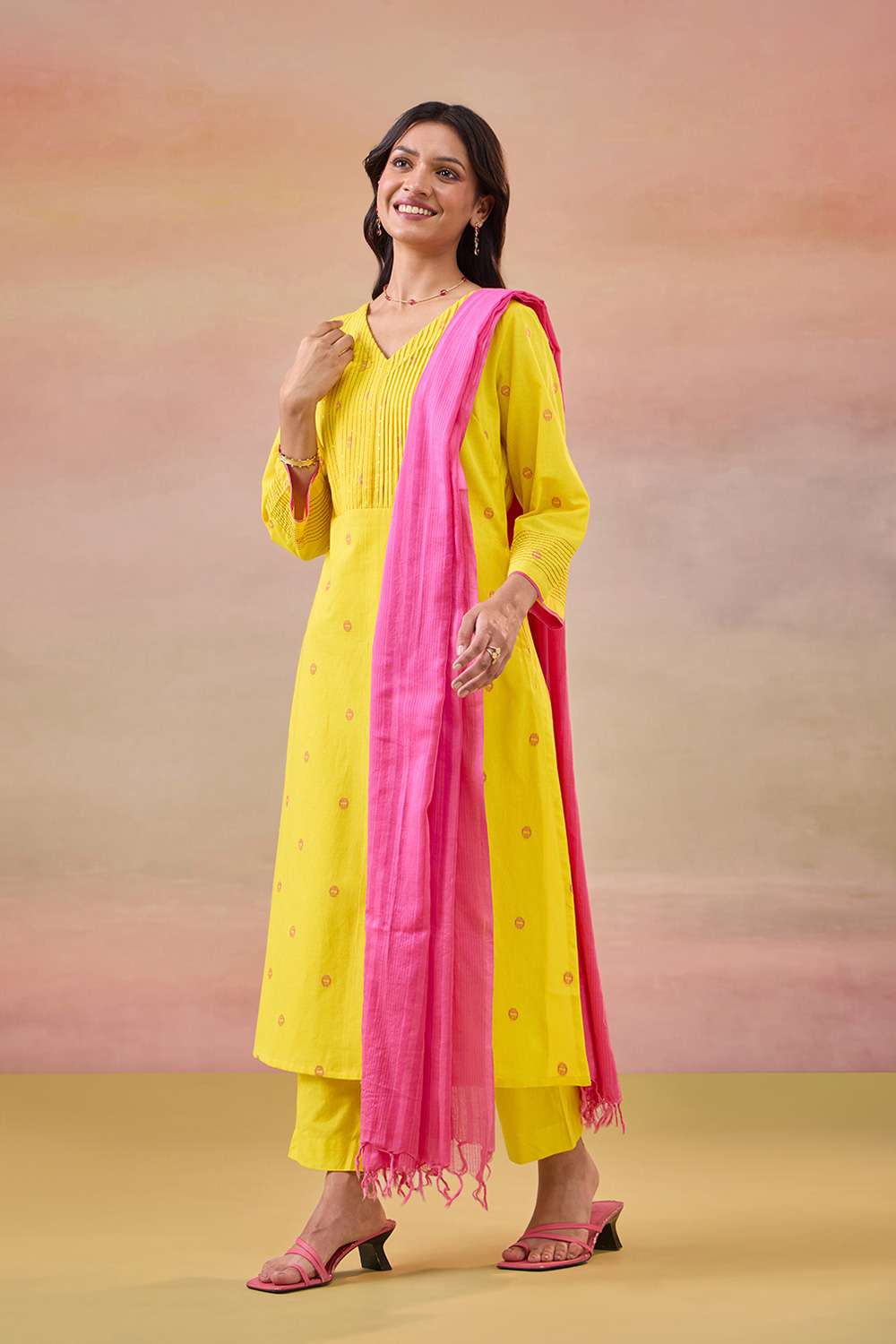
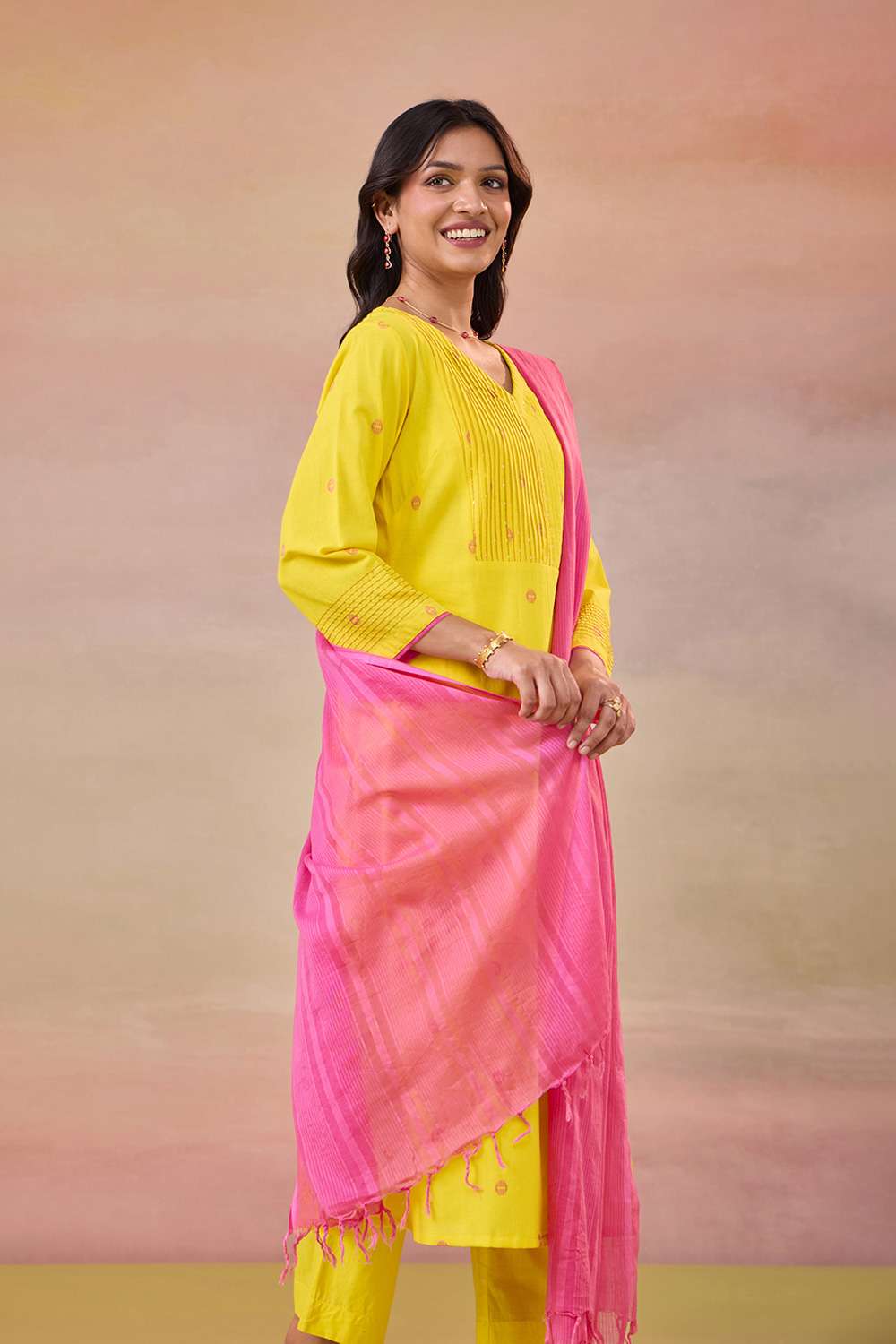
Pink block heels, small gold jhumkas and a few glass bangles. It suits a daytime puja, a haldi or a festive lunch.
2. Managing the Dupatta
A dupatta that keeps slipping is the most tiring part of ethnic wear. Three drapes cover almost every occasion:
- Over one shoulder. Fold it lengthways and let it fall from your left shoulder to the back, pinned once under the fold. The everyday drape.
- Across both shoulders. Lay it across your back with the ends falling in front. Traditional and graceful for a puja.
- Over one arm. Drape it over your forearm like a stole. Easy for photographs and long evenings.
If you would rather skip it, choose a set without a dupatta, or a single kurta.
No Dupatta Needed: Black Ajrakh Cotton
A black cotton kurta with panels of ajrakh print in blue and rust running down the front, worn with indigo pants. Ajrakh is a resist and block-printing craft from Kutch and Sindh with deep roots in western India, and its geometric patterns are bold enough that the outfit needs nothing more. The set comes without a dupatta.
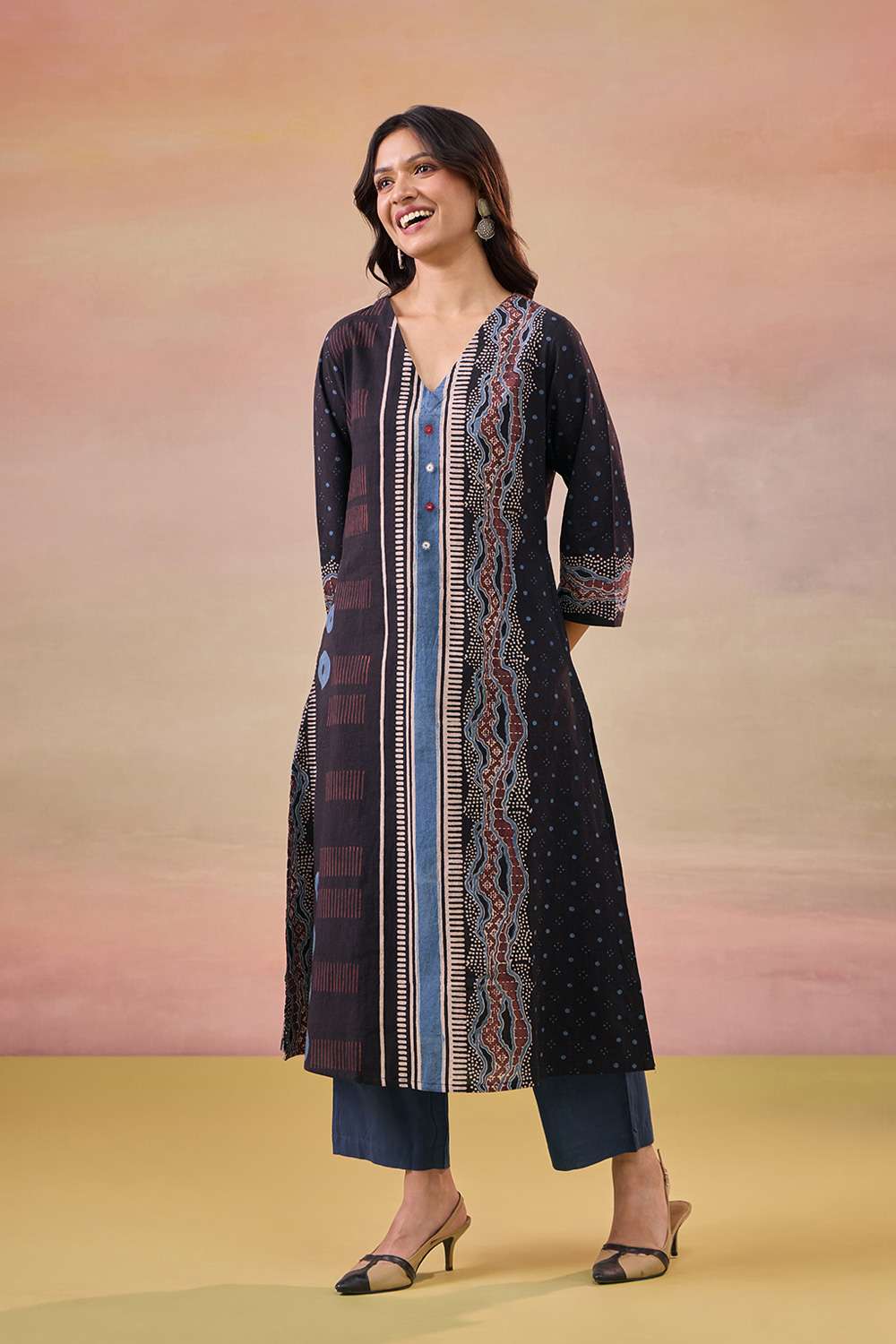
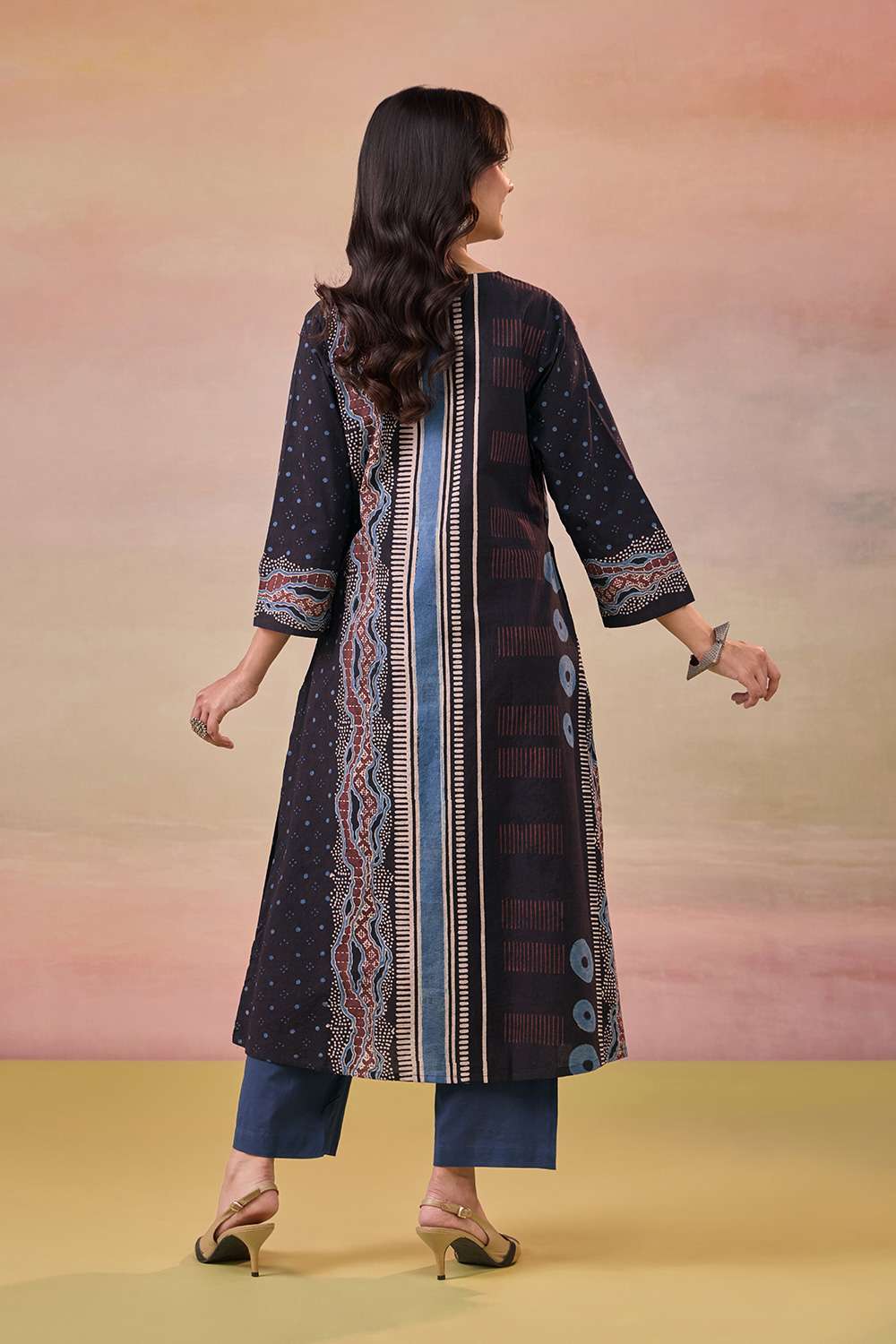
Silver jhumkas and black block heels. It moves easily from an office day to an evening exhibition.
3. Getting the Proportions Right
Proportion is about balance. A long, flowing kurta looks best with slim, straight pants; a short kurta can carry wider bottoms. When you buy a set, that balance is already built in. When you buy a single kurta, the rule is simple: keep one piece slim.
A Kurta to Build Around: Red Ajrakh Cotton
A brick red striped cotton kurta printed with large ajrakh lotus motifs, sold on its own. The product images pair it with wide black pants, a good example of the balance rule: a straight kurta can take a wider bottom. Browse Taneira trousers for neutral pairs.
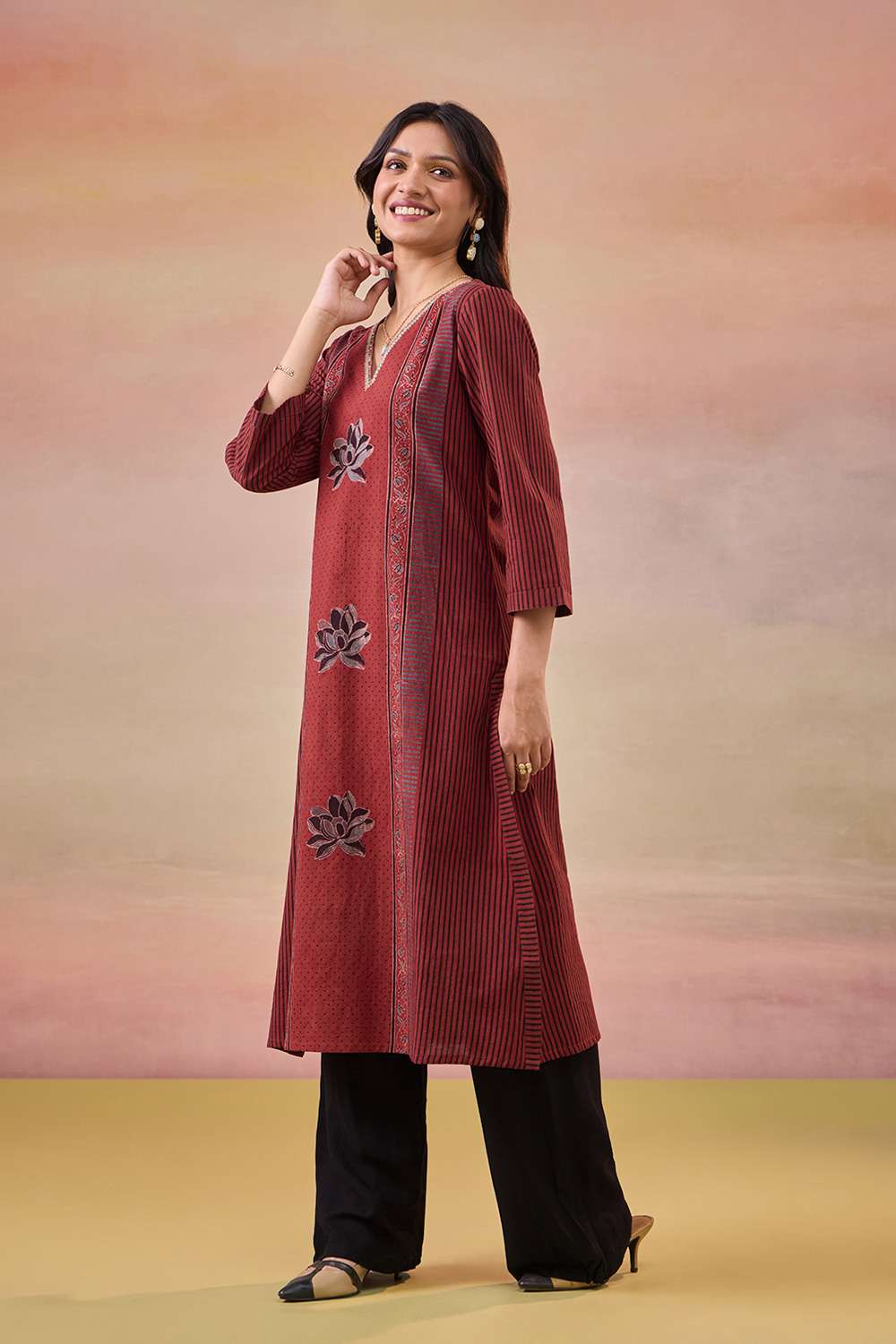
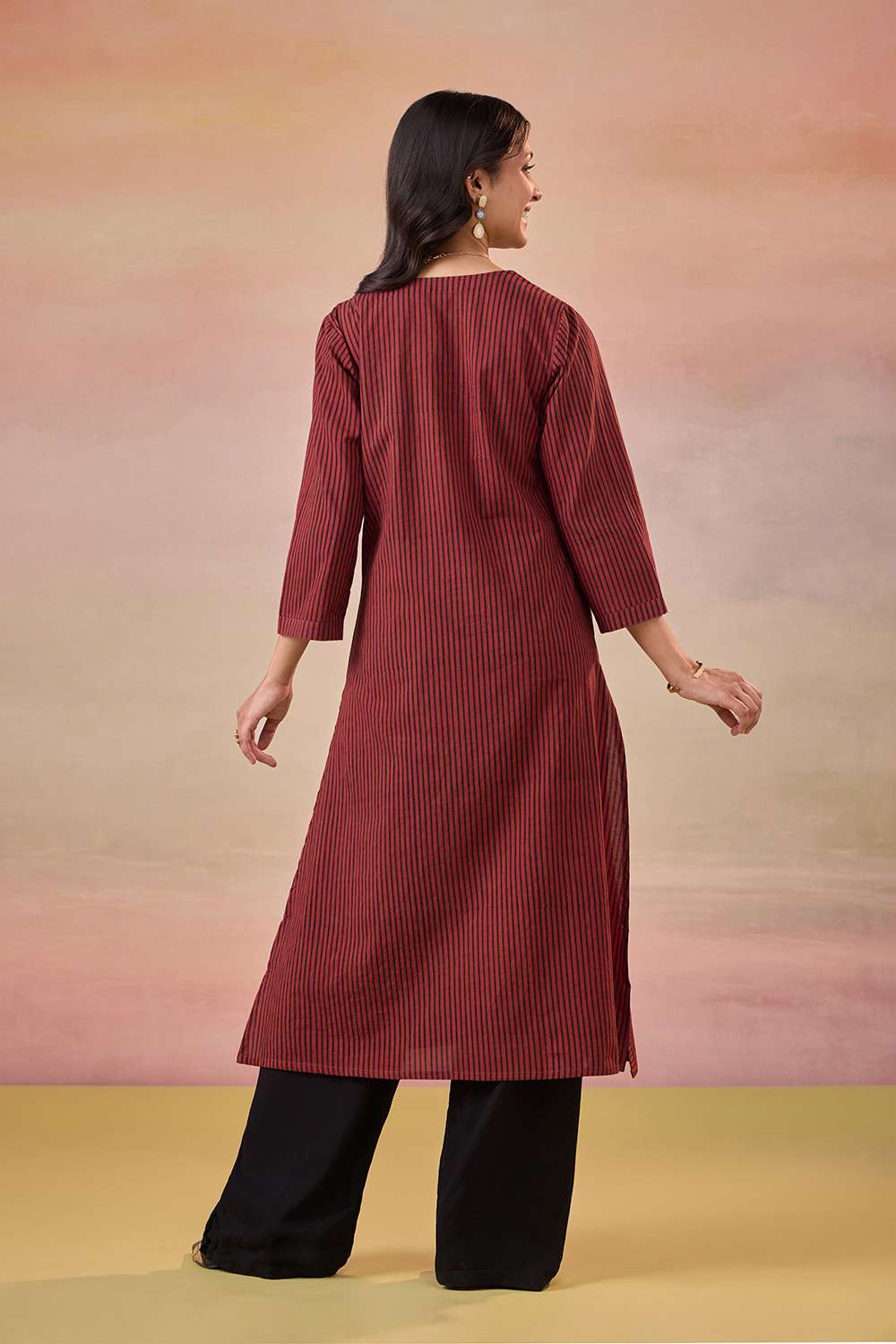
Black pants, black block heels and silver earrings. Swap the black pants for white on a summer weekend.
For a Slimmer Line: Plum Cotton with Churidar
A plum striped cotton kurta with an embroidered V-neck yoke and side slits, sold as a kurta. The product images pair it with beige churidar, which keeps the line long and lean beneath a knee-length kurta.
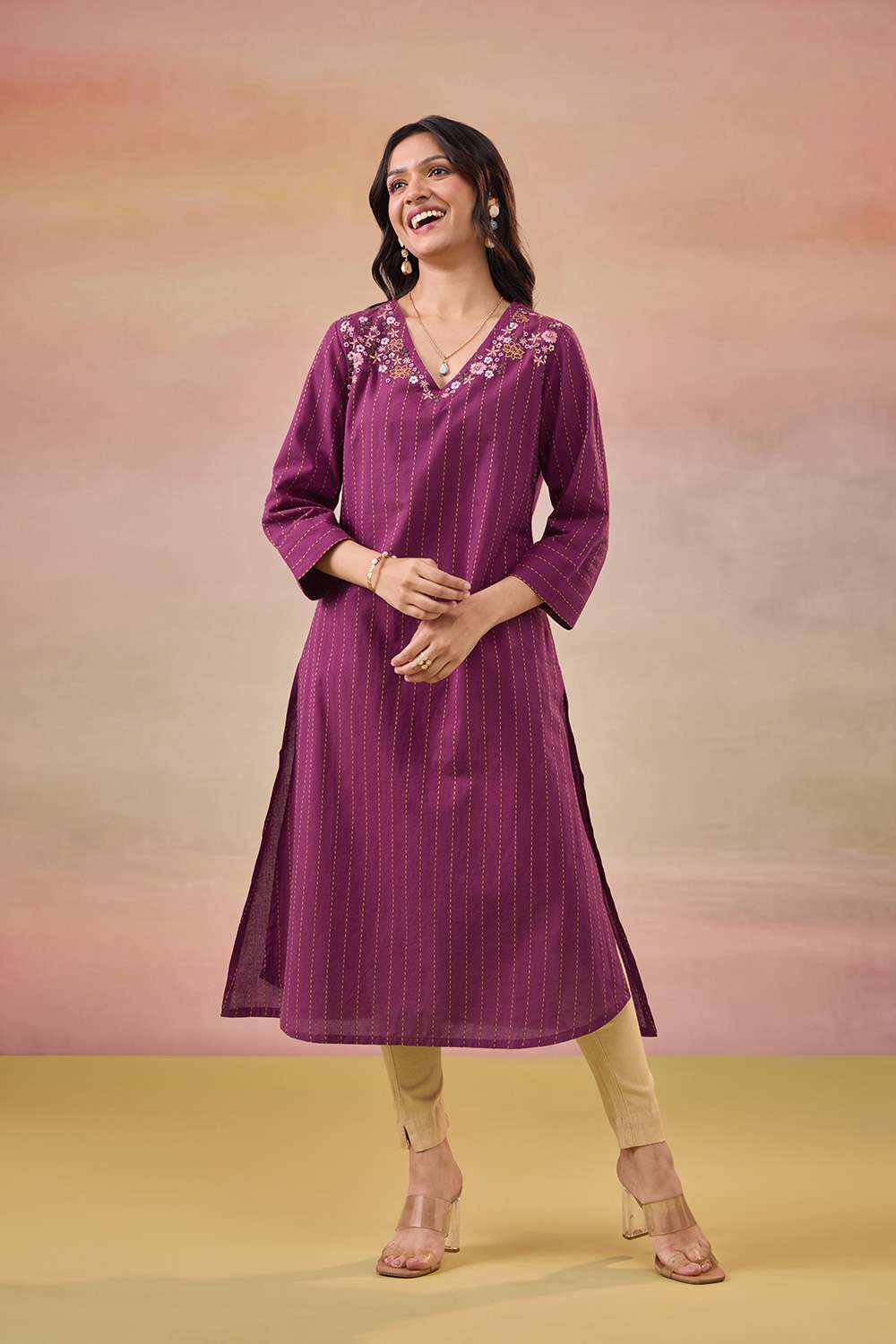
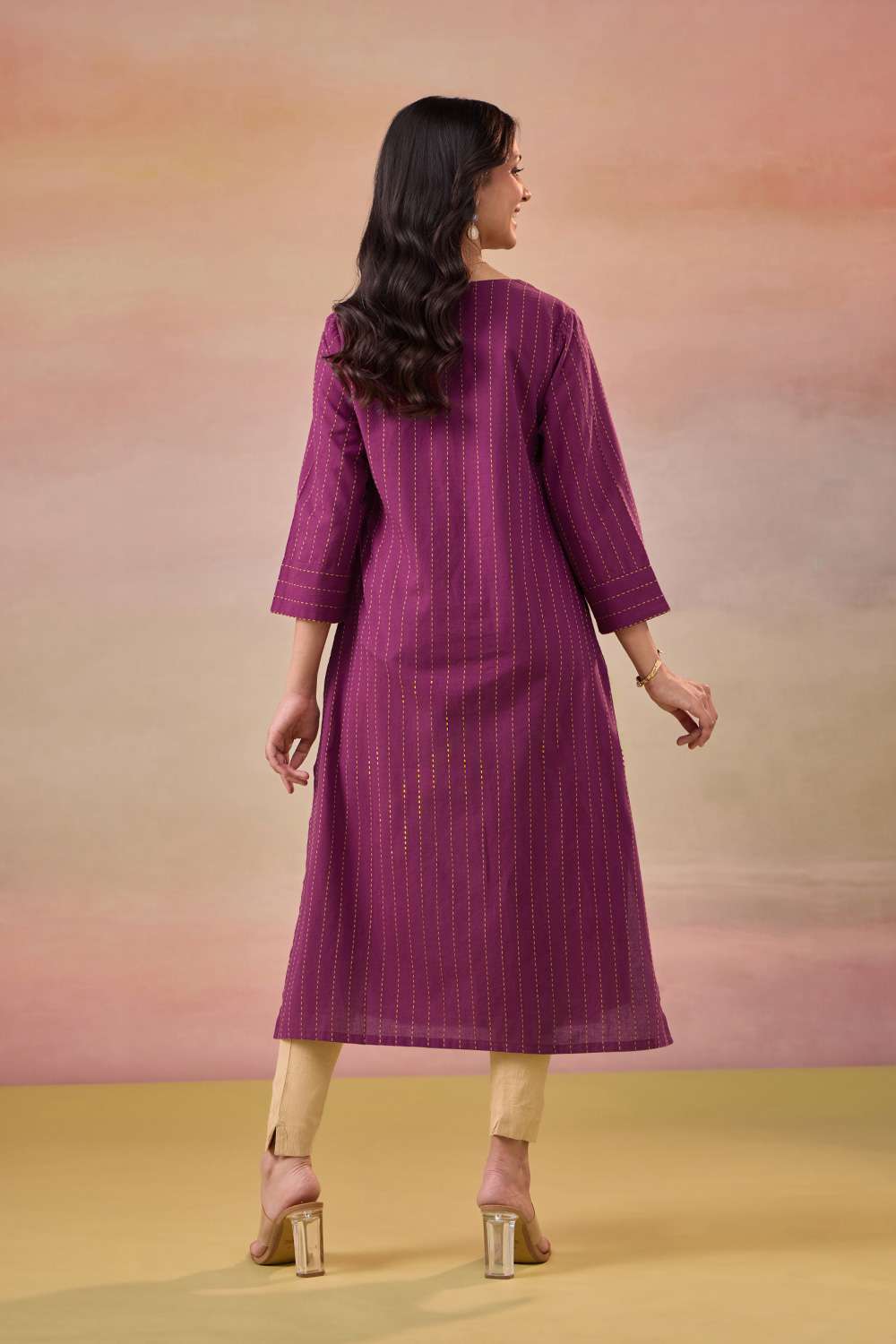
Beige churidar or leggings, nude heels and small gold studs. Ideal for an office day or a family visit.
4. Knowing What Suits the Occasion
The fabric and craft tell you most of what you need to know.
| You see | It usually means | Wear it to |
|---|---|---|
| Printed cotton, ajrakh, dabu | Everyday and casual | Work, weekends, travel |
| Woven cotton with buttis | Smart casual | Lunches, daytime pujas |
| Embroidered viscose or silk cotton | Festive | Festivals, weddings, parties |
| Brocade and zari-look dupattas | Dressy | Ceremonies, receptions |
When It Needs to Be Festive: Berry Viscose with an Embroidered V-Neck
A berry red viscose kurta with an embroidered V-neckline and cuffs, matching pants and a dupatta in the same berry scattered with small buttis. It is unmistakably festive, and the tonal colour makes it easy to style.
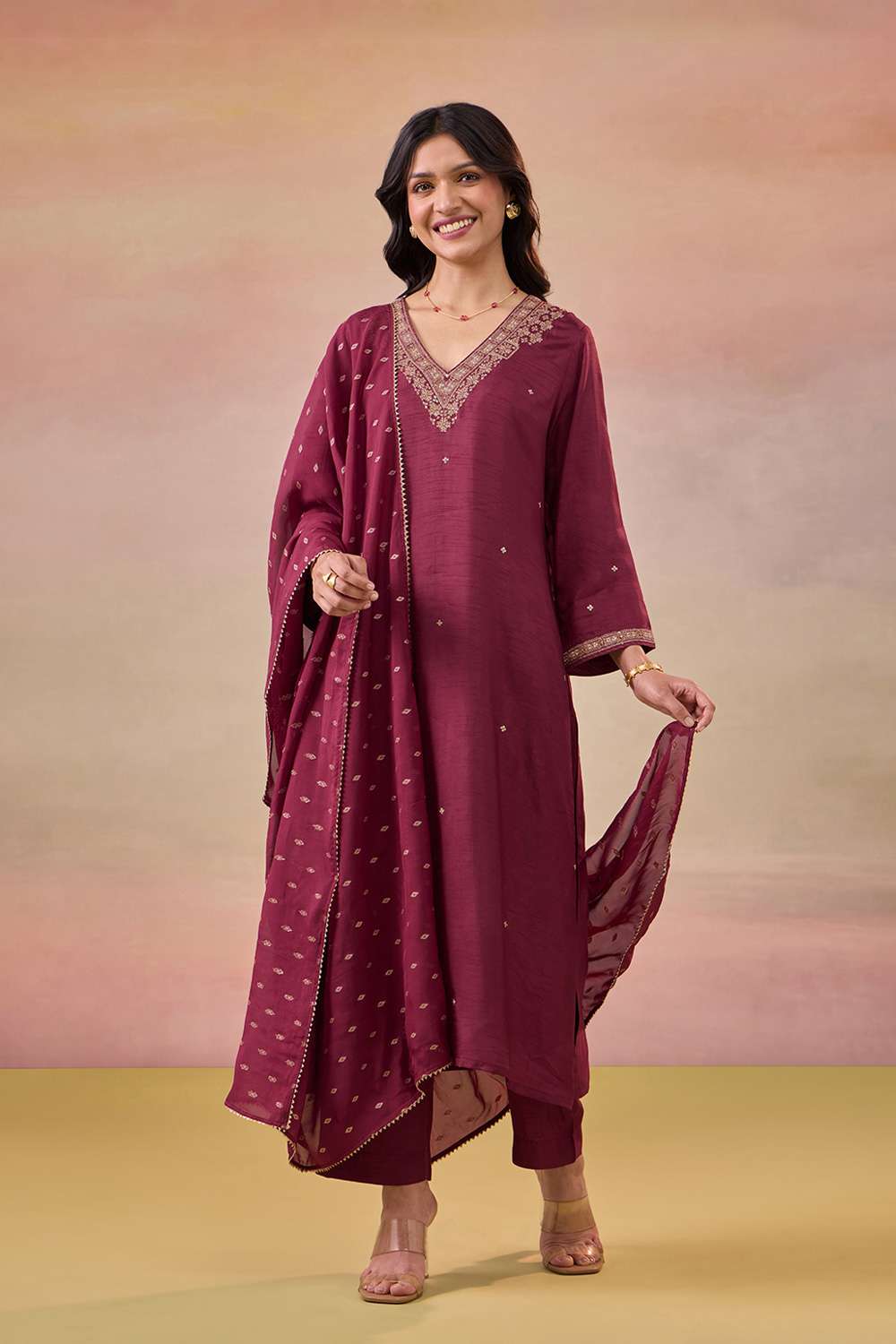
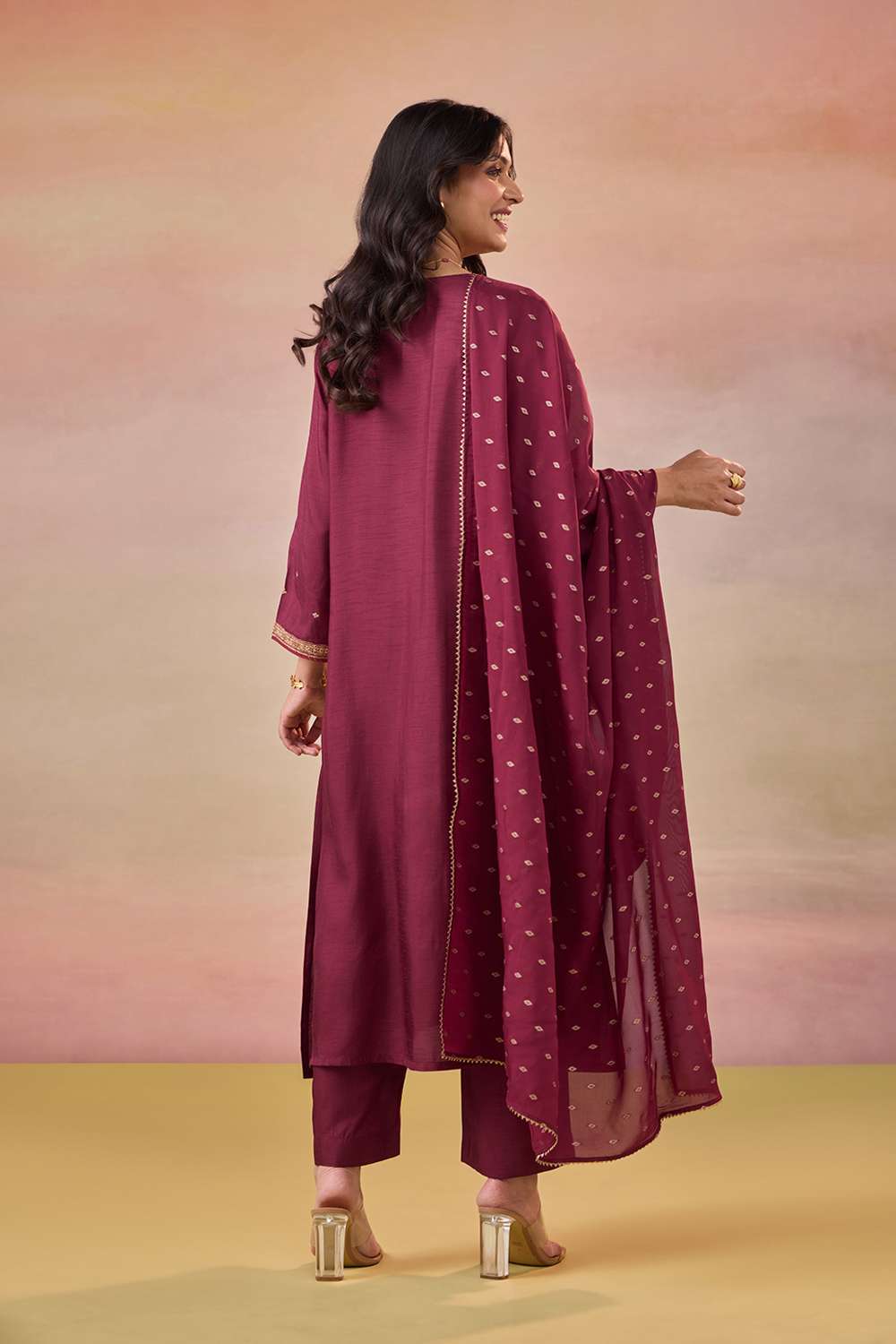
Gold chandbalis and gold heels for a wedding; smaller jhumkas for a Diwali puja.
Explore Cotton Kurtas
Printed, ajrakh and woven cotton kurtas for easy everyday dressing.
A Five-Piece Beginner Wardrobe
You do not need much to start. These five pieces cover most occasions in a year.
| Piece | What to choose | Wear it to |
|---|---|---|
| A festive set | Embroidered viscose or silk cotton with a dupatta | Festivals, weddings, pujas |
| A printed cotton kurta | A straight cut in a print you love | Work, weekends, travel |
| A craft kurta | Ajrakh, dabu or block print | Smart-casual days, exhibitions, lunches |
| Neutral pants | White, black or beige straight pants | With every single kurta |
| A versatile dupatta | Sheer, in a colour that lifts your plain kurtas | Turning everyday into festive |
Start with Taneira's printed kurtas for everyday pieces and the embroidered kurtas for festive ones. For fluid, easy-care sets, the viscose kurtas are a good place to look.
Reading the Fabric Label
- Cotton is a natural fibre: breathable, matte and the easiest everyday choice.
- Silk cotton blends the two fibres for a light fabric with a gentle sheen.
- Viscose and rayon are made from plant cellulose. They drape smoothly and feel soft, and they suit festive and travel wear.
- Craft on the label, such as embroidered, ajrakh, dabu or printed, tells you how the pattern was made and hints at the occasion.
Jewellery Basics
- Jhumkas go with almost every kurta, everyday or festive.
- Silver and oxidised pieces suit cotton, ajrakh and block prints.
- Gold suits embroidered viscose and silk cotton.
- One statement at a time. If the neckline is embroidered, choose earrings and skip the necklace.
Care Basics
Read the care label: many embroidered sets are dry clean only. For everyday cotton, wash in cold water, inside out, and dry in the shade so prints keep their colour. Hang kurtas so the shoulders keep their shape, and fold dupattas loosely.
Common First-Time Mistakes
- Buying by the photo alone. Check the fabric and the care label. A beautiful viscose set that needs dry cleaning may not suit daily wear.
- Choosing a size by the waist. Kurtas fit at the bust and shoulders. Size by those, and the rest follows.
- Pairing busy with busy. A printed kurta with printed pants and a printed dupatta is hard to pull off. Keep two of the three plain.
- Skipping the trial. Wear it at home for half an hour, sit down in it, walk the stairs.
Your First Few Occasions
| Occasion | Wear | Add |
|---|---|---|
| Diwali at a friend's home | An embroidered set with a dupatta | Jhumkas and a few bangles |
| A colleague's wedding | A festive set in a jewel tone | Statement earrings, heels |
| Ethnic day at work | A printed or craft kurta set | Silver earrings, flats |
| A weekend lunch | A single printed kurta with neutral pants | Sneakers or kolhapuris |
Your Beginner Checklist
- Start with one set and one single kurta. The set for festive days, the kurta for everything else.
- Buy one pair of neutral pants. White, black or beige, to pair with any single kurta.
- Choose your size by the bust and shoulders. Check the shoulder seam sits at the edge of your shoulder.
- Practise the dupatta once. Pin it at home before the day.
- Pick two pairs of shoes. Flats or block heels for every day, embroidered juttis or heels for festive.
When you are ready for more, our guide to pairing bottoms with kurtas explains every combination. For craft-led everyday pieces, browse Taneira's block printed kurtas.
Start with a Kurta Set
Easy, matched kurta sets and single kurtas for your first steps into ethnic wear.
Frequently Asked Questions
What should a beginner buy first in ethnic wear?
A kurta set for festive days and a single printed cotton kurta with a pair of neutral pants for everyday wear. Sets take the guesswork out of matching.
How do I wear a dupatta without it slipping?
Fold it lengthways, drape it from one shoulder to the back and pin it once under the fold. For a puja, drape it across both shoulders.
Which pants go with a long kurta?
Slim, straight pants or churidar. Keep one piece slim: a flowing kurta with slim bottoms, or a straight kurta with wider pants.
How do I know if a kurta is casual or festive?
Printed and block-printed cotton is everyday wear; embroidered viscose or silk cotton is festive; brocade and zari-look details are dressy.
What is ajrakh print?
A resist and block-printing craft from Kutch and Sindh, known for deep indigo, red and black geometric patterns.
Can I wear a kurta set without a dupatta?
Yes. Many everyday sets are sold without one, and festive sets look modern with the dupatta left off for a cocktail evening.

