A Voyage Into The World Of Indigo
28 January, 24
 5 min read
28
Jan, 24


In the world of natural dyes, indigo emerges as the poster child. Its deep blues - the most lightfast colours of all - were for many centuries considered a prized luxury the world over. The dye’s name is thought to give away its origin and intrinsic ties to India, where its mother plant, Indigofera tinctoria, grows in abundance.
Indigo in India
Indigo-dyed textiles have existed for thousands of years in different parts of the world including Eastern Asia and Africa. In India, the first evidence of the use of indigo dates back as early as the 4th century BC. The tropical climate and abundant natural resources favourable for the cultivation of the Indigofera tinctoria plant led to indigo being traded from India as a luxurious commodity to the Greeks and Romans, and eventually to the Western world in the late 15th century. As exports of Indian indigo skyrocketed, the dye even earned its name Blue Gold and enjoyed unmatched precedence until synthetic blue dyes were invented. After a brief hiatus, traditional indigo cultivation and dyeing techniques are experiencing an enthusiastic revival. The dye appears as a popular choice for handcrafted sarees where its coveted blue colour finds unwavering love amongst the younger and older generations for casual, formal, and festive occasions alike.
Making of Blue Gold
Unlike other natural colours, indigo dyeing is an arduous, time-consuming process. Freshly harvested leaves, which haven’t yet sprouted pink flowers, stay submerged in large tanks of water for days together. They ferment, leaving the water yellow-green and frothy. The leaves are then removed, and the water is whisked continuously, causing the liquid to eventually turn blue. Allowed to rest, the blue sludge settles at the bottom, and is later dried and packed into cakes or ground into fine powder for further use. This indigo can’t yet be used for dyeing and is mixed with reducing sugars like wheat bran or fructose and alkaline materials like calcium hydroxide and soda ash to create a dye vat. Over days or even weeks, the vat develops a coppery sheen, indicating its readiness for use. As pre-prepped fabrics, including sarees, get immersed into this vat, they develop a pale green hue, which slowly turns blue on oxidation in open air. This gradual change in colour is a magical sight to behold.
Indian Textile Crafts & Indigo Sarees
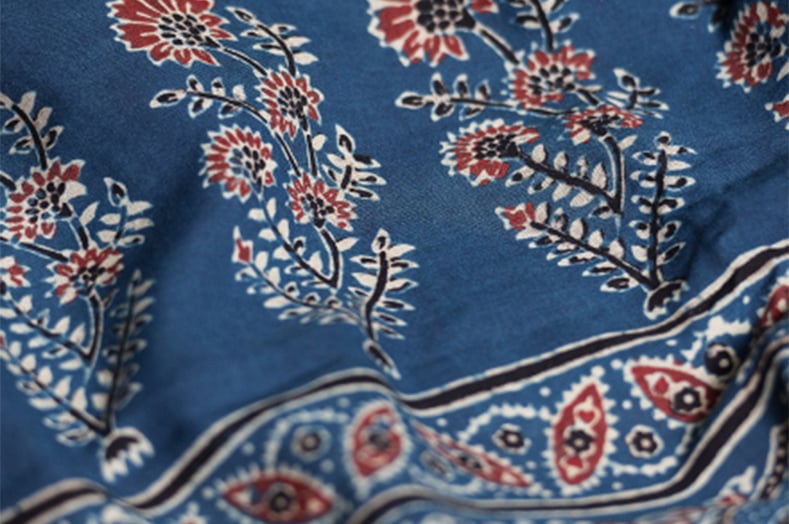
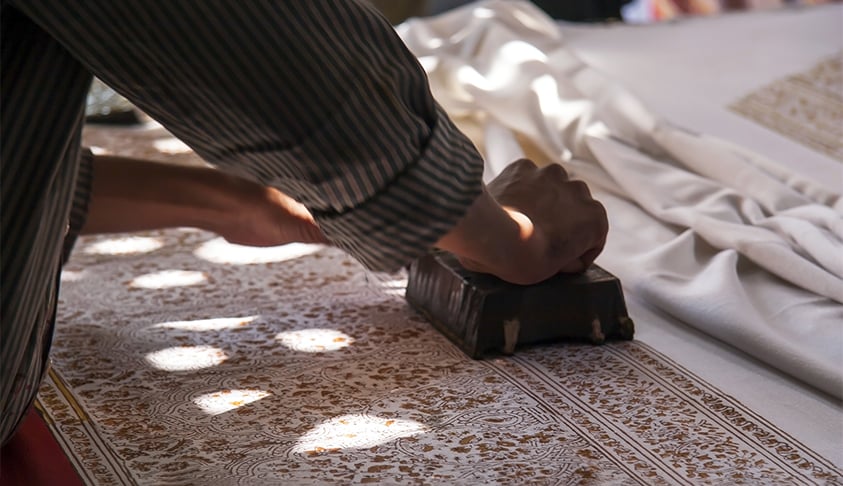
India’s contribution to the world of indigo-dyed textiles remains unparalleled. Traditional block printing and tie-dye crafts of Gujarat and Rajasthan have all used this natural colour in abundance to carve a niche for themselves over many centuries. The quintessential indigo saree with off-white prints on an enchanting blue canvas typically results from Dabu, a mud-resist block printing technique. Artisans use a resist paste made of clay, wheat chaff, guar gum, and lime to veil the saree from indigo in the dyeing pot. Upon curing and washing, the paste dissolves, revealing enchanting prints.
The coveted blue of indigo is one of the hallmark colours of Ajrakh, the others being deep crimson hues of madder or alizarin and sharp black outlines achieved using iron. Ajrakh’s hand-block prints are famed for their intricate latticework-inspired patterns of flowers and geometric shapes, which are often mirrored on the reverse side of the saree through a technique known as Bopari.
Indigo is also a well-loved colour in Bagru, a hand-block printing craft known for its splendid motifs that include floral buttis, geometric designs, and religious symbols borrowed from natural surroundings and Rajasthan’s rich cultural heritage. Blending seamlessly with the classic Syahi (black) and Begar (red) colours, the blue lends an ethereal appeal to drapes printed using the Bagru technique.
Bagh, the traditional hand-block printing craft of Madhya Pradesh, follows Bagru’s suit, employing indigo as a paste for direct printing on an off-white saree base or as a dye that sets a blue canvas for contrasting colour prints.
Beyond Blue
The charm of indigo blues remains unparalleled, and yet, artisans have long used the dye with other natural colours to create stunning hues that are hard to mimic with synthetic dyes. The red of madder interacts with indigo to give birth to a rich purple hue. When overdyed with yellow pomegranate rinds or myrobalan, indigo sarees develop a mesmerising green hue.
A Unique Indigo Saree To Call Your Own
Handcrafted indigo sarees are a world of their own. Woven in cotton, linen, silk, or a blend, these drapes serve as versatile choices for occasions ranging from formal gatherings to casual outings and festive celebrations. Taneira’s indigo saree collection encompasses distinctive designs in a myriad of blue hues to cater to classic saree enthusiasts as well as contemporary admirers. From breezy printed drapes to luxe hand-painted and embroidered party wear sarees, explore the range from the comfort of your home at www.taneira.com or visit a store near you today.

