The Sacred Red Border: Why the Bengali Laal Paar Saree Is the Soul of Durga Puja and Weddings
Ashtami morning, a little after nine. The dhak is already going, the conch has sounded, and the pandal is filling with women waiting to offer anjali. Look along the line and you will see it again and again: white or ivory saree, red border, red bindi, shankha and pola on the wrists. Nobody planned it. It is simply what Bengal wears to meet the goddess.
That saree is the laal paar, literally the red border. This guide explains what it means, the days it is worn, the weaves it comes in, and how to drape it the Bengali way, with red-bordered sarees from Taneira's Bengali sarees and beyond.
What Makes a Saree Laal Paar
A laal paar saree has a white, ivory or off-white body and a red border, usually with a red or red-striped pallu. That is the whole definition, and within it there is enormous variety: undyed silk or crisp cotton, a fine line of red or a border a hand-span deep, a plain body or one scattered with small motifs.
| Part | What it usually looks like | What it carries |
|---|---|---|
| Body | White, ivory or the natural off-white of undyed silk | Purity; the colour of the shankha, the conch-shell bangle |
| Border (paar) | Red or deep maroon, from a fine line to a broad woven band | Shakti, the power of the goddess; marriage and sindoor |
| Pallu | Red stripes, a red block, or motifs woven in red | The part that falls over the shoulder and frames the face |
Read together, the two colours echo the shankha and pola a married Bengali woman wears on her wrists: white conch and red coral or lac, side by side. The pairing is so recognisable that it now appears well beyond Bengal's own weaves; browse Taneira's white sarees and you will find red borders on Chanderi, Maheshwari and Banarasi silk too.
The Days It Is Worn
| Occasion | What happens | Why laal paar |
|---|---|---|
| Ashtami anjali | Women offer flowers to Durga on the eighth day of the puja | The most formal puja morning; many wear their best silk |
| Sindoor Khela | On Vijaya Dashami, married women offer sindoor to the goddess, then smear it on each other | Red border, red sindoor: the saree is part of the ritual's look |
| Kojagari Lakshmi Puja | The full-moon Lakshmi Puja after Durga Puja, kept at home in many Bengali families | A traditional, auspicious saree for a home puja |
| Poila Baishakh | The Bengali New Year, in April | New clothes, and for many, a new red and white saree |
| Weddings | Rituals before and after the wedding; the bride's mother, aunts and sisters | Rich red-bordered silks are long-standing choices for wedding rituals |
For Sindoor Khela in detail, from the drape to the shankha-pola, see our Sindoor Khela styling guide. For the season's other days, browse Taneira's Pujo sarees.
Five Red Borders for the Season
For Ashtami Anjali: Off-White Chanderi with a Chequered Red Pallu
An off-white silk cotton Chanderi with small gold buttis across the body and a fine red-and-gold border. The pallu is the showpiece: a grid of small red diamonds between red and gold stripes, like a woven chequerboard. Chanderi is light and slightly sheer, which matters on a warm morning in a crowded pandal, and the tested zari gives it just enough sheen for the most formal puja of the year.
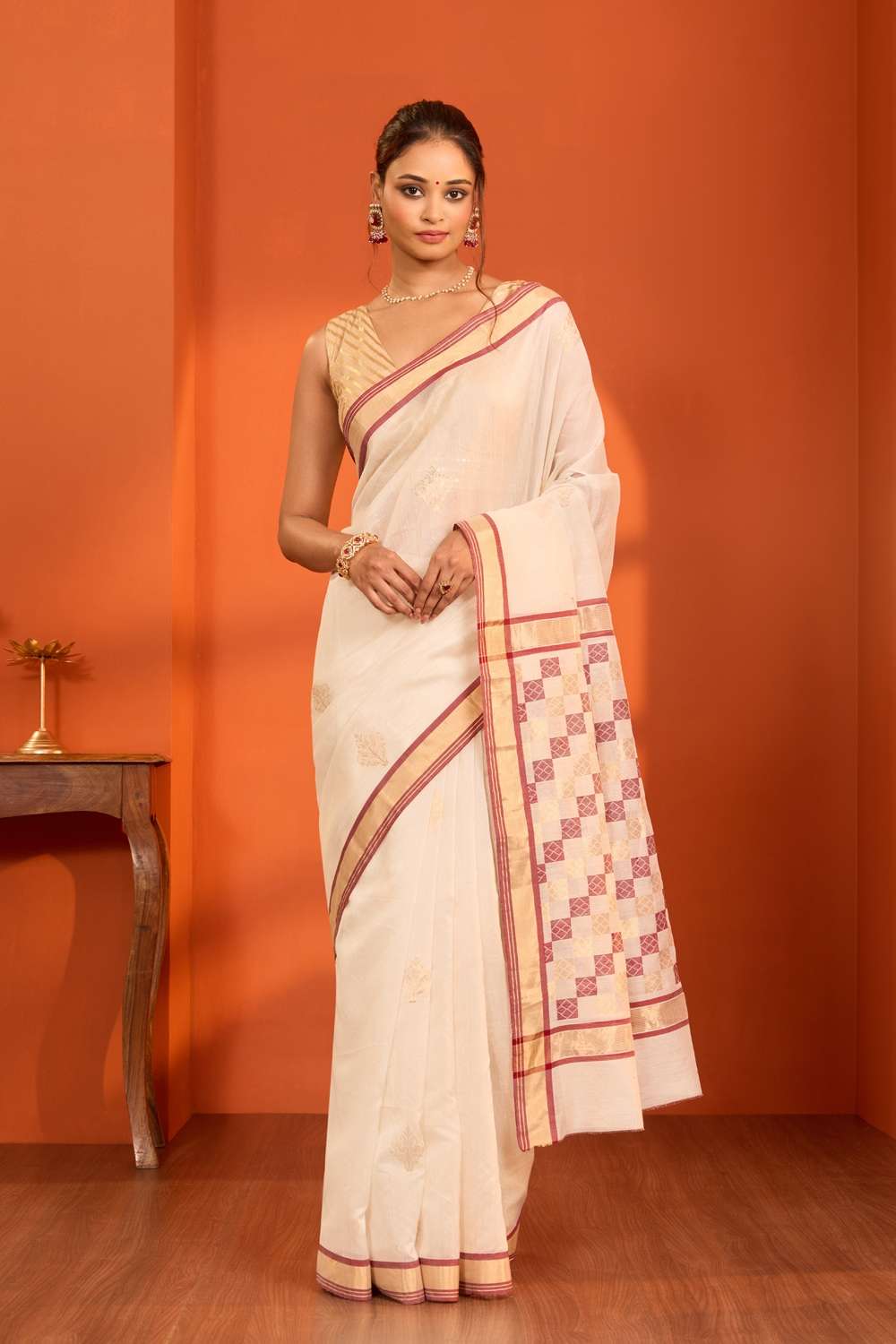
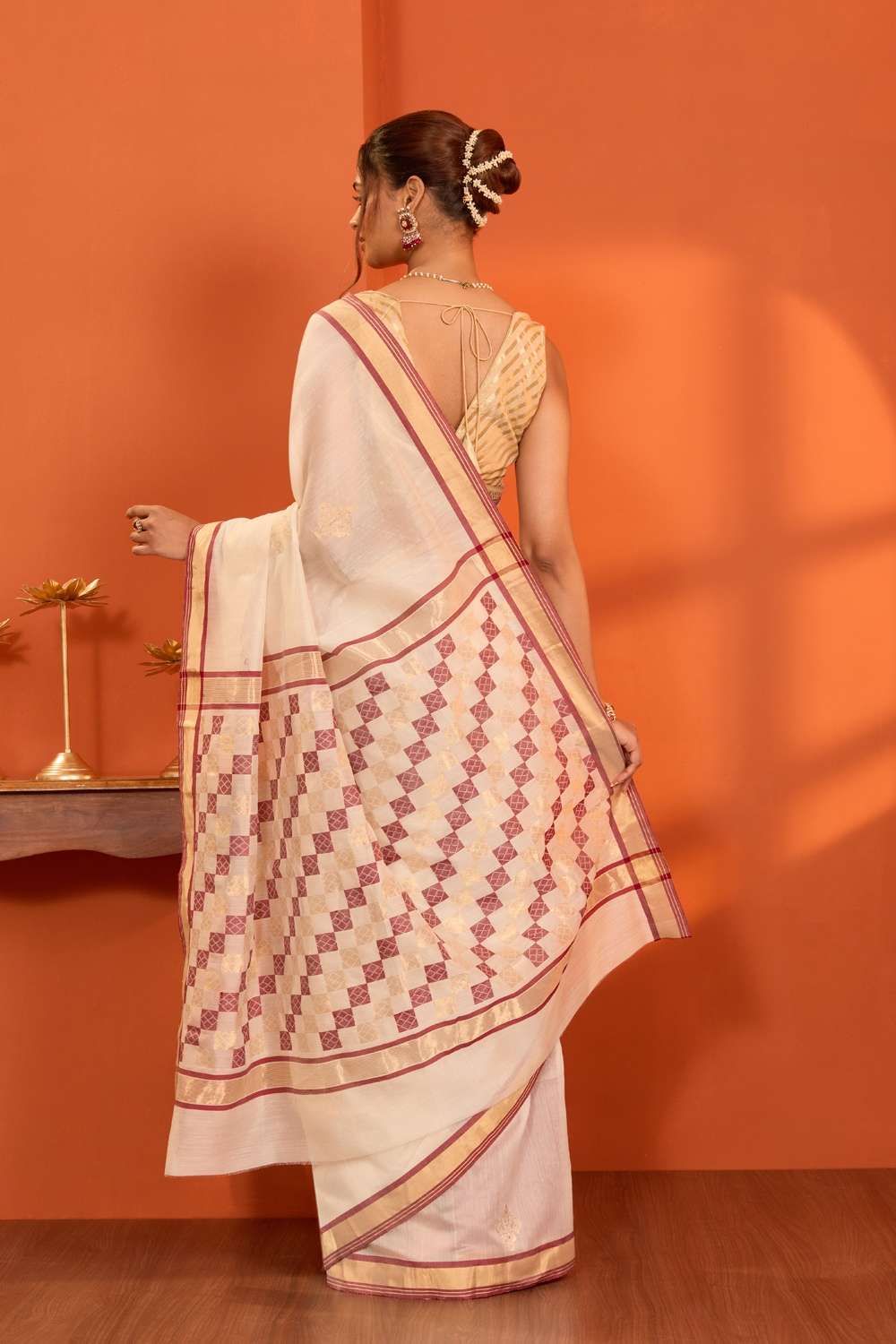
The red blouse piece is the classic pairing; a gold blouse, as in the product images, softens it. Add a large red bindi, shankha-pola and gold jhumkas, and wear your hair in a low bun with a string of jasmine.
For Kojagari Lakshmi Puja: Off-White Chanderi with a Gold Tissue Pallu
Another silk cotton Chanderi, this one with tiny gold buttis, a narrow red border and a pallu that glows: a broad band of gold tissue edged with red stripes. It catches lamplight beautifully, which suits a full-moon puja kept at home in the evening.
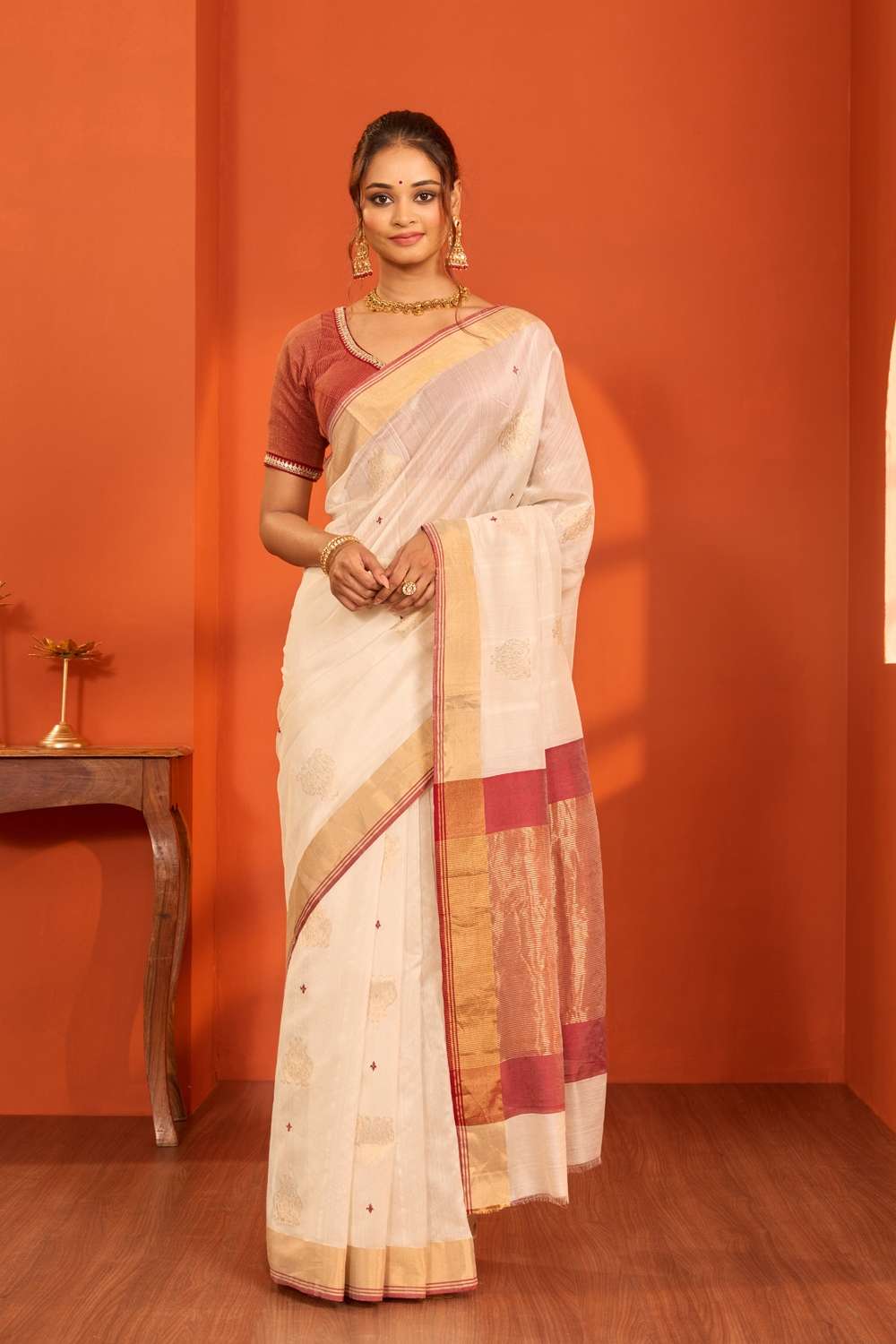
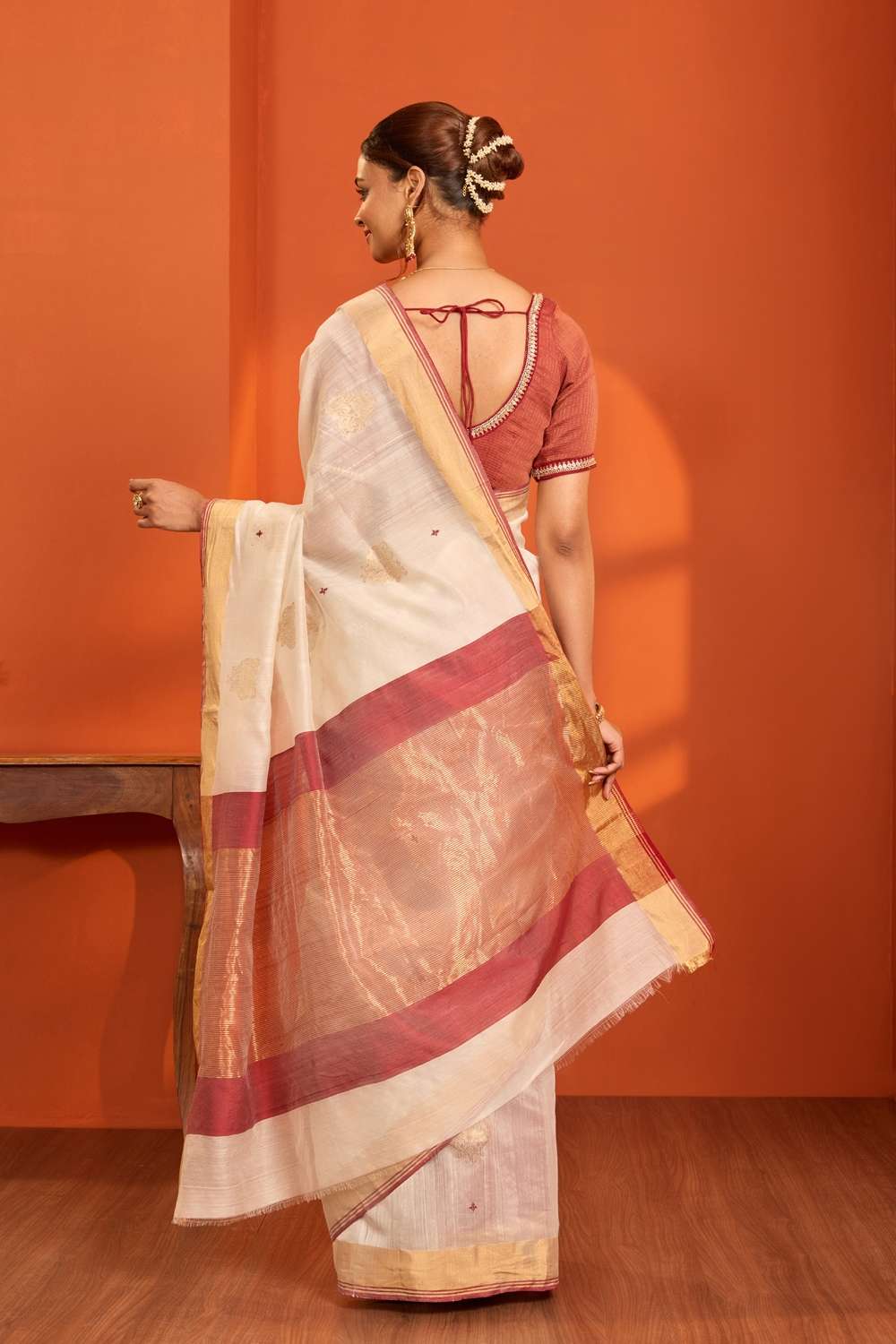
Wear it with the light red blouse piece, a gold chain and small earrings. Sit on the floor for the puja with the pallu pinned at the shoulder so the tissue stays clear of the diyas.
For a Bengali Wedding Ritual: Beige Kadwa Banarasi with a Woven Red Border
A beige pure silk Banarasi woven in the kadwa technique, where each motif is woven on its own. The red border is broad and densely patterned, and the red pallu is worked edge to edge with tested zari. It has the rich, ceremonial weight of the most formal laal paar, in a Banarasi weave. Browse more Banarasi sarees for wedding rituals.
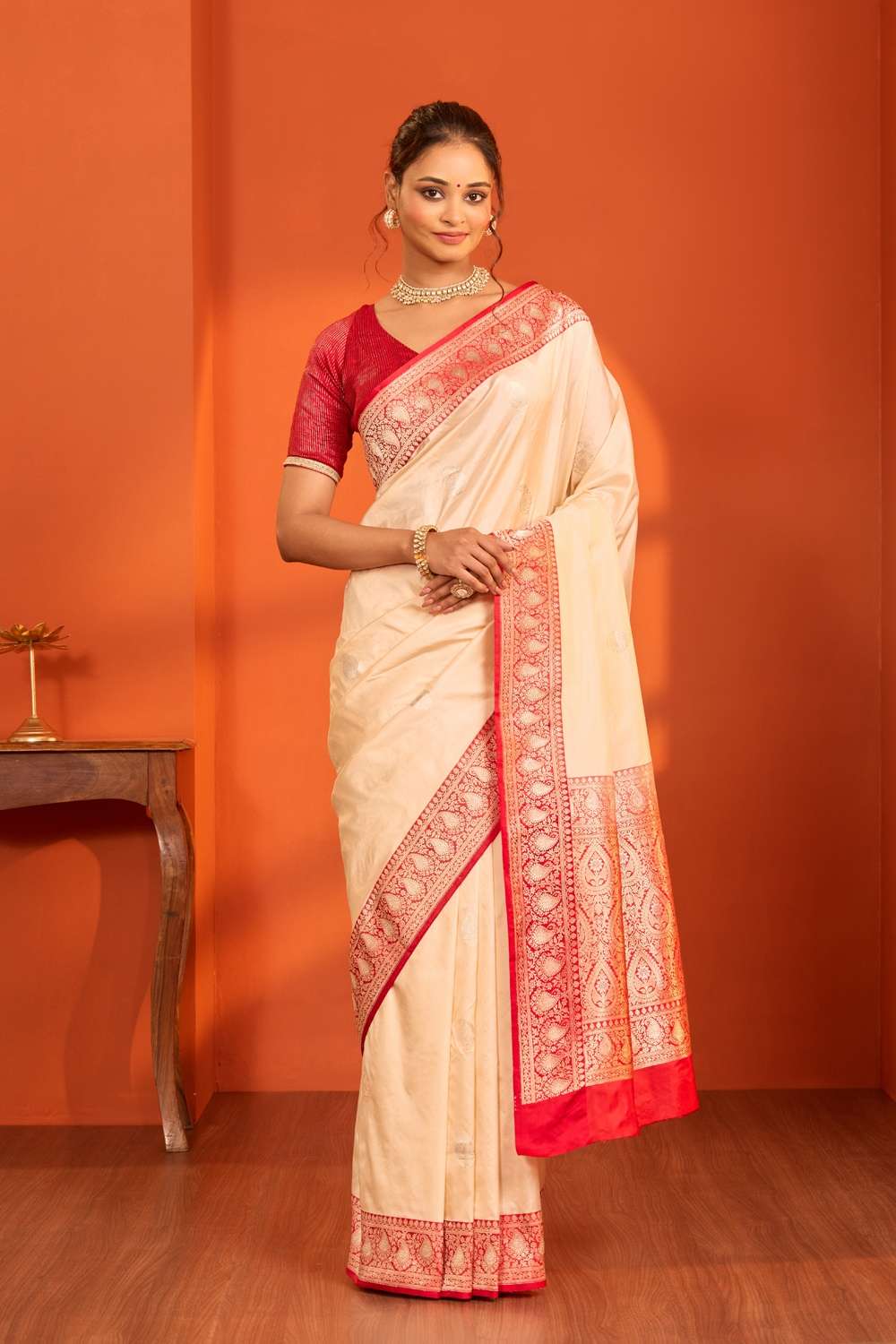
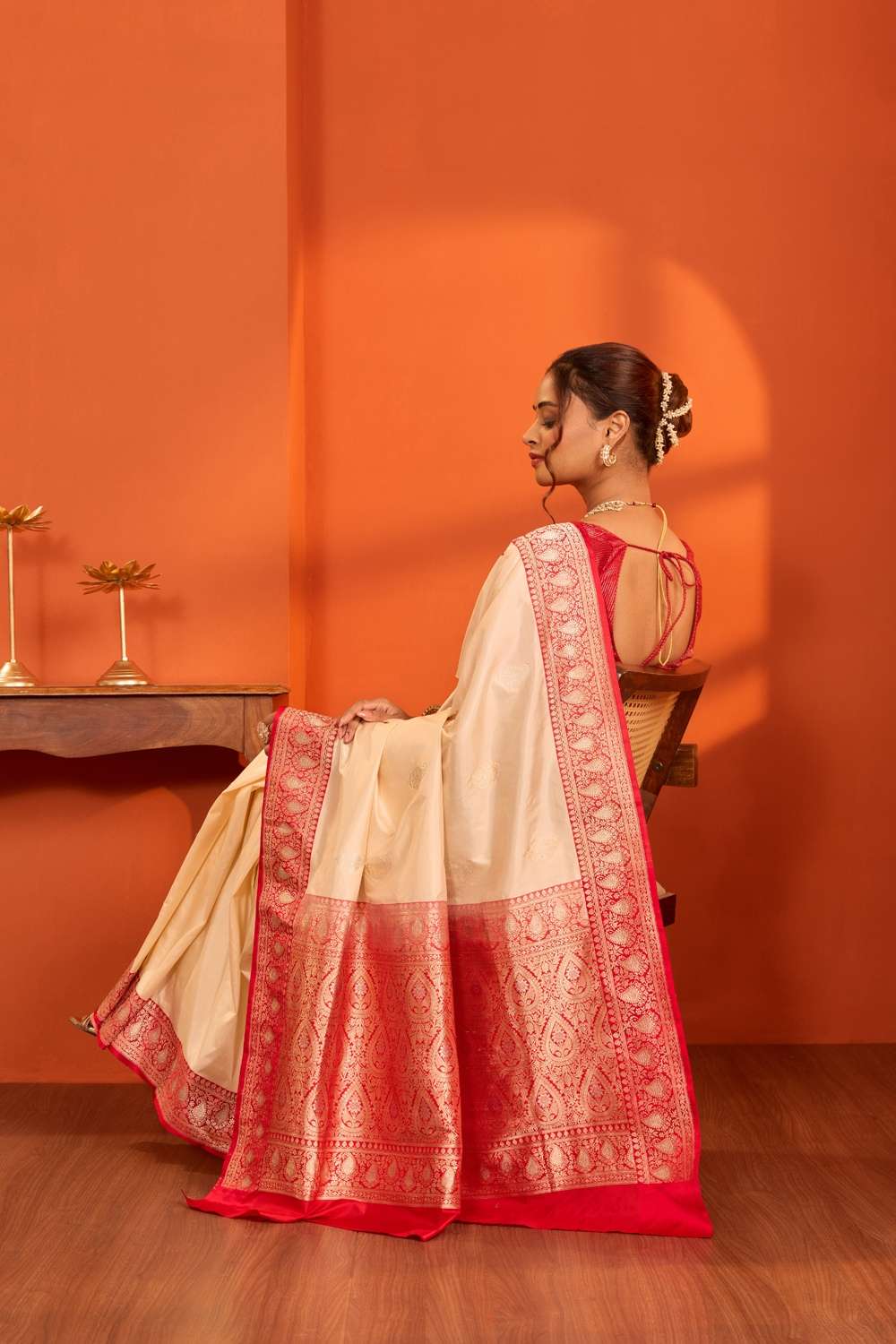
A red blouse, polki or gold jewellery and a red bindi. For a wedding ritual, add alta to the feet and a gold kamarbandh over the pleats.
For the Bride's Mother: A Second Kadwa Banarasi in Beige and Red
A sister piece to the saree above, with a beige silk body, a red woven border and a red pallu patterned with floral and geometric motifs in tested zari. Both are listed with only one piece left, so if you are coordinating with a sister or cousin, decide quickly.
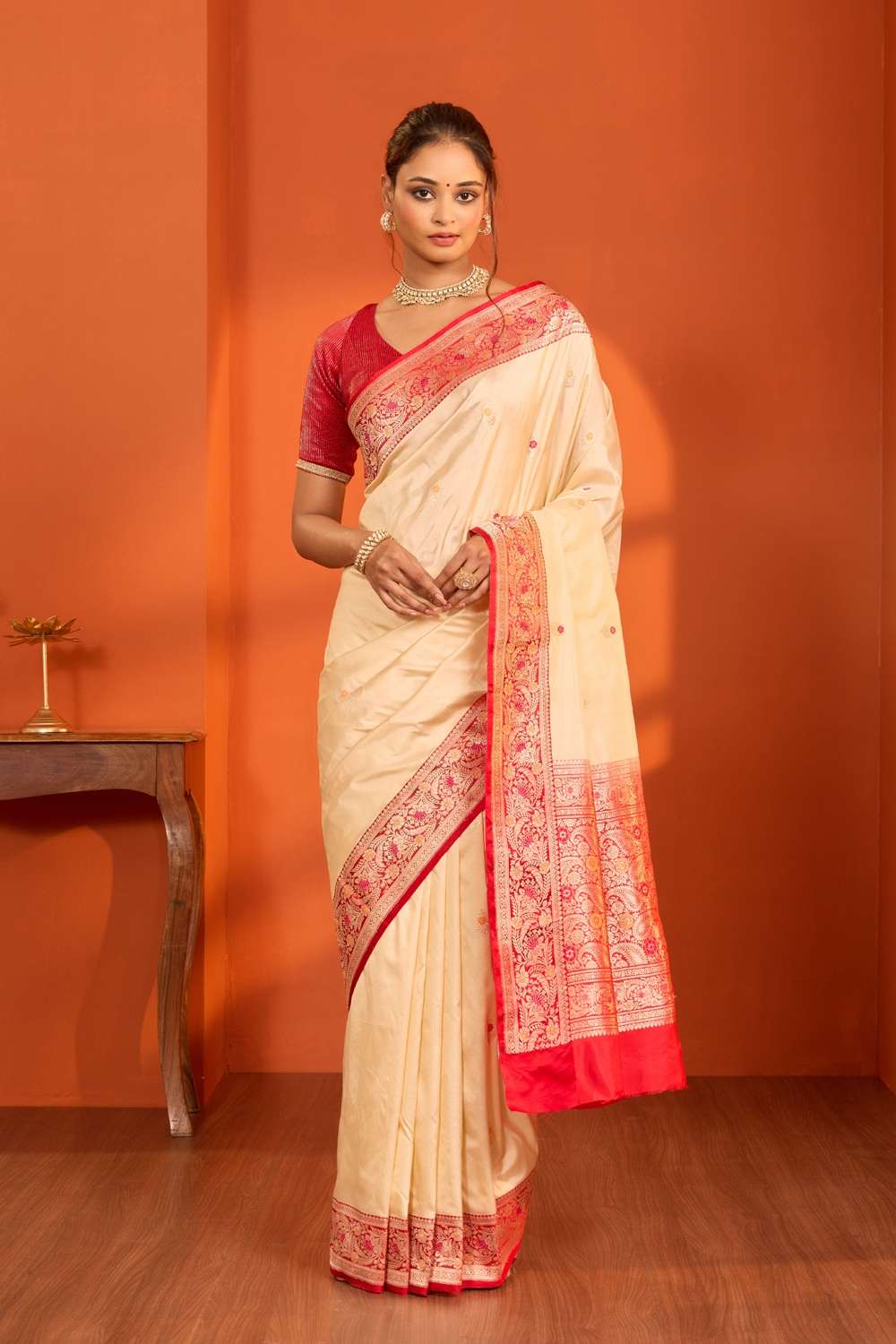
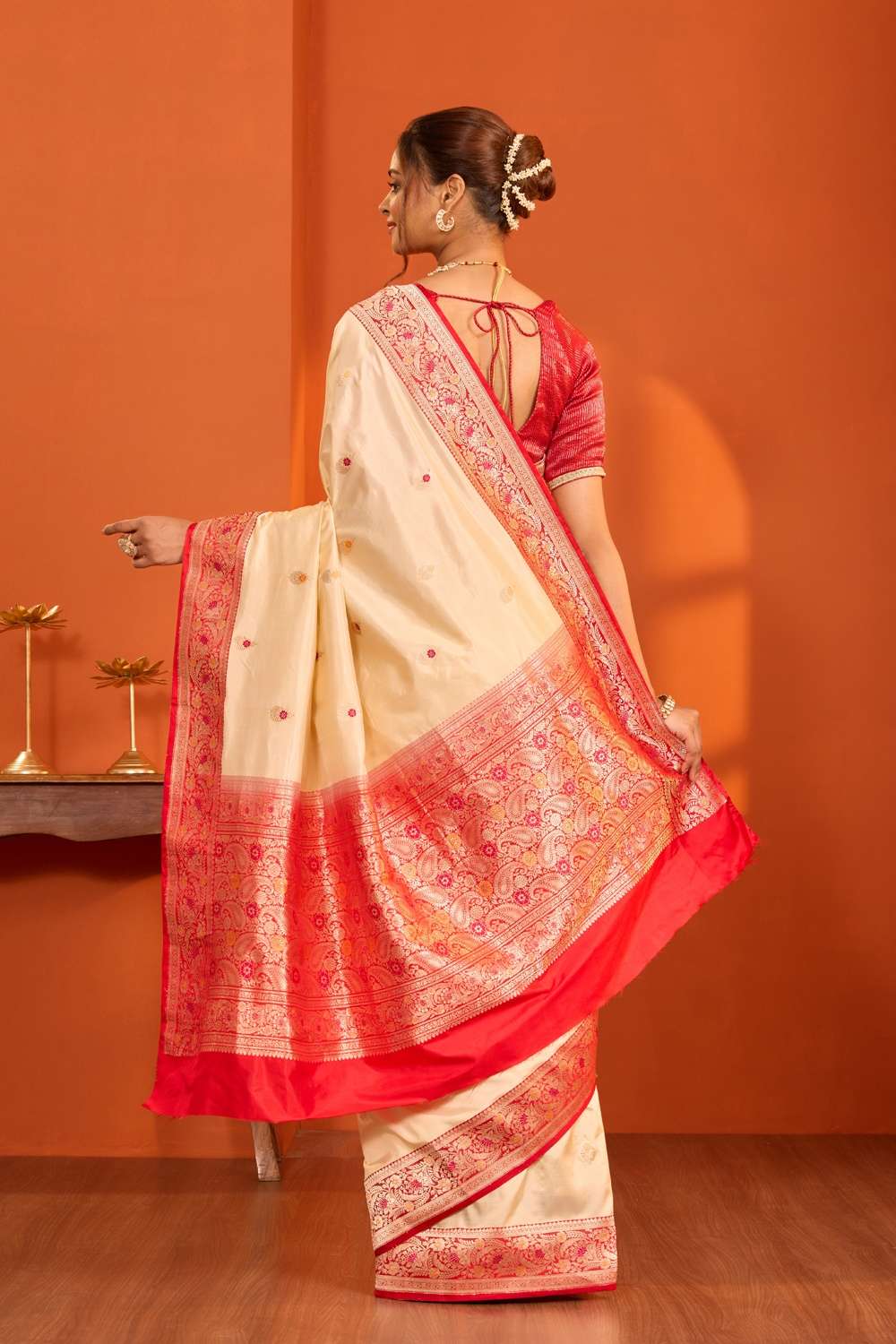
Pair it with temple or antique gold jewellery and the red blouse piece. Drape it in the Bengali style below so the border frames you twice.
A Modern Twist for Poila Baishakh: Light Blue Tussar with a Red Border
Not every red border needs a white body. This light blue Bengal tussar is block printed in blue and red, with a red border and a pallu of large floral medallions. It keeps the red paar and changes everything around it, a fresh choice for the Bengali New Year or a daytime visit during the puja. Tussar has a natural texture and a soft, matte sheen; see more tussar sarees.
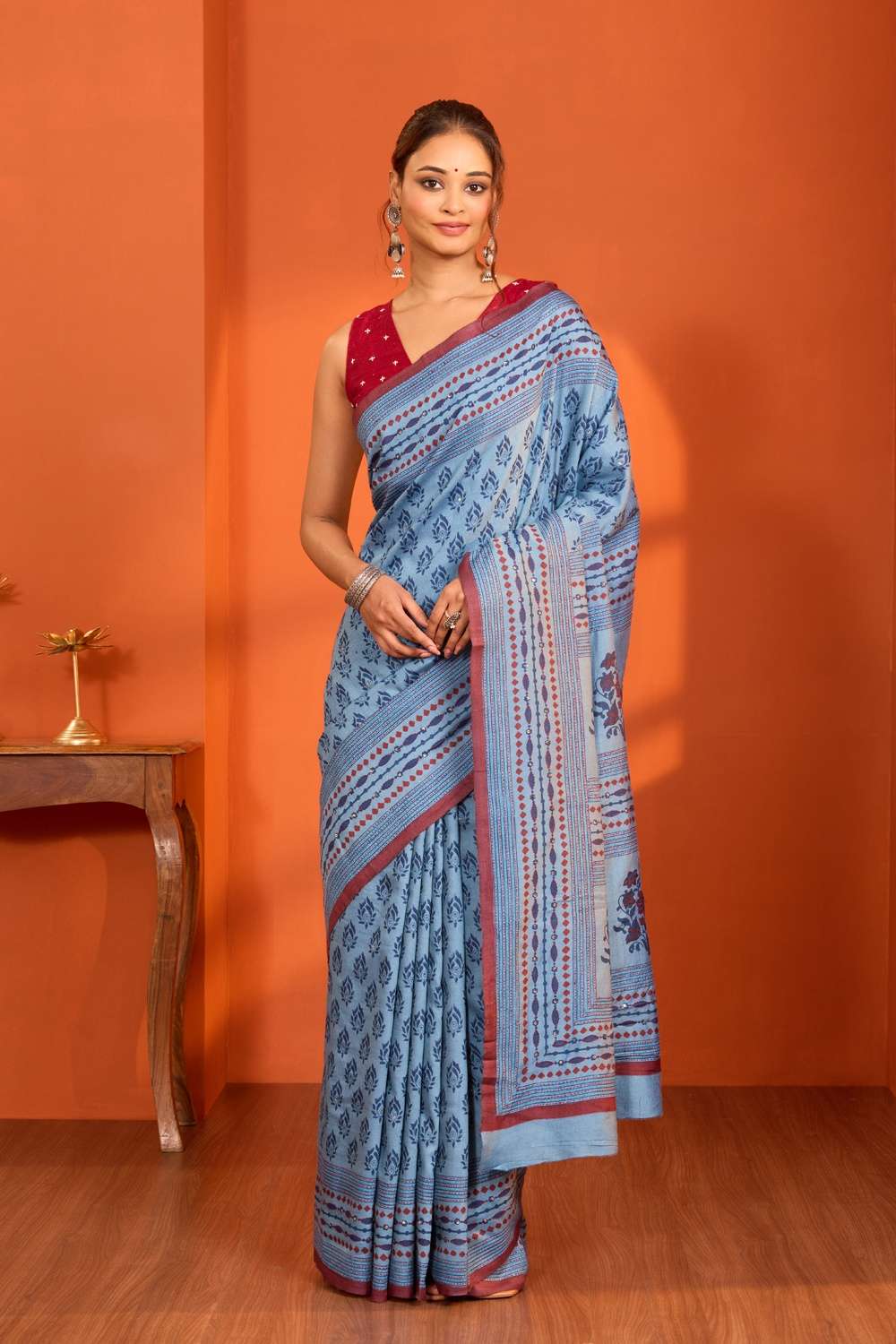
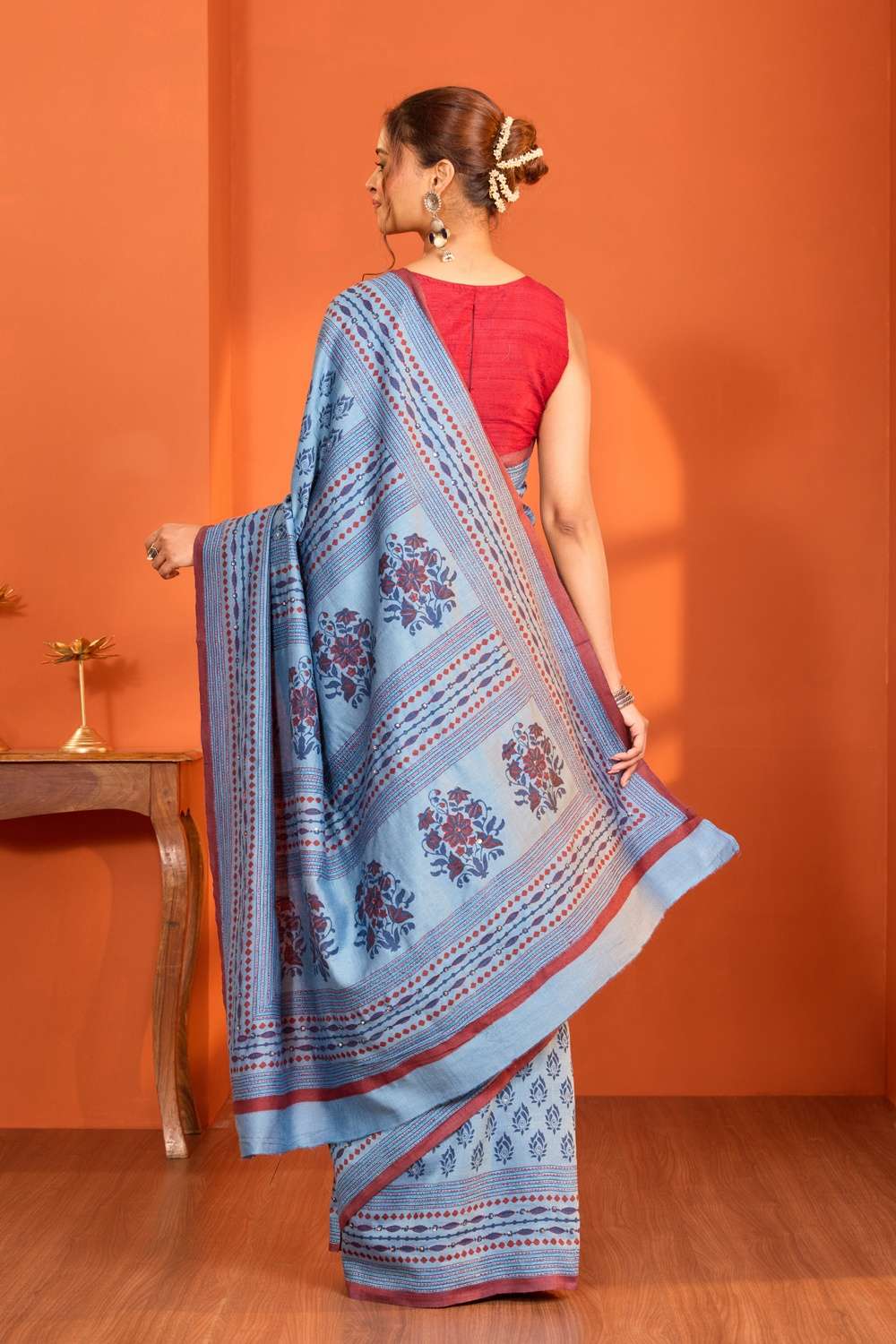
The red blouse piece ties the border together. Silver or oxidised jewellery and a small red bindi keep it relaxed.
Explore Red Sarees
Red borders, red pallus and red bodies for every day of the festive season.
Three Traditional Weaves, One Red Border
In Bengal, most laal paar sarees come from three weaving traditions, each with its own occasion.
- Garad. Silk left undyed so it keeps its natural off-white, with a red or maroon border, a striped pallu and small motifs scattered across the body. Woven mainly in Murshidabad. The puja saree.
- Korial. Garad's more ornate cousin: a lustrous white body and a deep red border that is far more elaborate. A saree for weddings and the most important puja days.
- Tant. Handloom cotton from Bengal's weaving towns such as Shantipur, Phulia and Dhaniakhali. Light, crisp and cool, for long days in the pandal and every day.
Garad and korial received Geographical Indication registrations for West Bengal in 2024, and Shantipur and Dhaniakhali sarees hold their own. The red border has also travelled: today you will find it on Chanderi from Madhya Pradesh, Maheshwari, Banarasi kadwa and Bengal tussar. For a side-by-side guide, read how to choose the right laal paar saree. If you want Chanderi's light weight, browse Taneira's Chanderi sarees.
At a Bengali Wedding
The bride's wedding-night saree is usually a red Banarasi. Around it, laal paar is everywhere. Women of the family wear red-bordered silks for the rituals in the days before and after, and many brides wear one for rituals of their own. A rich red border reads as festive and traditional at the same time, which is exactly what the mother of the bride wants. For the ceremony itself, the heavier the border, the more formal the look.
How to Drape It the Bengali Way
The traditional Bengali drape, often called atpoure, shows off the border more than a Nivi drape does.
- Tuck and wrap. Tuck the plain end into the petticoat at the right hip and wrap once around the waist.
- Make broad pleats. Gather a few wide pleats and tuck them in at the front, so the red border runs in clear lines down the pleats.
- First pass of the pallu. Take the pallu over your left shoulder, letting it fall long at the back.
- Bring it round. Draw the pallu end around under your right arm and lay it back over the left shoulder, so the border frames you twice.
- Add the keys. Traditionally a bunch of keys, the chabi gochha, is tied to the pallu end. A decorative key bunch is a lovely finishing touch for Ashtami.
What to Wear With It
- Shankha, pola and loha. The bangles of a married Bengali woman, and the natural companions of the red and white.
- A large red bindi. Round and generous, the way it is worn for puja.
- Gold. Jhumkas, a chain or a choker. Laal paar takes gold beautifully.
- Alta. A red line around bare feet in the pandal.
- A red blouse. The classic pairing. Gold, black or white work for a sharper, more modern look.
Caring for a Red Border
Red borders are where stains and colour run show first. Dry clean silk, Chanderi and Banarasi pieces, as their care labels advise. Keep sindoor and alta away from the body of the saree on puja days, and fold the saree with tissue paper between the layers so the zari does not crack along the fold. Store it wrapped in muslin, away from damp.
Find Your Laal Paar Saree
Red-bordered silks and cottons for every day of the puja and every ritual of the wedding.
Frequently Asked Questions
What is a laal paar saree?
A laal paar saree has a white, ivory or off-white body with a red border, usually with a red or red-striped pallu. Laal means red and paar means border in Bengali.
Why do Bengali women wear red and white for Durga Puja?
The white body and red border echo the shankha and pola a married Bengali woman wears, and red is the colour of Shakti and of sindoor. It is especially worn for Ashtami anjali and Sindoor Khela.
Which laal paar saree is best for Ashtami anjali?
A light silk or silk cotton with a red border, such as a Chanderi, is comfortable through a long morning in the pandal. Garad silk is the traditional Bengali choice.
Can I wear a laal paar saree to a Bengali wedding?
Yes. Rich red-bordered silks are long-standing choices for the women of the family at wedding rituals. The bride usually wears a red Banarasi on the wedding night.
Is a laal paar saree only for married women?
No. Laal paar is worn by women of all ages for Durga Puja, Poila Baishakh and family celebrations. Sindoor Khela itself is traditionally a ritual for married women.
How is the Bengali saree drape different?
In the Bengali drape, the pallu goes over the left shoulder, comes around under the right arm and is laid over the left shoulder again, so the border frames you twice. A bunch of keys is traditionally tied to the pallu end.

