The 60-Second Outfit
Dressed in a Minute: Why Modern Women Are Choosing Ready-to-Wear Kurta Sets
It is 7.40 on a Thursday. There is a family lunch at one, a meeting before that, and the outfit you planned is still a kurta in one drawer, a pair of pants that almost match in another, and a dupatta somewhere at the back of the cupboard. You know how the next ten minutes go.
A ready-to-wear kurta set ends that search. The kurta, the pants and usually the dupatta are designed together, cut to fit together and sold together, so getting dressed takes about a minute. Here is why the matched set has become the everyday uniform of so many women, how to choose one that fits, and five sets from Taneira's kurtas and kurta sets to start with.
What a Ready-to-Wear Kurta Set Is
A kurta set is a coordinated outfit: a kurta with matching or contrasting bottoms, and in most festive sets a dupatta. Ready-to-wear means it is stitched to standard sizes and goes on straight from the bag. Nothing needs tailoring, nothing needs matching, and the proportions have already been worked out for you.
| Piece | What it usually is | Why it matters |
|---|---|---|
| Kurta | Straight or A-line, knee to calf length, with three-quarter or full sleeves | Sets the occasion: printed for every day, embroidered for festive |
| Bottoms | Straight pants, often with a detail at the hem | Cut to balance the kurta's length, so the outfit sits in proportion |
| Dupatta | Sheer organza, cotton or a printed fabric, often finished with tassels | Adds the festive layer; colour-matched or chosen as a contrast |
Some styles are sold as a single kurta, which gives you room to pair it with bottoms you already own. Check the product description: it says whether the set includes a dupatta.
Why It Is Catching On
- Time. No matching, no tailoring, no hunting. You are dressed in about a minute.
- Proportion. The pants are cut for the kurta's length, so the outfit looks considered without effort on your part.
- One decision a day. Choose the set, add earrings, leave. Many women keep three or four sets on rotation for the working week.
- It works everywhere. The same set goes to the office, a lunch, a puja and a train journey.
- It travels. Three pieces that fold flat, with no ironing of pleats and nothing to drape.
Five Sets to Start With
For a Festive Lunch: Aqua Viscose with a Sheer Dupatta
An aqua kurta in soft viscose with fine silver-toned embroidery along the neckline placket and the sleeve hems, worn with matching straight pants that carry the same detail at the hem. The sheer dupatta in the same aqua is finished with tassels. It reads as festive without a trace of heaviness.
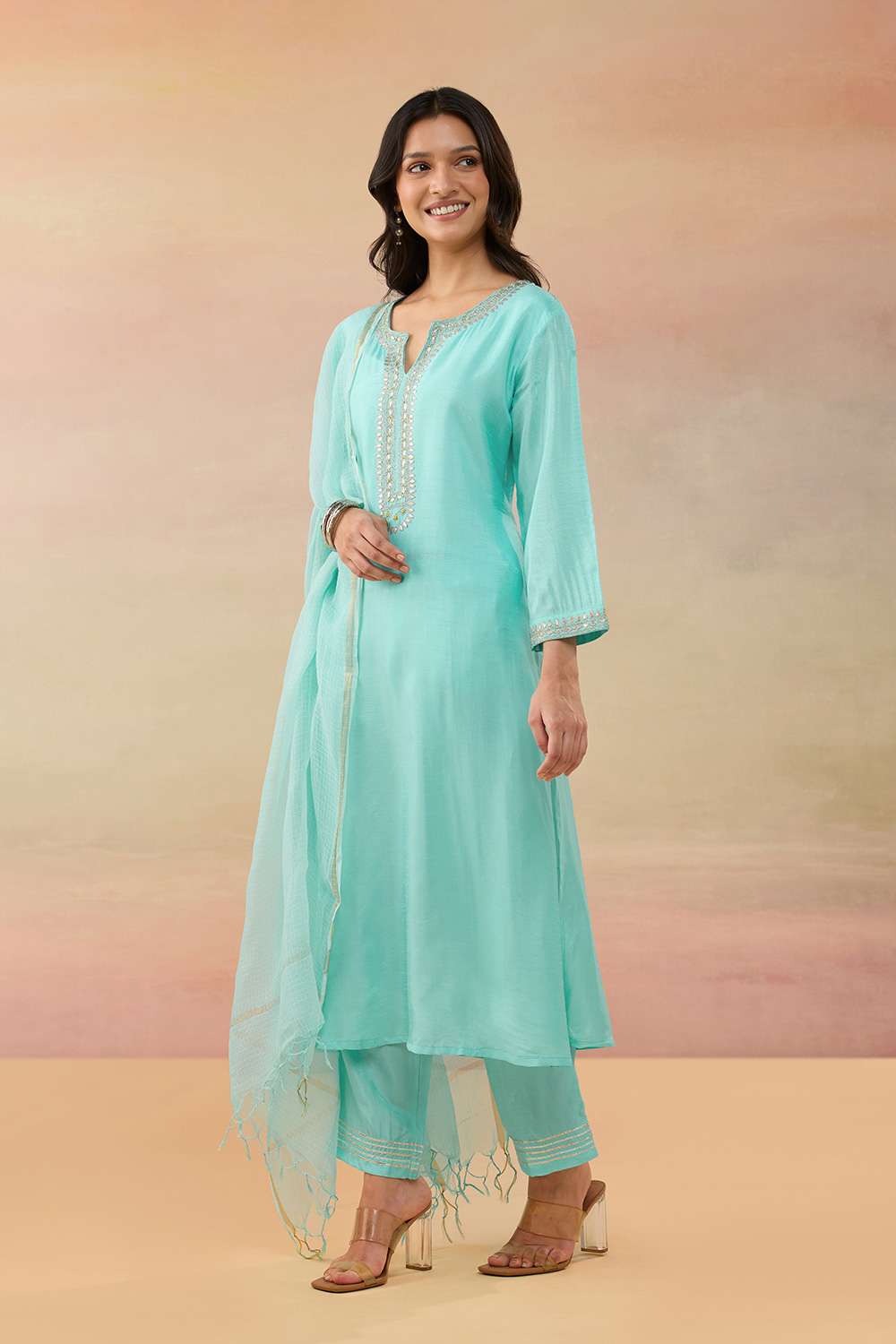
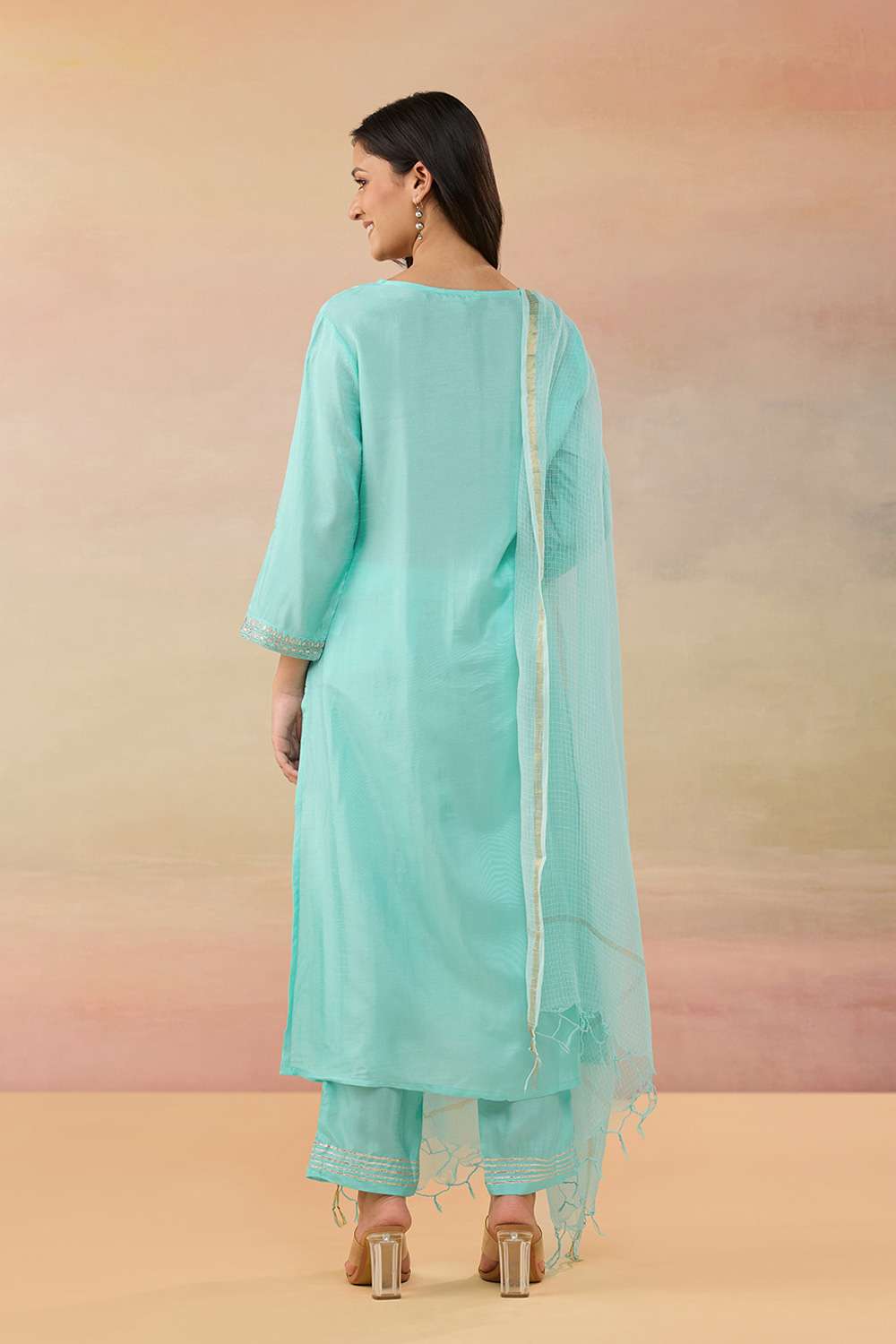
Pearl studs or small silver jhumkas and clear or nude heels keep the look as light as the colour. Wear the dupatta over one shoulder for a lunch, or across both for a puja.
For a Day That Ends at a Dinner: Red Cotton with a Printed Dupatta
A deep red cotton kurta with embroidery at the V-neckline, straight red pants and a sheer red dupatta scattered with tall floral sprays in white. Cotton keeps it comfortable through the day; the dupatta does the festive work in the evening.
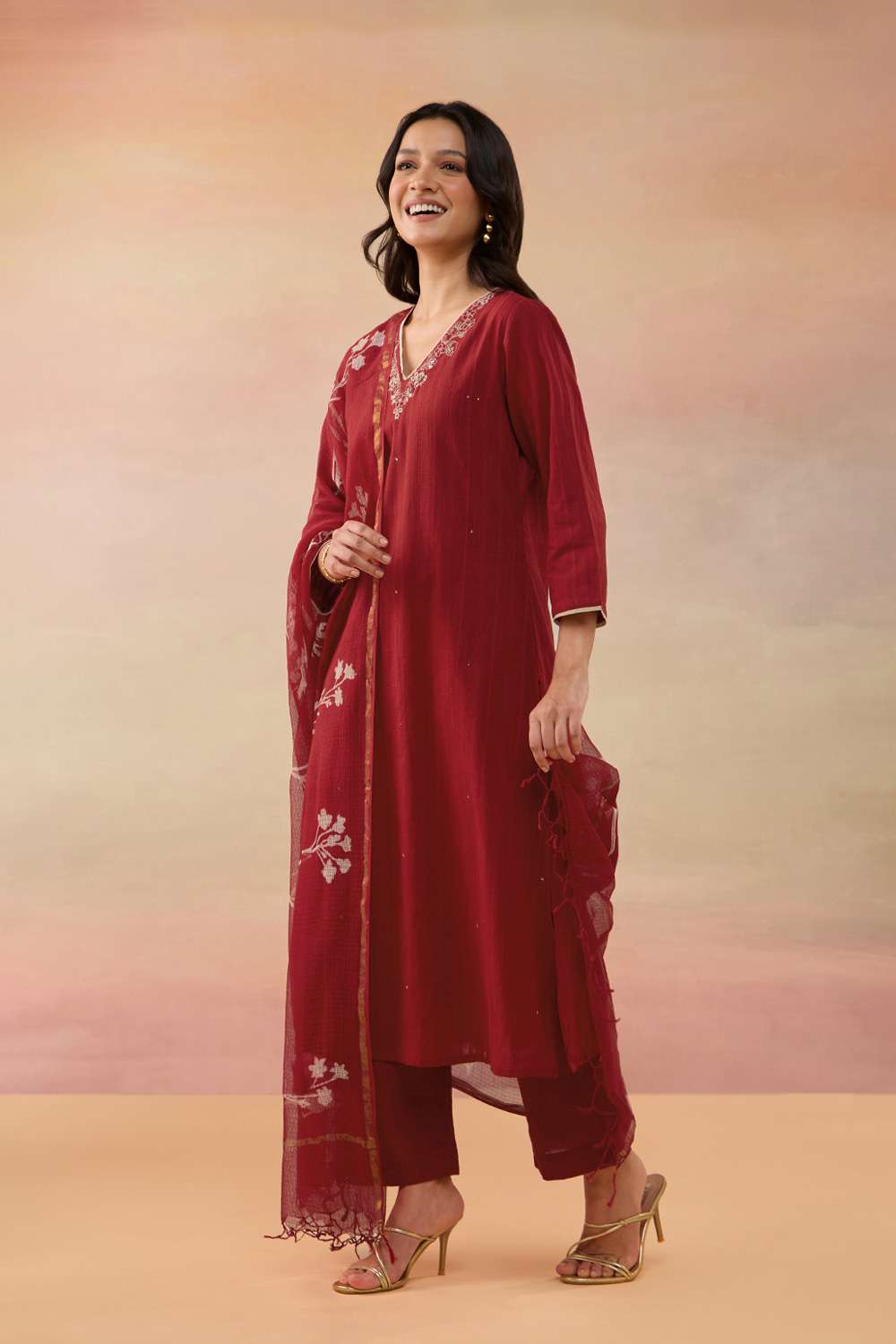
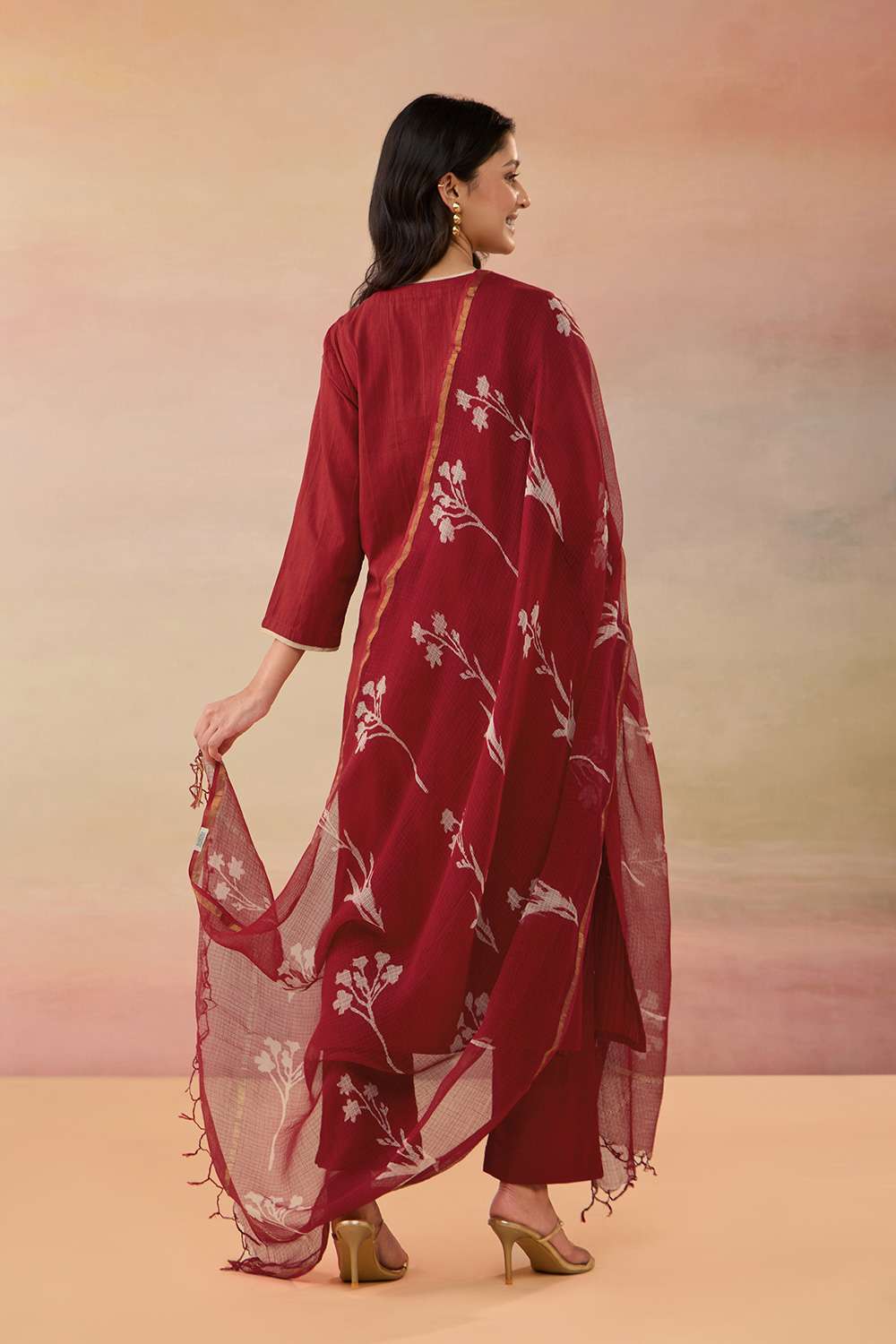
Gold jhumkas and a few bangles for the evening. By day, fold the dupatta over your bag strap and wear the kurta and pants on their own.
For Mehendi and Haldi Mornings: Lime Silk Cotton with Mirror Work
A lime green silk cotton kurta with an embroidered yoke set with shisha, the small mirrors that catch the light as you move. It comes with matching pants and a sheer pink dupatta with tassels, a colour pairing made for daytime celebrations.
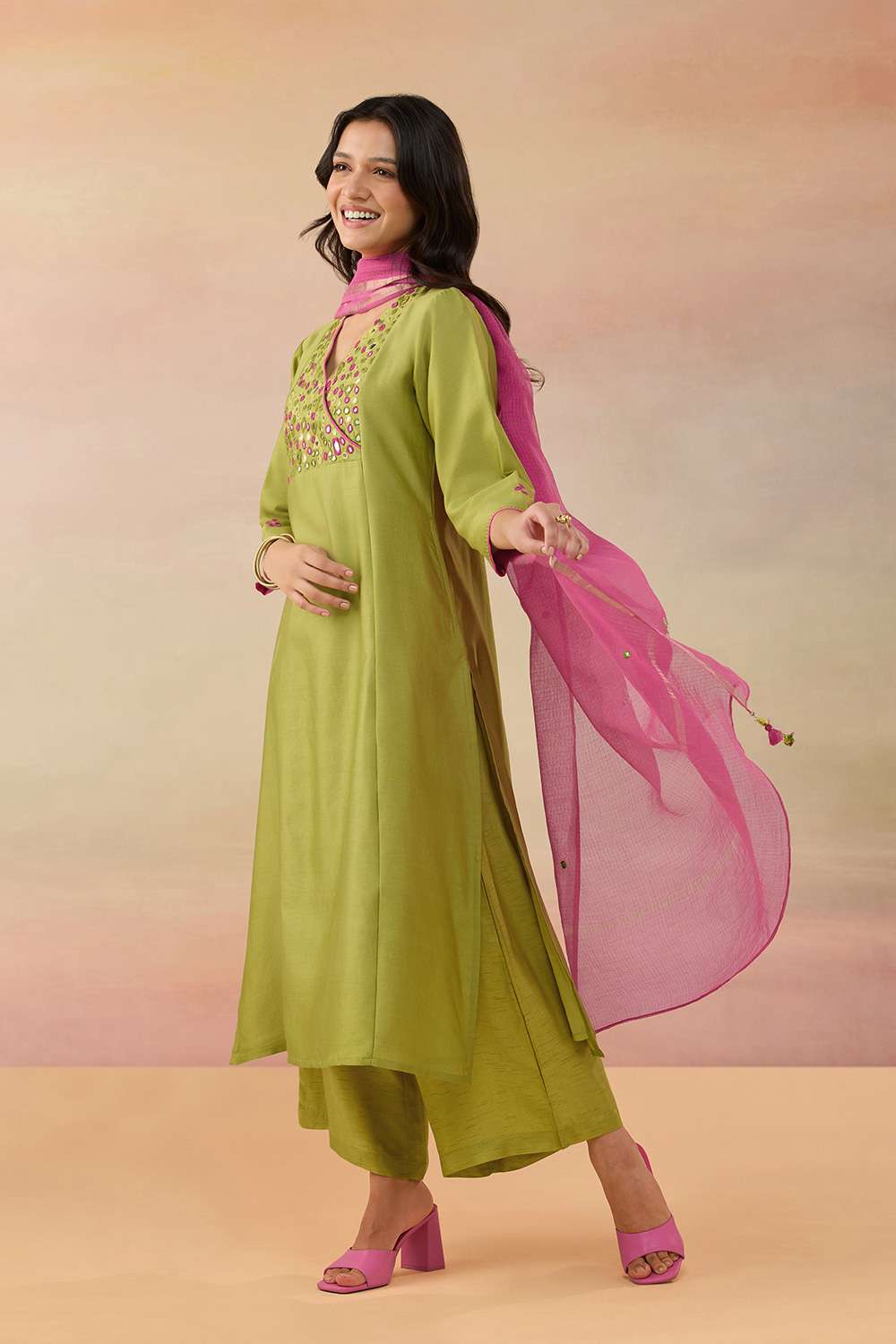
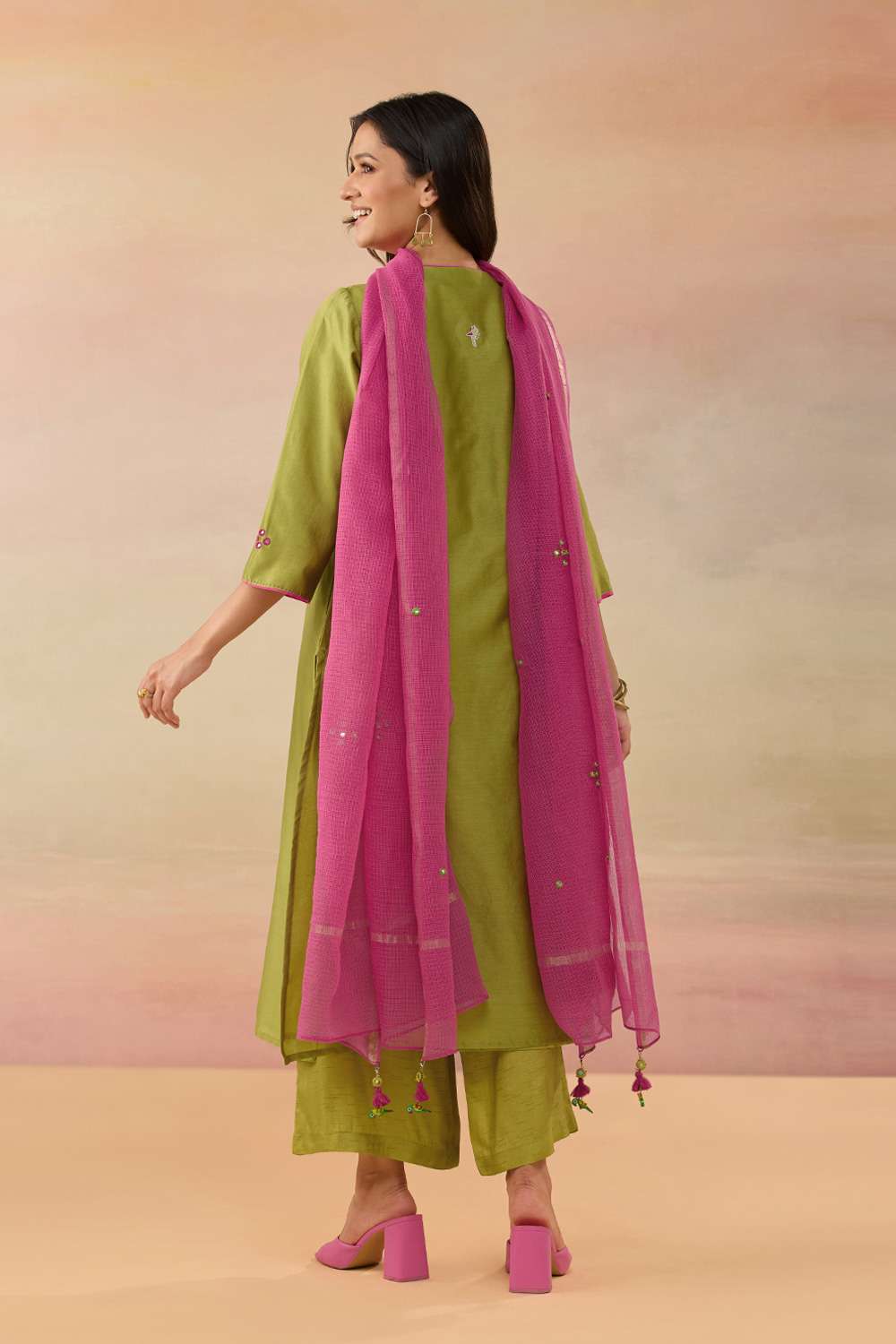
Pink block heels or juttis pick up the dupatta. Keep the jewellery small, since the mirror work already sparkles; a pair of jhumkas is enough.
For Weekdays: Lilac Floral Cotton, Sold as a Kurta
A light violet cotton kurta printed with pink and green florals, with a keyhole neckline, three-quarter sleeves and side slits. It is sold as a kurta on its own, which makes it the most flexible piece here: pair it with fuchsia pants, as in the product images, or with any pair from Taneira trousers.
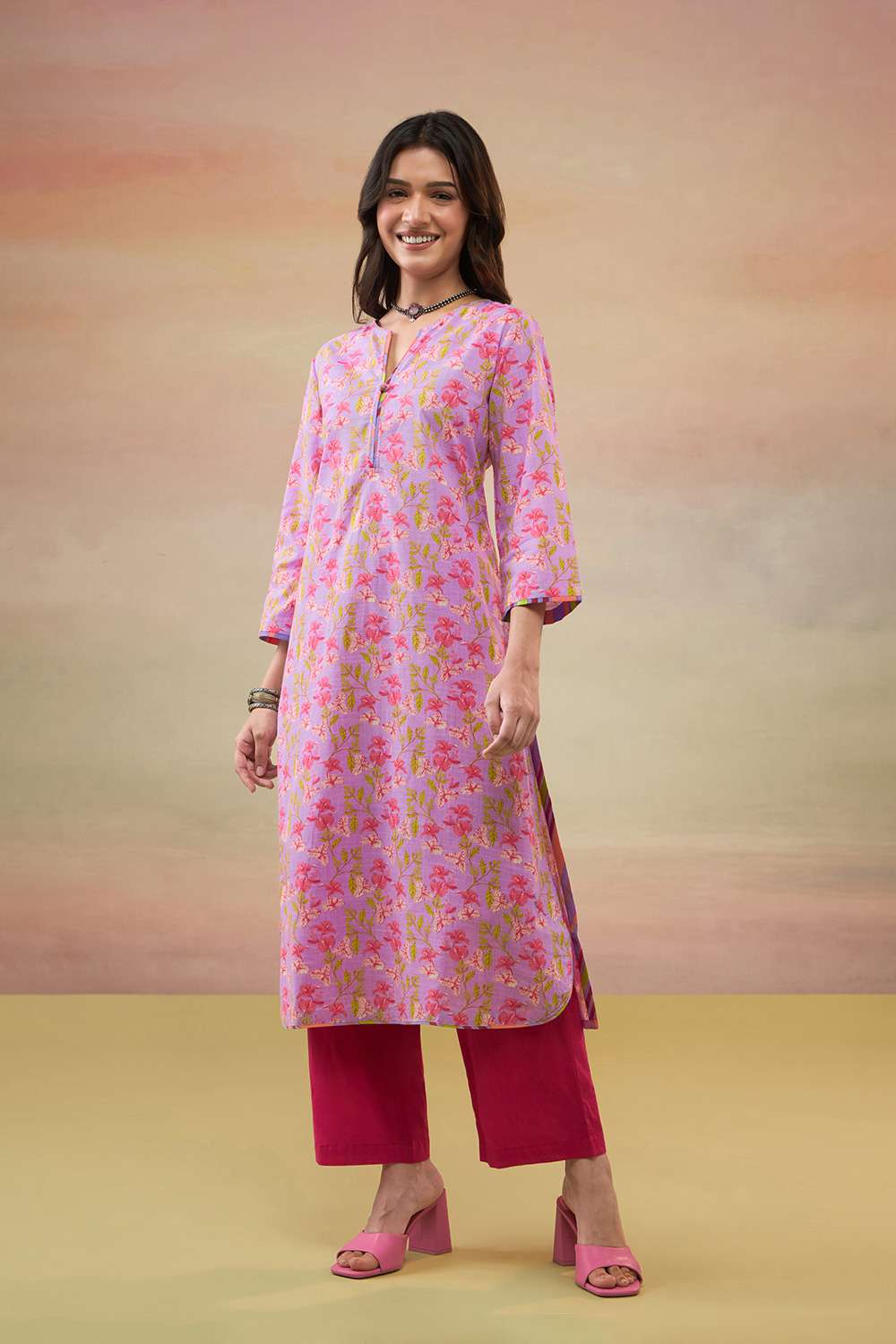
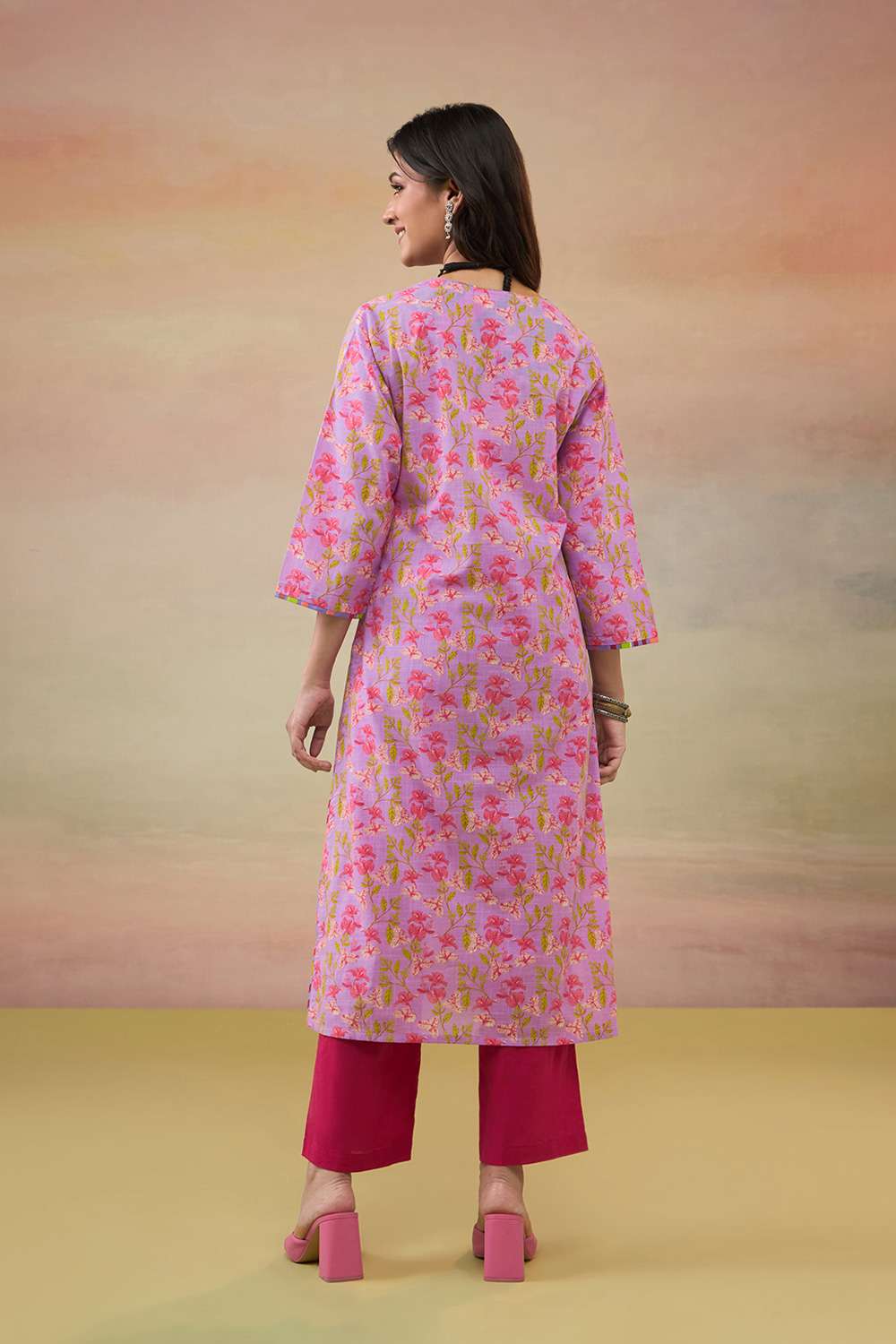
Fuchsia or white pants, flat sandals and a canvas tote for the office; swap in silver earrings for a weekend brunch.
Explore Cotton Kurtas
Printed and embroidered cotton kurtas and sets for every working day.
A Set for Every Occasion
Ready-to-wear does not mean casual. The fabric and the craft decide where a set belongs, and once you can read them, you can build a small wardrobe that covers almost every invitation.
| Occasion | Look for | Why |
|---|---|---|
| Office | Printed or lightly embroidered cotton, no dupatta or a light one | Breathable, polished, nothing to manage at a desk |
| Festive lunch or puja | Silk cotton or viscose with an embroidered yoke and a matching dupatta | Festive without the weight of a saree |
| Mehendi or haldi | Bright cotton or silk cotton, mirror work, a contrast dupatta | Colourful, washable, easy to sit in |
| Evening party | Viscose in a jewel tone with a printed or brocade-look dupatta | Fluid drape and richer colour under evening light |
| Travel | Cotton with straight pants, dupatta optional | Comfortable for hours and quick to change |
For fluid, festive drapes, browse Taneira's viscose kurtas; for everyday prints, the printed kurtas; and for a gentle sheen on special days, the silk kurtas.
Which Colour to Start With
If you are buying your first one or two sets, start with colours that work across occasions. A deep red or wine goes from a puja to a dinner. A soft aqua or pastel suits daytime functions and the office. A bright such as lime or marigold suits mehendi season. Add prints once you have a solid colour or two, since a printed kurta is easier to re-style with neutral bottoms.
- Deep tones (wine, red, emerald) for festive evenings and weddings.
- Soft tones (aqua, lilac, blush) for daytime and the office.
- Brights (lime, marigold, fuchsia) for mehendi, haldi and festivals.
- Prints for every day and weekends.
How to Choose the Right Size
A ready-to-wear set is only as good as its fit, and kurta sizing is mostly about the shoulders and the bust.
- Measure your bust and shoulders. Use the size chart on the product page. If you fall between sizes, choose by the bust; it is easier to take in a little at the waist than to let out at the chest.
- Check the shoulder seam. On the body, it should sit at the edge of your shoulder, neither sliding down your arm nor pulling towards your neck.
- Check the length with your shoes. Most kurtas fall between the knee and mid-calf. The pants should end just above the ankle bone in the shoes you plan to wear.
- Sit down in it. At home, before you remove the tags, sit cross-legged and on a chair. The kurta should not pull at the hips, and the side slits should open comfortably.
Choosing the Fabric
| Fabric | How it feels | Best for |
|---|---|---|
| Cotton | Breathable and matte; softens with each wash | Every day, work, warm weather |
| Silk cotton | Light, with a gentle sheen | Festive mornings, lunches, office celebrations |
| Viscose | Smooth and fluid, with a soft drape | Festive days, evenings, travel |
| Rayon | Soft and light, similar to viscose | All-day festive wear |
For the full range of embroidered festive sets, browse Taneira's embroidered kurtas.
Making One Set Work Harder
A set is three outfits in disguise. Wear all three pieces together for a festive day. Wear the kurta with jeans or a different pair of pants for a weekend. Lend the dupatta to a plain kurta to lift it for an evening. Count how often each piece comes out, and the set pays for itself quickly.
- Keep a neutral bottom. White, black or beige pants let you re-wear the kurta without its matching pants.
- Rotate the dupatta. A sheer, tasselled dupatta from one set can dress up a printed cotton kurta from another.
- Change the shoes. Flats for the office, block heels for a lunch, embroidered juttis for a puja.
The Finishing Touches
A set does most of the work, so the accessories can stay small and still change the mood completely.
| Accessory | Everyday | Festive |
|---|---|---|
| Earrings | Small studs or silver drops | Jhumkas or chandbalis |
| Shoes | Flats, kolhapuris or clean sneakers | Block heels or embroidered juttis |
| Bag | A canvas tote or crossbody | An embroidered potli |
| Wrists | A watch | A bangle stack or a cuff |
Pick one statement at a time when the kurta already has embroidery at the neckline: earrings or bangles, and let the other stay quiet.
Caring for Your Set
The product pages for these sets advise dry cleaning, and that is the safest route for embroidered and mirror-work pieces. Between wears, hang the kurta, fold the pants along their crease, and store the dupatta folded loosely with tissue paper so a sheer fabric does not crease sharply. Keep perfume off the embroidery.
Not sure which cut suits you? Read our guide to kurta silhouettes.
Find Your Kurta Set
Ready-to-wear kurta sets in cotton, silk cotton and viscose, matched and ready in a minute.
Frequently Asked Questions
What is a ready-to-wear kurta set?
A kurta with coordinated bottoms, and often a dupatta, stitched to standard sizes and designed to be worn together. Nothing needs tailoring or matching, so you are dressed in about a minute.
Do Taneira kurta sets come with a dupatta?
Many do. The product description states whether the set includes a dupatta, so check it before you buy. Some styles are sold as a kurta on its own.
How do I choose the right size of kurta set?
Use the size chart and choose by your bust and shoulder measurements. If you are between sizes, choose by the bust, and check the pant length with the shoes you plan to wear.
Which fabric is best for an everyday kurta set?
Cotton is breathable and easy for daily wear. Silk cotton and viscose have more sheen and suit festive days and evenings.
Can I wear a kurta set to the office?
Yes. A printed or lightly embroidered cotton kurta set with straight pants suits most workplaces. Keep the dupatta for festive office days.
How should I care for an embroidered kurta set?
Follow the care label, which usually advises dry cleaning. Hang the kurta, fold the pants along their crease, and keep perfume away from the embroidery.

