Sindoor Khela Styling Guide: How to Drape and Accessorise a Classic Laal Paar Saree
By the afternoon of Vijaya Dashami the dhak has slowed. Women queue in front of the goddess with a plate of sweets, a betel leaf and a small box of sindoor. They touch the leaf to her face, offer the sindoor, whisper a goodbye until next year. Then someone turns around, laughing, with red on her fingers, and within minutes everyone's cheeks are crimson.
That is Sindoor Khela. Traditionally it is a ritual for married women, who wish one another a long married life; in many pandals today, more women join in. The saree for it is almost always red and white. Here is how to choose it, drape it, accessorise it and save it afterwards, with picks from Taneira's Bengali sarees.
What Happens on the Day
| Moment | What happens | What it means for your saree |
|---|---|---|
| Morning | The Dashami puja and the last anjali | Your most formal look; often a silk |
| Boron | Women bid the goddess farewell with sweets, betel leaf and sindoor | You will reach and bend; pin the pallu |
| Sindoor Khela | Sindoor is smeared on foreheads, cheeks and hair | Your saree will get red |
| Bisarjan | The idol is carried away for immersion, often with dancing | Comfort and freedom to move |
| Evening | Bijoya greetings, sweets and visits | Many change into a fresh saree |
Choose a Saree You Can Get Red
Sindoor will end up on your saree. Accept that before you choose, and plan for it.
| Saree | Why choose it | The trade-off |
|---|---|---|
| Printed Bengal silk | The print hides small marks; light and easy to move in | Needs prompt dry cleaning |
| Silk cotton (Maheshwari, Chanderi) | Light, with a gentle sheen and red-gold borders | Shows marks on a white body |
| Banarasi | The richest border for the morning puja | The one you will most want to protect |
| Tant cotton | Washable and cool | Less formal than silk |
If you can, wear your finest silk for the morning and change into something easier to clean for the afternoon.
Five Sarees for Dashami
For the Morning Puja: Paisley Block-Printed Bengal Silk
An off-white Bengal silk block printed with red paisleys across the body and bands of red and yellow at the border. The pallu is a bold chevron of red and white, edged in yellow. It feels traditional and festive without the weight of a woven brocade, which makes it easy to wear from the morning puja into the afternoon.
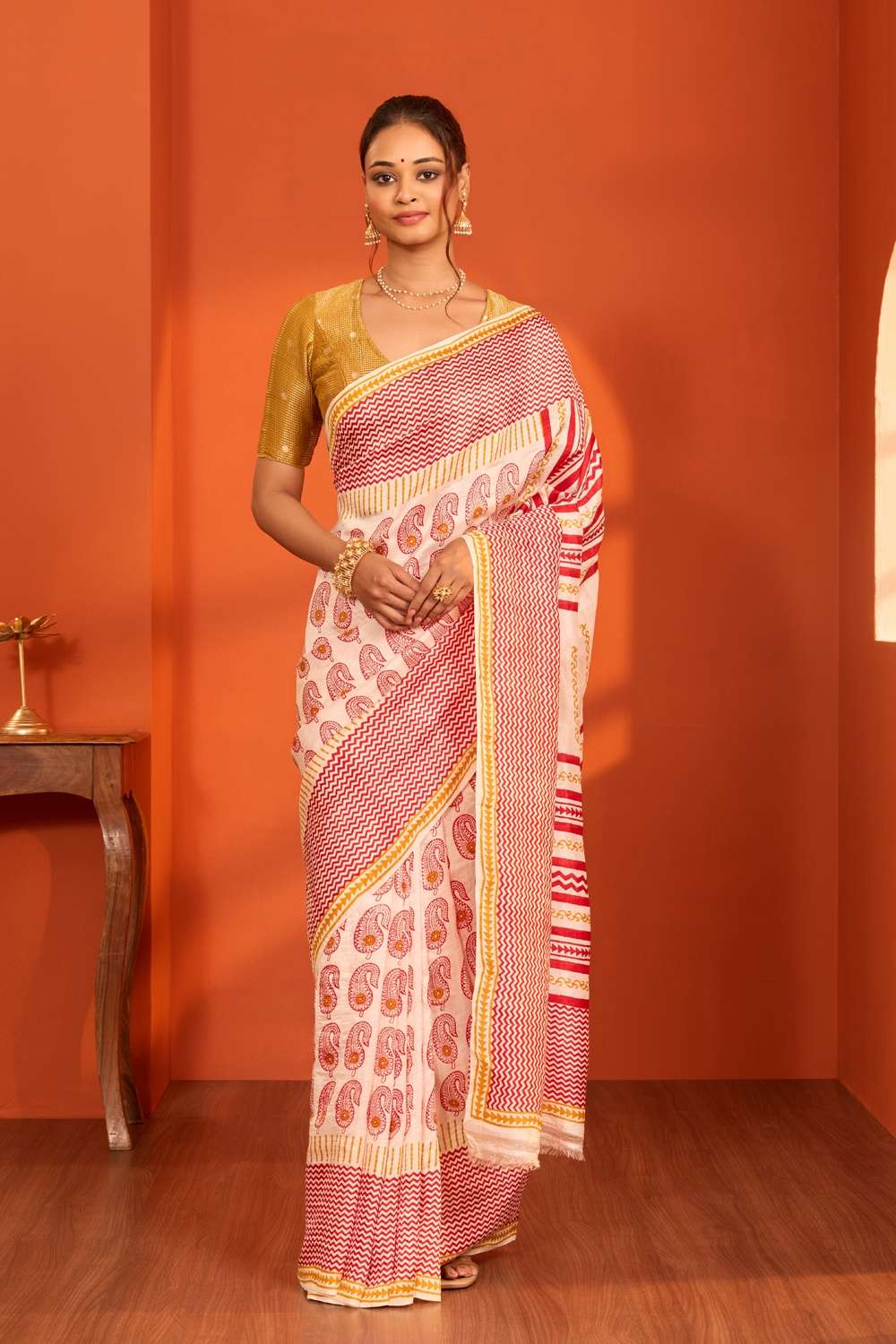
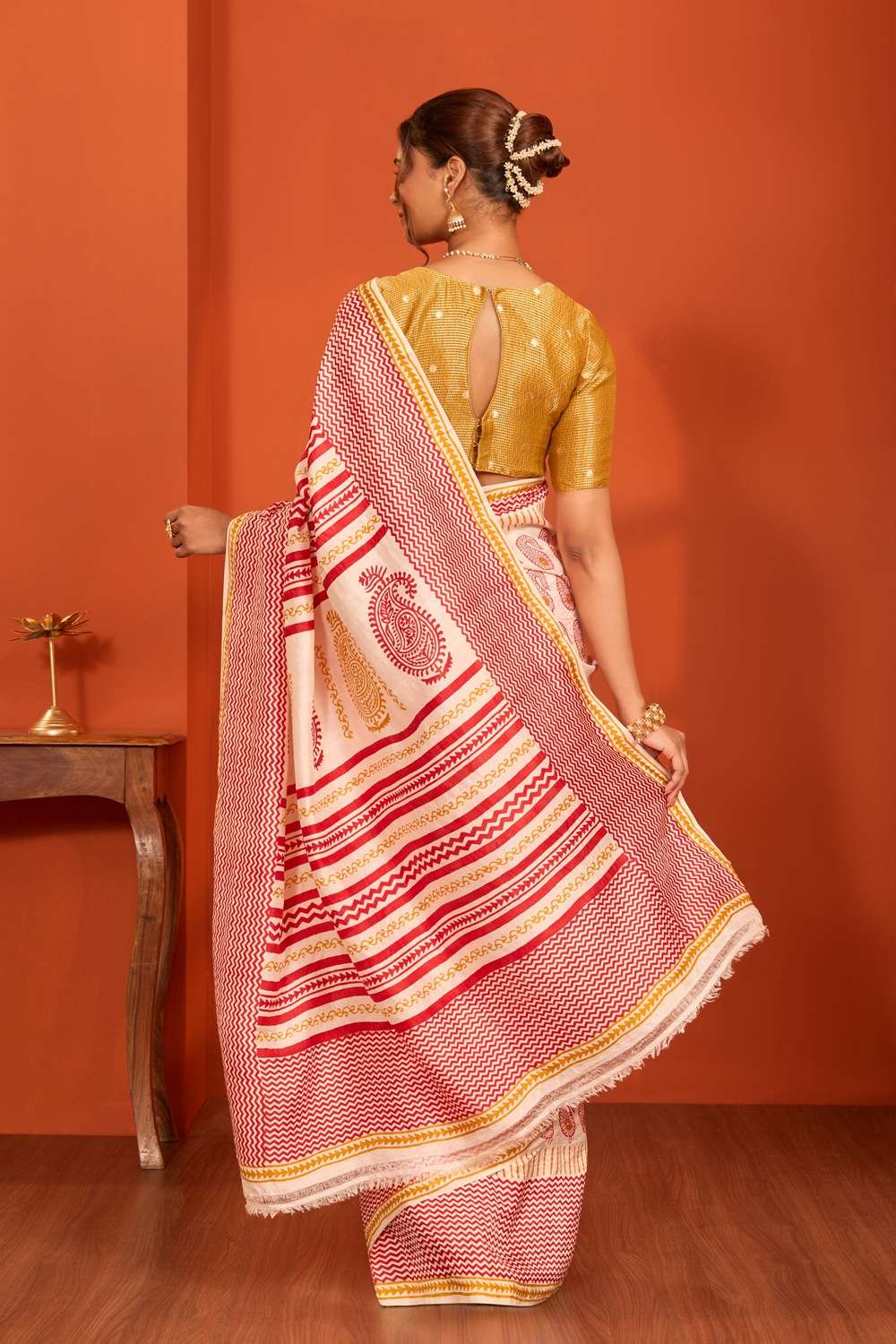
The yellow blouse piece, as in the product images, picks up the edging. Gold jhumkas, shankha-pola and a large red bindi complete it.
For Sindoor Khela Itself: Coral Ombré Bengal Silk
A Bengal silk that shades from a cream pallu with fine stripes into a coral body printed with small florals, finished with a red border. The coral body is forgiving: a stray smudge of sindoor blends in far more than it would on pure white. It is the practical choice that still looks the part.
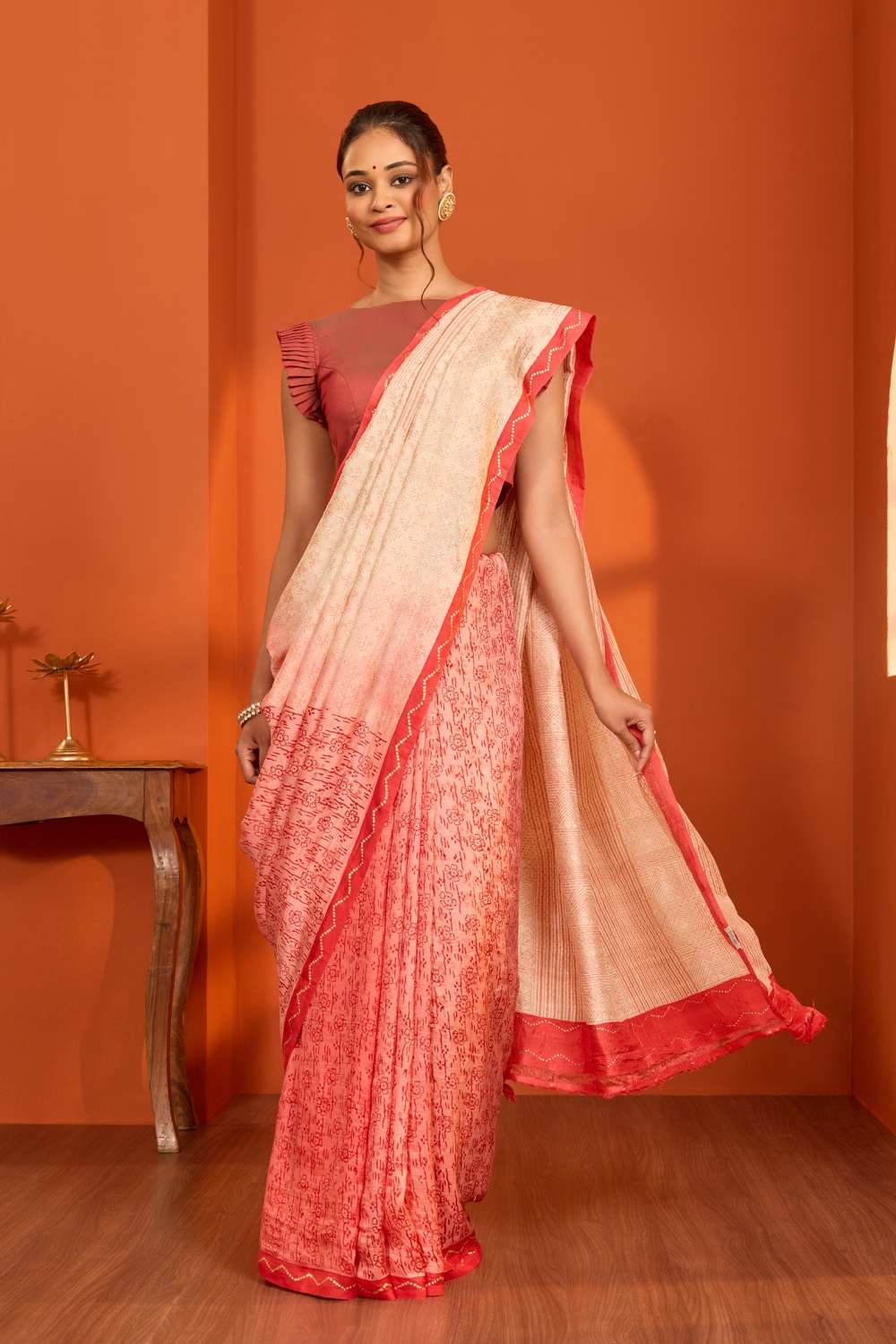
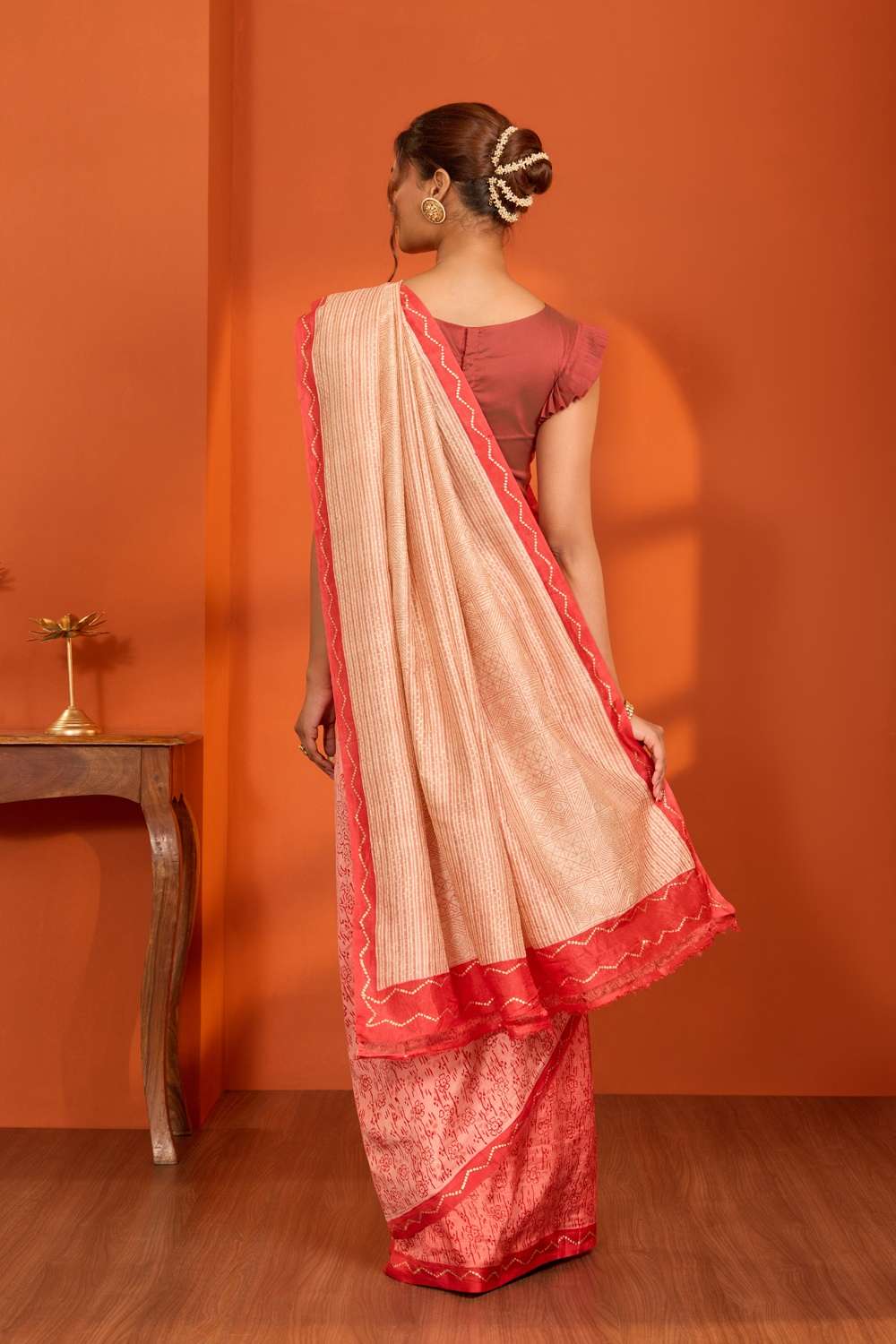
The red blouse piece keeps it classic. Add gold earrings, alta and a loha. Pin the pallu twice: at the shoulder and at the waist.
For the Boron: White Maheshwari with Rose-Gold Stripes
A white silk cotton Maheshwari with tiny red buttis, a rose-gold border and a pallu of pink silk and gold stripes, finished with tassels. Maheshwari is light and crisp, with a gentle sheen, and the white body makes the red of the sindoor stand out in photographs. Browse more Maheshwari sarees.
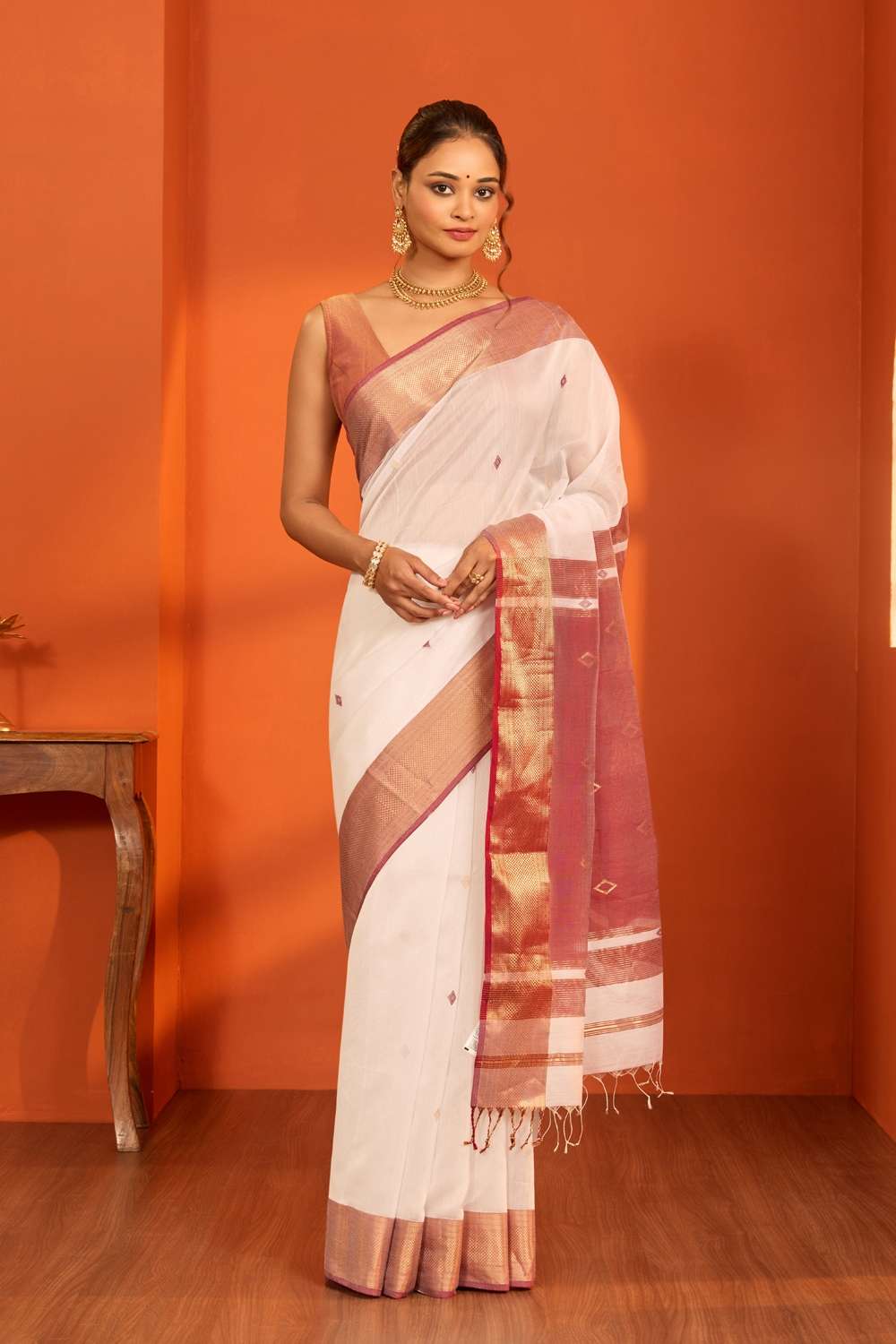
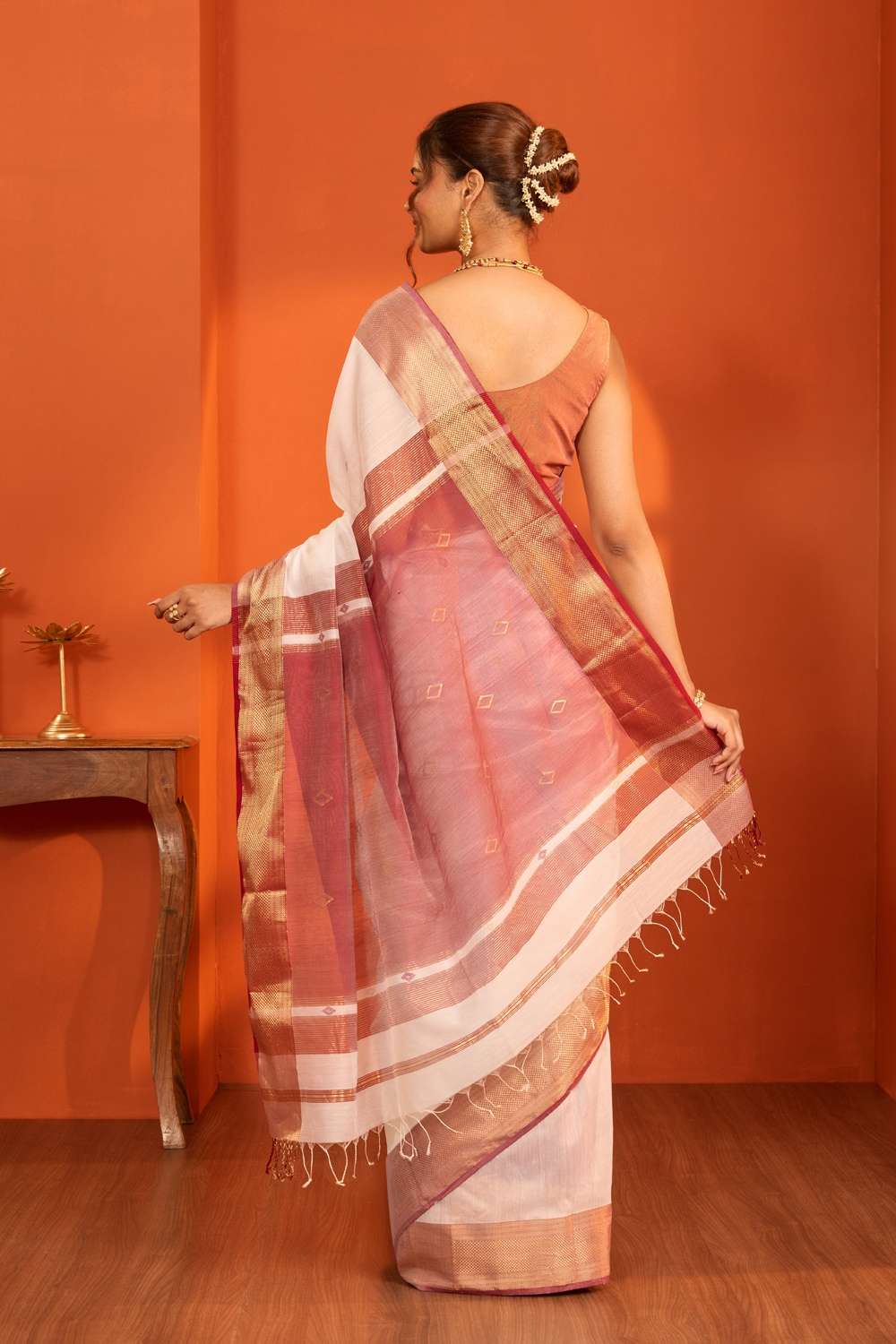
A red blouse, as listed, with gold jhumkas and a red bindi. Keep the jewellery light; you will be reaching forward to the goddess.
For the Bijoya Evening: Beige Tissue Maheshwari
A beige tissue cotton Maheshwari with a soft gold sheen, a fine red-and-gold border and a striped pallu finished with tassels. It is the saree to change into after the sindoor, for an evening of Bijoya visits and sweets. Tissue catches lamplight beautifully; see more tissue sarees.
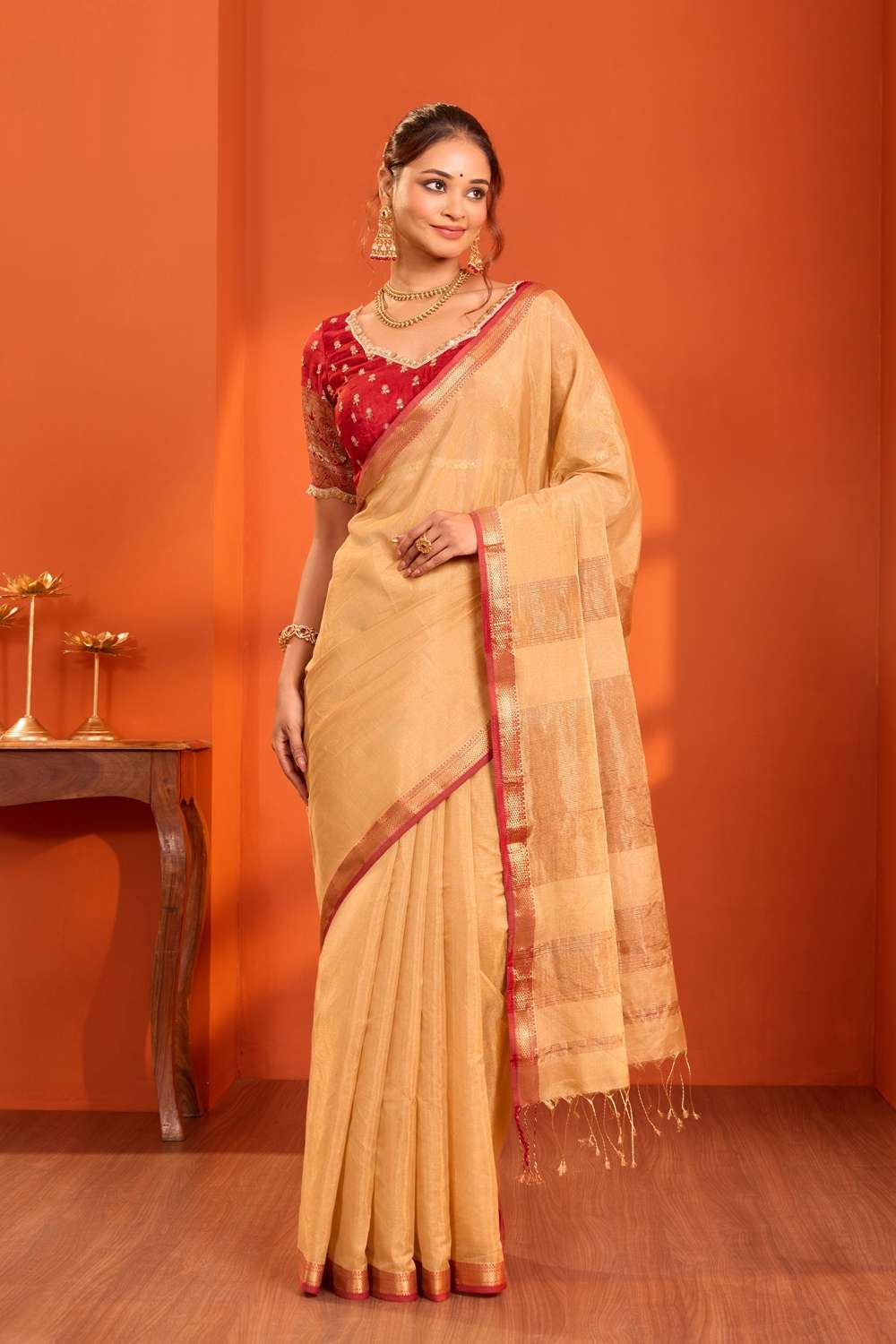
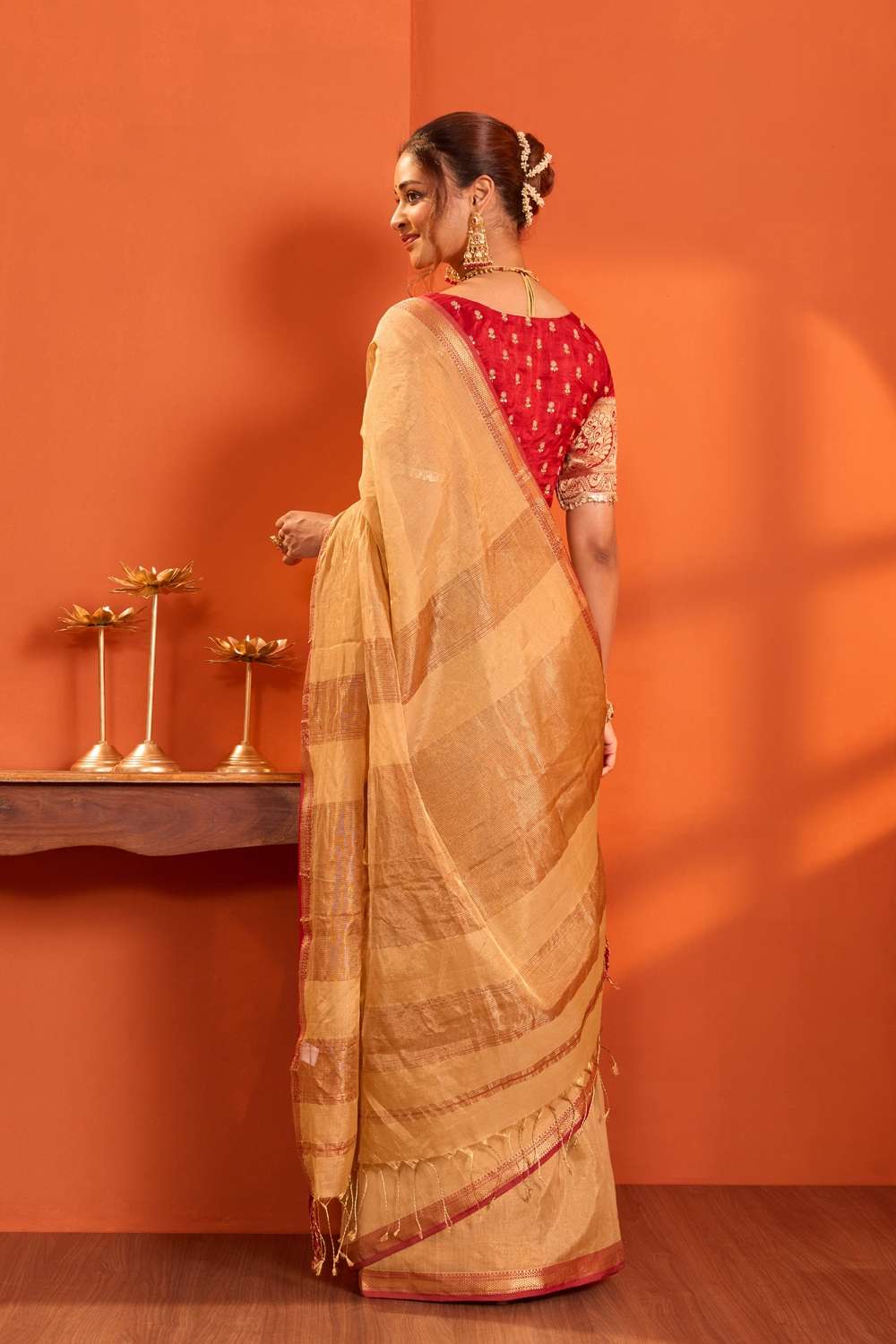
The red blouse piece is the easiest pairing. Add a gold choker and a fresh red bindi.
For a Dashami Dinner: Off-White Cutwork Banarasi
An off-white silk georgette Banarasi in the cutwork technique, with soft gold and green motifs on the body, a red border and a red-orange pallu with gold medallions. Georgette is fluid and light, so it moves well through an evening, and the red pallu brings the festival colours home. The zari is listed as faux. For more, browse Banarasi sarees.
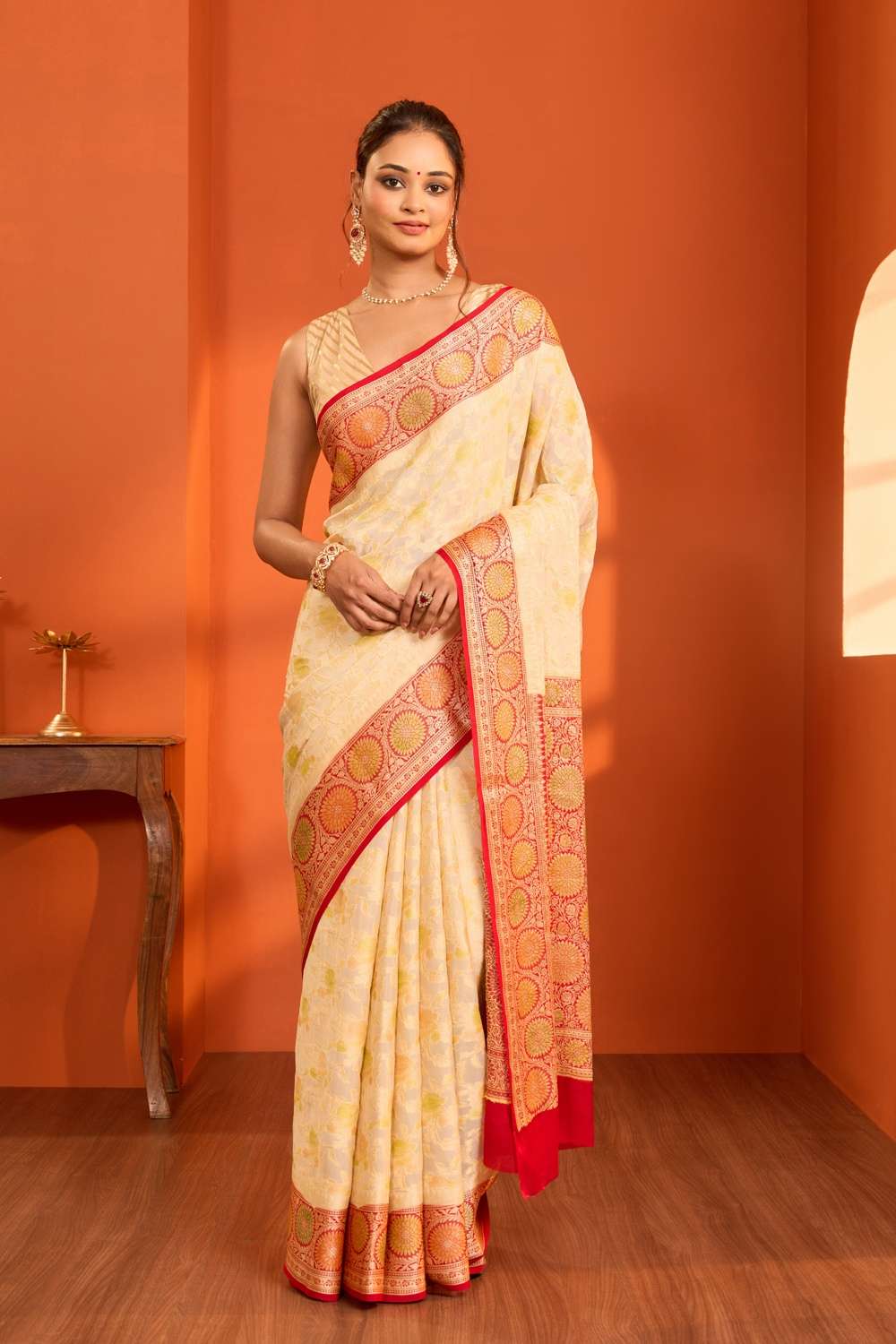
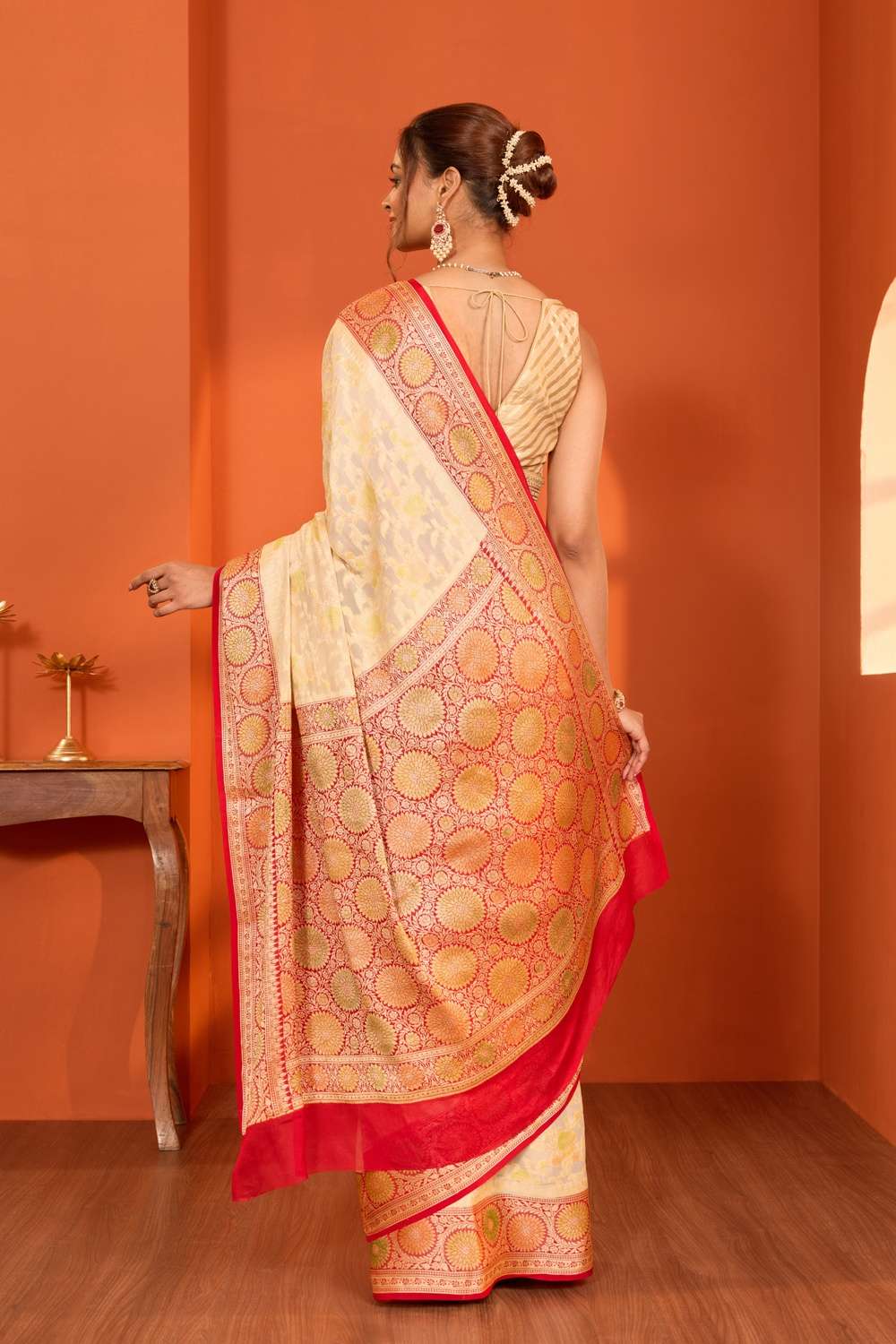
The red blouse piece, gold chandbalis and a small potli. Wear it once the sindoor has been washed off.
Explore Red Sarees
Red borders and red pallus for Dashami morning, Sindoor Khela and the evening after.
The Bengali Drape, Step by Step
The traditional drape shows the red border twice, which is exactly what you want in the photographs.
- Start at the right hip. Tuck the plain end into your petticoat and wrap the saree once around your waist.
- Pleat wide. Make a few broad pleats, about a hand-span each, and tuck them in at the front so the border falls in straight red lines.
- Over the left shoulder. Take the pallu over your left shoulder and let it hang to the back of your knees.
- Round and back. Bring the pallu end around under your right arm and lay it over your left shoulder again.
- Pin it twice. Pin at the left shoulder and at the waist. You will be hugging, laughing and reaching for sindoor; nothing should move.
- Add the chabi gochha. Tie a bunch of keys, real or decorative, to the pallu end, as Bengali women traditionally do.
What to Wear With It
| Zone | What to wear | A small tip |
|---|---|---|
| Hair | A low khopa bun, wound with jasmine or a single red flower | Pin it tight; there will be a lot of hugging |
| Forehead | A large round red bindi | Draw it with kumkum; stick-on bindis slide off in the crowd |
| Parting | Sindoor, for married women | It will be refreshed many times this afternoon |
| Ears and neck | Gold jhumkas; a gold chain or choker | Avoid pearls and light stones that sindoor stains |
| Wrists | Shankha, pola and loha | The heart of the look |
| Feet | Alta and silver payal | Apply the alta the night before |
A red blouse is the classic pairing. For a sharper look, try black or white with three-quarter sleeves; sleeves also keep sindoor off your arms. Keep your make-up simple and long-wearing: a smudge-proof kajal and a red lip that can take a few hugs.
Hair and Make-up That Lasts
- A low bun, pinned firmly. It survives hugs and keeps sindoor out of loose hair.
- Smudge-proof kajal and a matte red lip. They hold up to the heat, the crowd and the laughter.
- A light base. Sindoor sits on top of heavy foundation and smears; a light, set base looks better in the photographs.
- Wet wipes in your bag. For hands, before you touch your saree or your phone.
What to Carry
- Your own sindoor box. Small, with a lid that closes firmly.
- Safety pins. Four or five, for the pallu and for a friend who needs one.
- Wet wipes and a small towel. For hands and faces after the play.
- A cloth bag. Leave the leather handbag at home; sindoor stains it.
- A change of clothes, if you are going straight on to Bijoya visits. A light cotton saree or a kurta set folds small and saves the evening.
A Little Etiquette
- Offer, then apply. Hold out the sindoor and let the other person accept before you smear it.
- Start with the elders. Many women touch the feet of older relatives and offer them sindoor first.
- Be gentle with first-timers. Not everyone wants a full face of red; a touch on the forehead is enough.
- Remember the goddess first. The boron, the farewell to Durga, comes before the play. Many women still feel the lump in the throat as she leaves, and the sindoor that follows is as much comfort as celebration.
Saving Your Saree Afterwards
- Shake it off first. Let the sindoor dry and shake or brush off as much powder as you can. Rubbing pushes it into the weave.
- Cold water only, for cotton. Rinse a cotton saree from the back of the stain in cold water, then wash it on its own.
- Silk goes to the dry cleaner. Take silk, silk cotton and Banarasi in within a day or two, and point out the stains.
- Clean yourself before you sit. Wipe hands and face before you settle into a car seat or a sofa in your saree.
For the meaning behind the red border, read The Sacred Red Border. To choose a laal paar for every other day, see how to choose the right laal paar saree. For classic white bodies with red borders, browse Taneira's white sarees.
Find Your Dashami Saree
Red-bordered weaves for the last, happiest day of the puja.
Frequently Asked Questions
What do you wear for Sindoor Khela?
A red and white saree, usually white or off-white with a red border, worn with shankha-pola, a large red bindi, gold jewellery and alta.
Who takes part in Sindoor Khela?
Traditionally, married women, who offer sindoor to the goddess and then to one another, wishing each other a long married life. In many pandals today, more women join in.
Which saree is best for Sindoor Khela?
A printed silk or a cotton is easiest to clean afterwards, and a coral or printed body hides small marks. Keep your finest silk for the morning puja.
How do I remove sindoor from a saree?
Let it dry, then shake or brush off the powder without rubbing. Rinse cotton from the back in cold water; take silk to a dry cleaner within a day or two.
How do I drape a saree the Bengali way?
Make a few broad pleats at the front, take the pallu over the left shoulder, bring it round under the right arm and lay it over the left shoulder again. Pin at the shoulder and waist.
What jewellery goes with a laal paar saree for Sindoor Khela?
Shankha, pola and loha on the wrists, gold jhumkas, a gold chain or choker, and a large red bindi. Avoid pearls, which sindoor stains.

