How to Choose a Traditional Saree for Bhai Dooj: Silk, Banarasi or Kanjivaram?
You open the cupboard on the morning of Bhai Dooj and there they are: the Kanjivaram from your wedding, the Banarasi your mother gave you, and the lighter silk you actually wear. Your brother is coming at ten. You have about four minutes to decide.
This guide makes that decision quicker. It compares the three traditional Indian sarees most sisters reach for, explains what sets each apart, and picks six silk sarees, Kanjivaram and Banarasi among them, to suit the kind of Bhai Dooj you are having.
The short answer
Kanjivaram for a formal family gathering, Banarasi for a festive tilak with lots of photographs, and a lighter silk such as tussar for a long day at home.
If you are hosting, choose comfort; if you are visiting, choose the richer weave.
Silk, Banarasi and Kanjivaram, Side by Side
All three are silk sarees; the difference is where and how they are woven. Kanjivaram comes from Kanchipuram in Tamil Nadu, Banarasi from Varanasi in Uttar Pradesh, and "silk" covers everything else, from Maheshwari to tussar. Here is how they compare on the things that matter on the day.
| Kanjivaram | Banarasi | Other silks (tussar, Maheshwari, soft silk) | |
|---|---|---|---|
| Weight | Heavy and firm | Medium to heavy, depending on the weave | Light to medium |
| Feel | Thick, with an almost structured drape | Fluid; moves when you move | Soft, often with a natural texture |
| Sheen | Rich, deep lustre | Bright zari, from gold to silver | Softer; tussar has a matte glow |
| Typical design | Contrast borders and pallu, temple and checks | Floral jaals, buttis and Mughal-inspired motifs | Stripes, prints, embroidery |
| Best on Bhai Dooj for | A formal family gathering or an evening dinner | The tilak and the photographs | A long day of hosting and cooking |
Any of the three is right for Bhai Dooj. The tilak itself takes a few minutes; what you are really choosing for is the rest of the day. Hold each saree up for a minute before you decide. A Kanjivaram will feel heavy in your arms, a Banarasi will slide, and a tussar will feel like almost nothing. Then picture yourself in it at four in the afternoon.
One more thing to check before you buy is the zari. Pure zari is silver thread coated with gold; tested zari is usually a copper thread plated with silver and gold. Taneira lists the zari on each product page, along with the craft and origin. Kanchipuram silk sarees and Banaras brocades and sarees both hold Geographical Indication registrations for their regions.
Two Kanjivaram Silk Sarees and a Brocade
For a Formal Family Gathering: Red Kanjivaram Woven All Over in Zari
A red-orange pure silk Kanjivaram with a body woven densely in gold zari motifs and a red border. The product page lists it as handwoven, with tested zari. It is a wedding-weight Kanjivaram silk saree, so wear it when the whole family is coming and the day is about sitting together. See more Kanjivaram sarees.
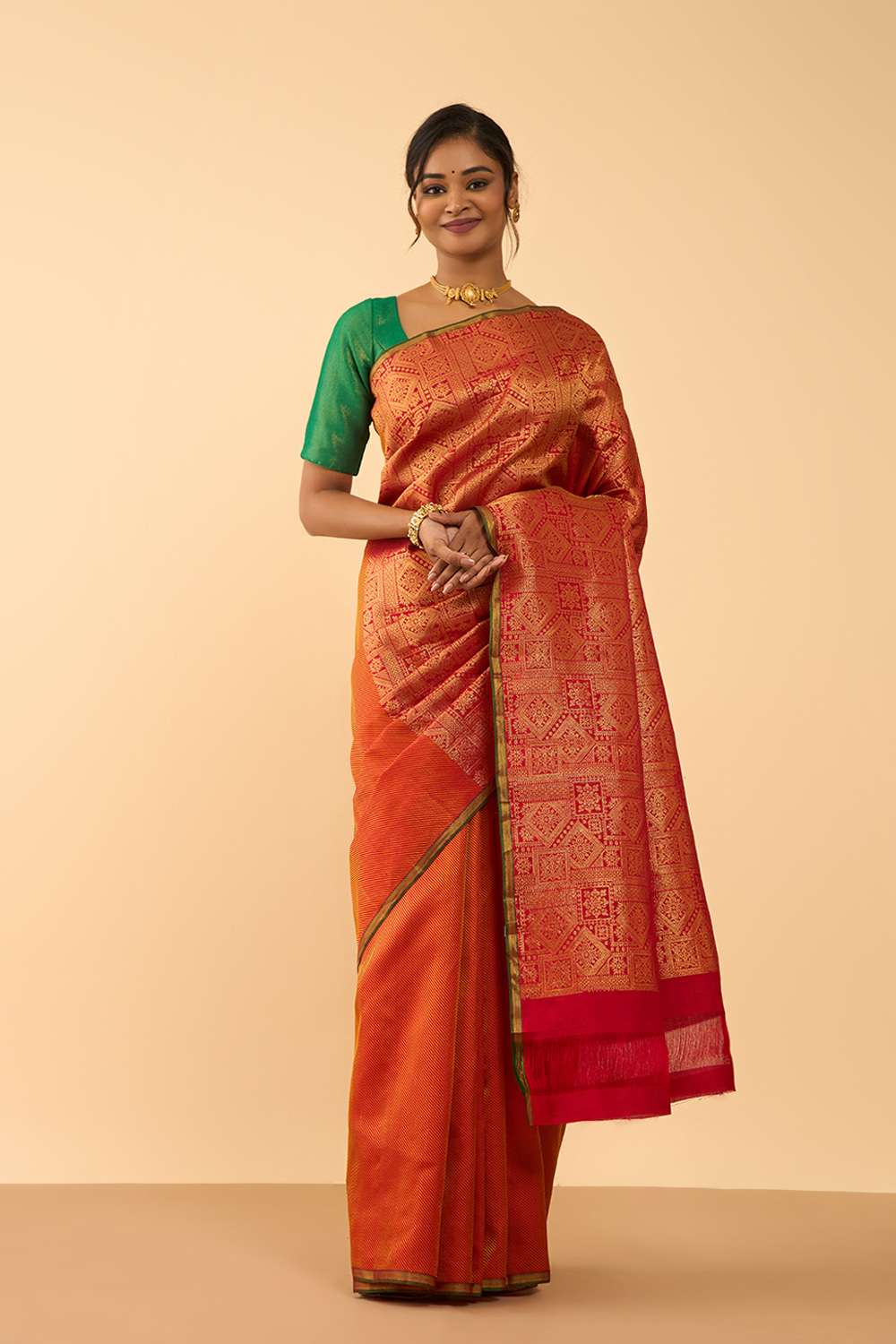
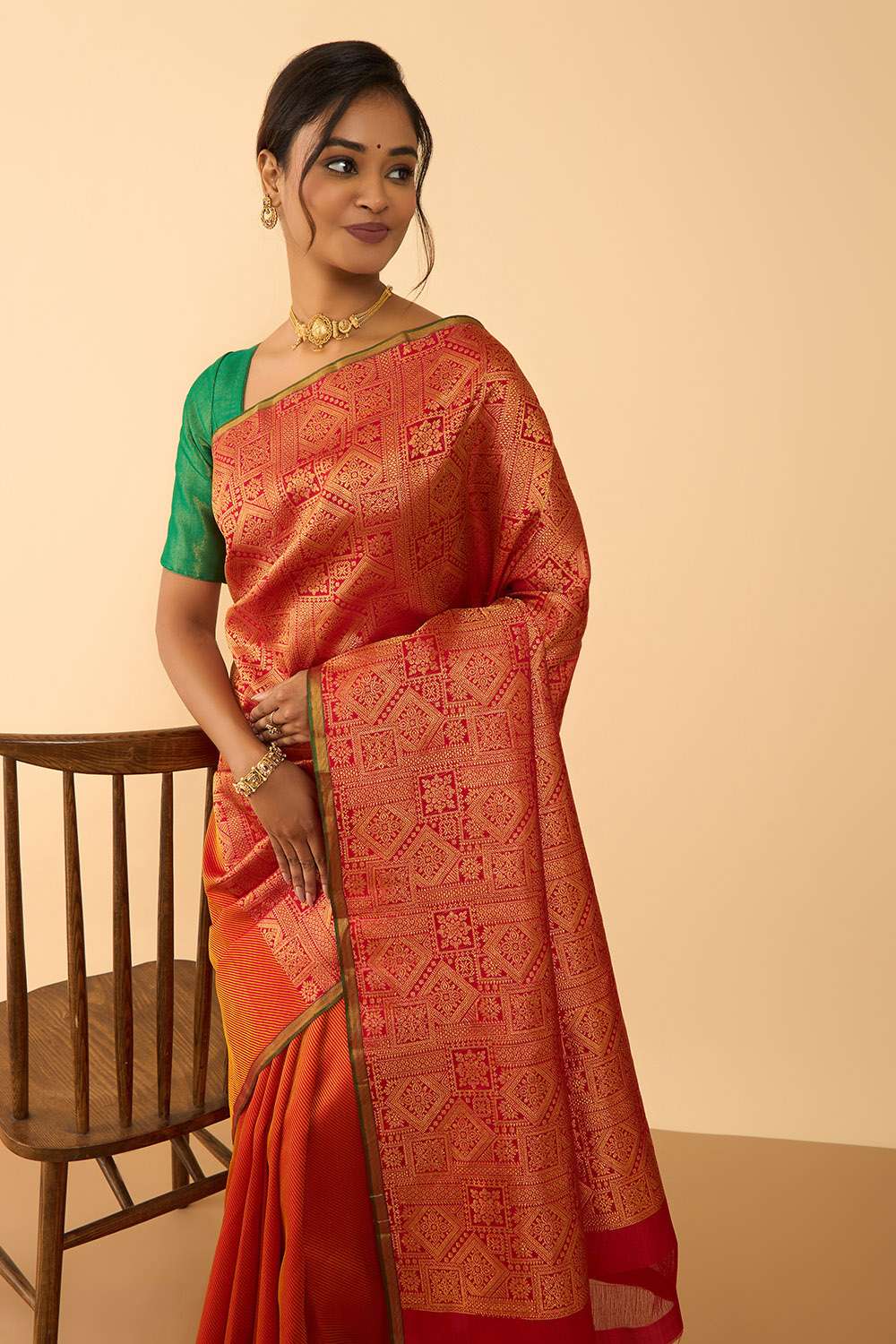
The red blouse piece is traditional; the photos pair it with green, a classic South Indian contrast. Temple jewellery, a long haram and jasmine in the hair suit it.
For the Tilak: Golden Yellow Kanjivaram with a Pink Border
A golden yellow pure silk Kanjivaram with gold zari and a pink border, listed as handwoven with pure zari. Yellow is auspicious and the pink border gives it warmth. It is lighter in mood than the red, and more suited to a morning tilak.
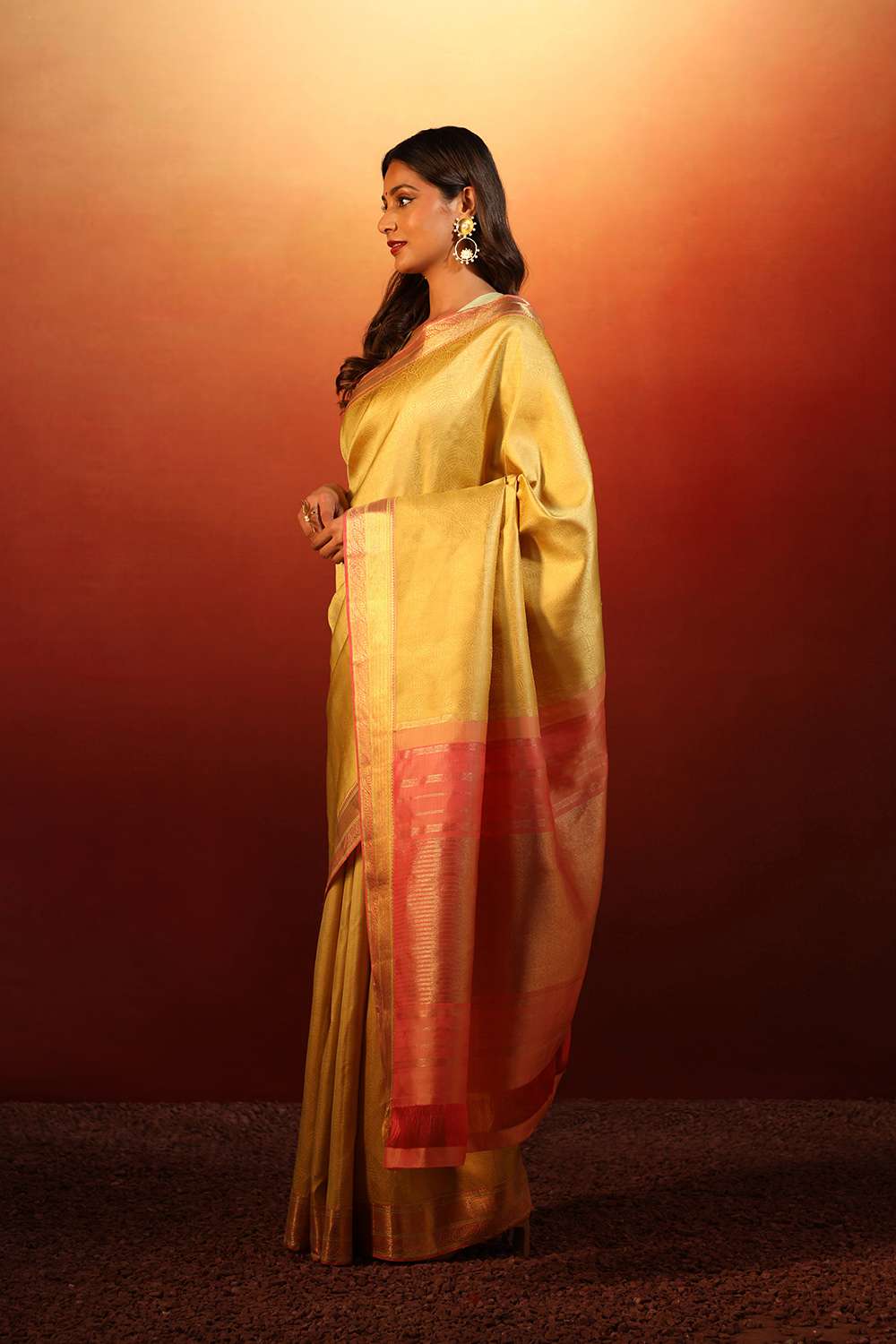
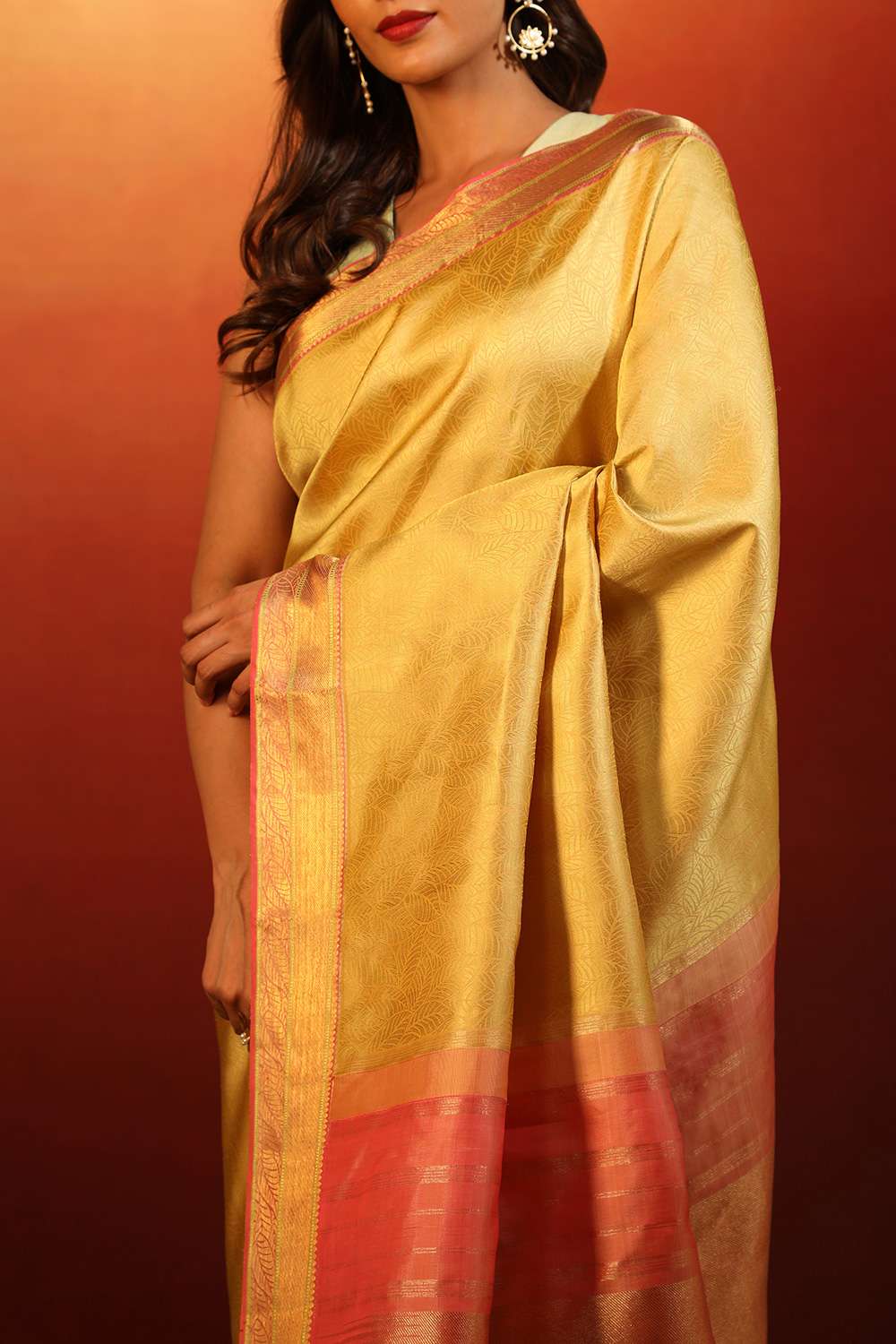
Wear it with the pink blouse piece, gold jhumkas and a pink bindi. Leave your hair in a long plait with a string of jasmine.
For an Evening Dinner: Dark Red Brocade Kanjivaram
A dark red Kanjivaram woven in brocade, with gold motifs across the body and a broad gold border. The zari is listed as gold tested zari. Brocade gives it a raised, rich surface that looks beautiful by lamplight.
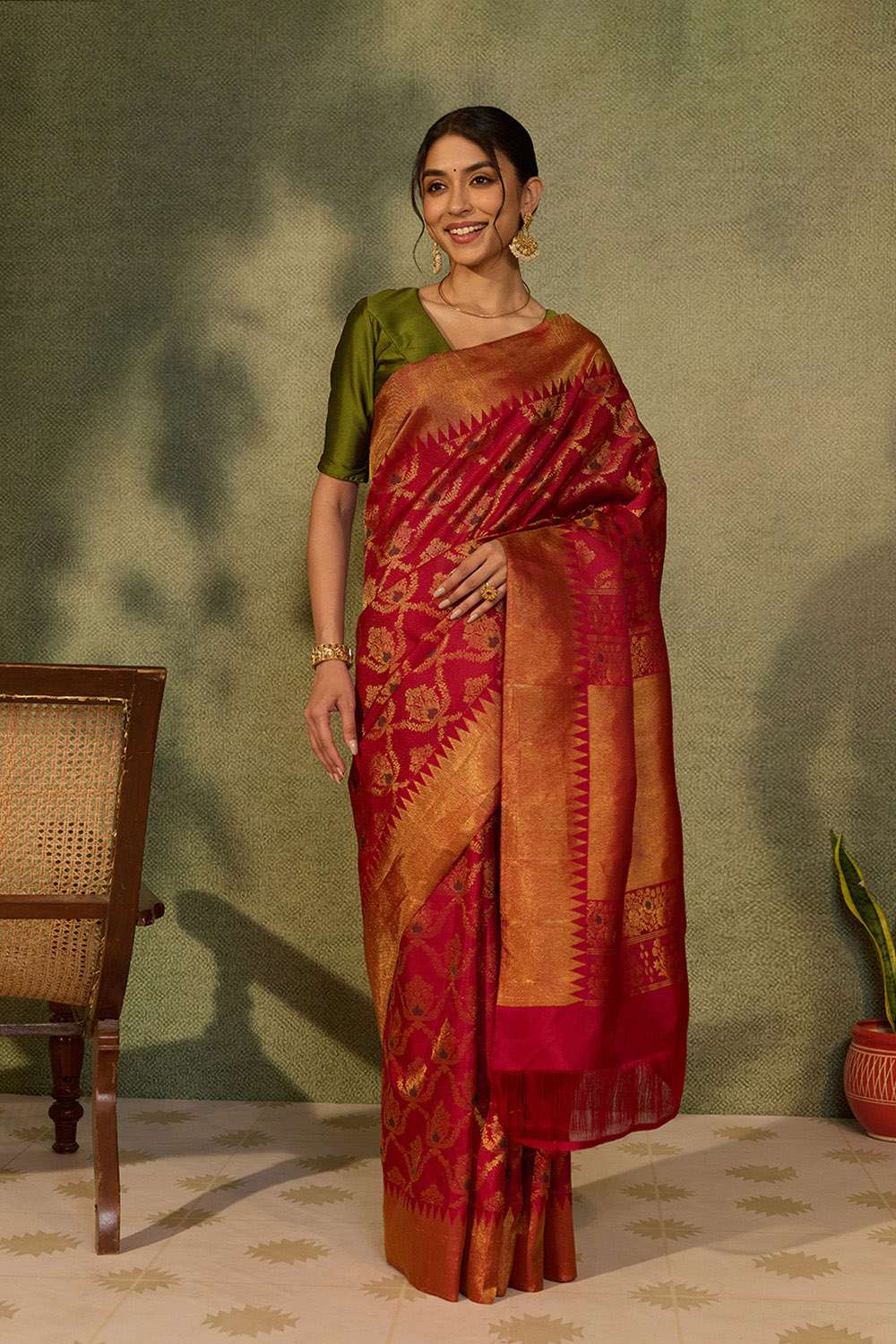
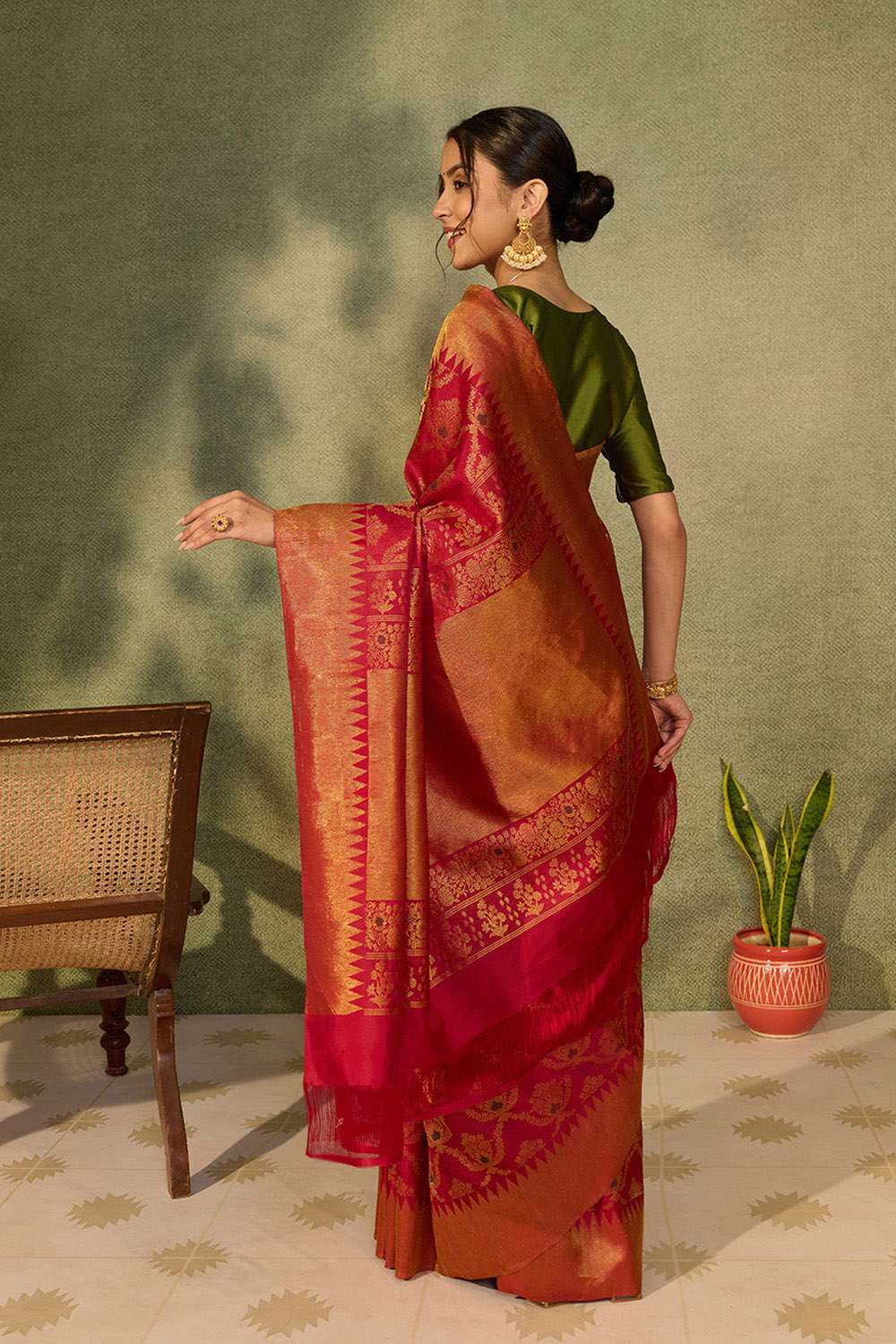
The red blouse piece is listed; the photos style it with olive green, which makes the red deeper. Antique gold jewellery and a bun suit it.
Two Banarasi Sarees for the Photographs
For a Traditional Tilak: Red Banaras Silk with Silver Buttis
A red Banaras silk with small silver and white buttis across the body and a border of floral sprays, woven in the extra-weft technique with silver and gold tested zari. The silver on red is less common than gold and looks striking in photographs. Browse more Banarasi sarees.
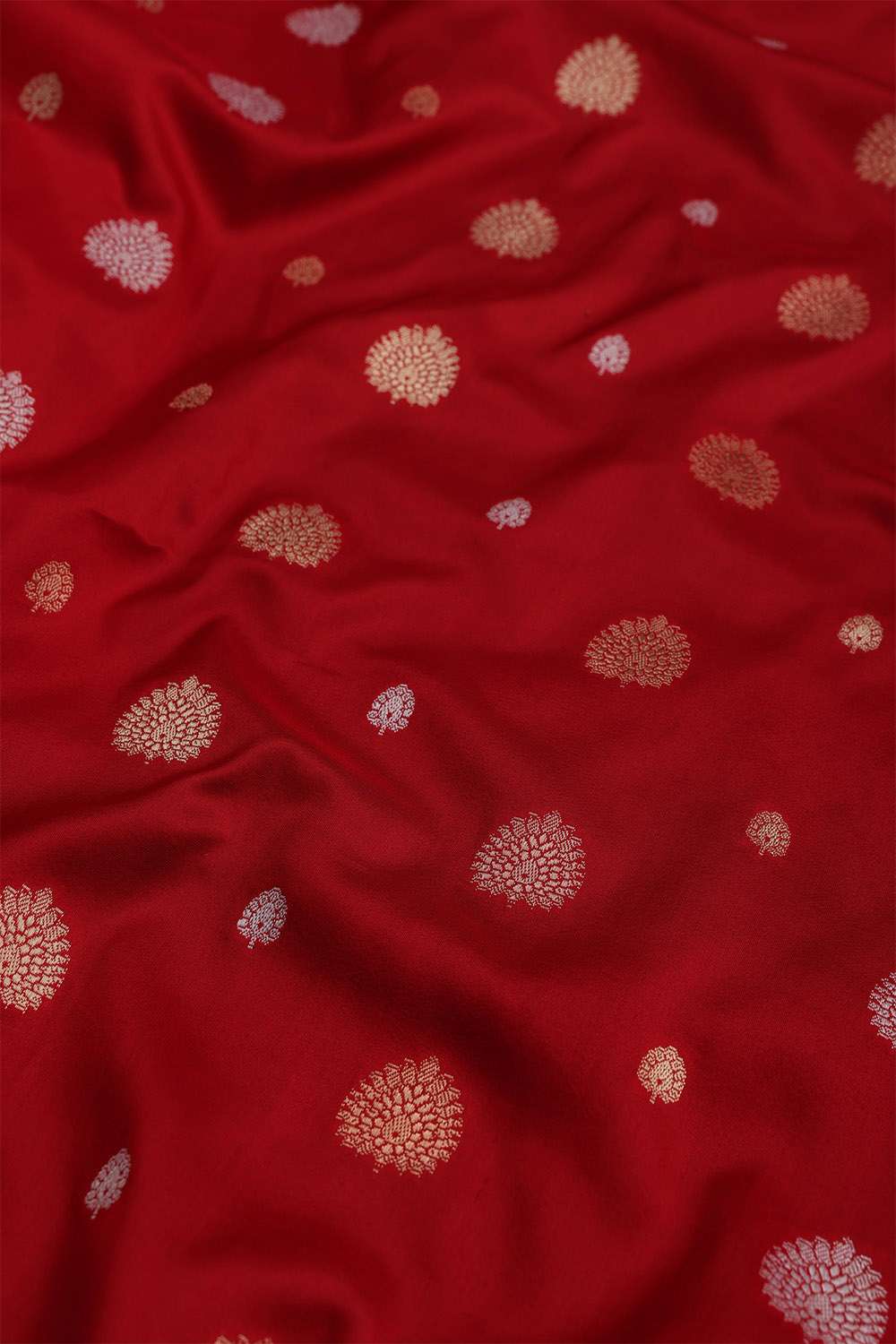
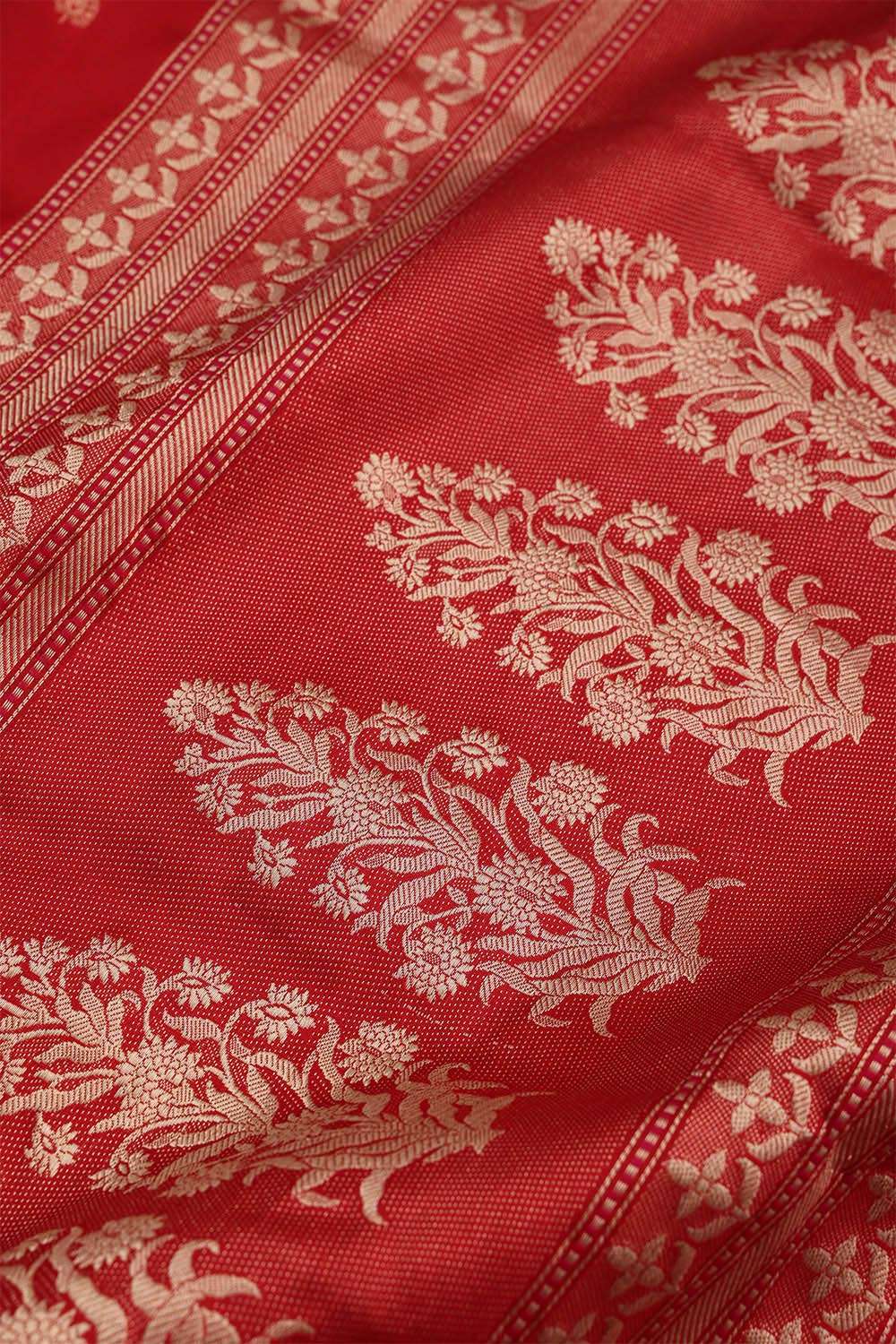
Silver or polki jewellery suits the silver zari. Add a red bindi and red glass bangles, and keep the blouse red.
For a Younger Sister: Pink Banaras Silk with Rose Medallions
A pink Banaras silk woven with large rose-pink floral medallions and gold tested zari, in the extra-weft technique. It is a cheerful, romantic Banarasi saree that suits a younger sister or a new bride's first Bhai Dooj.
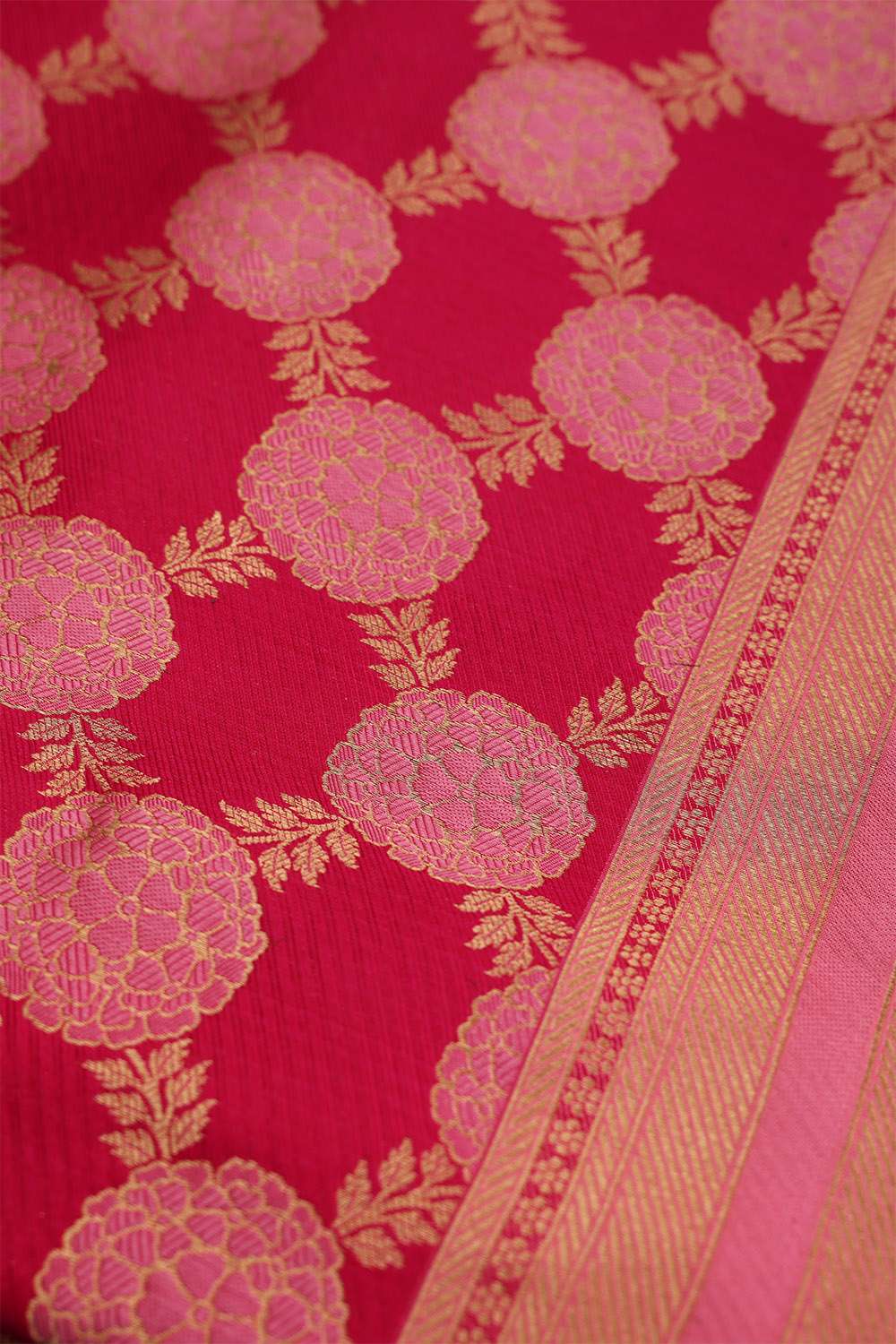
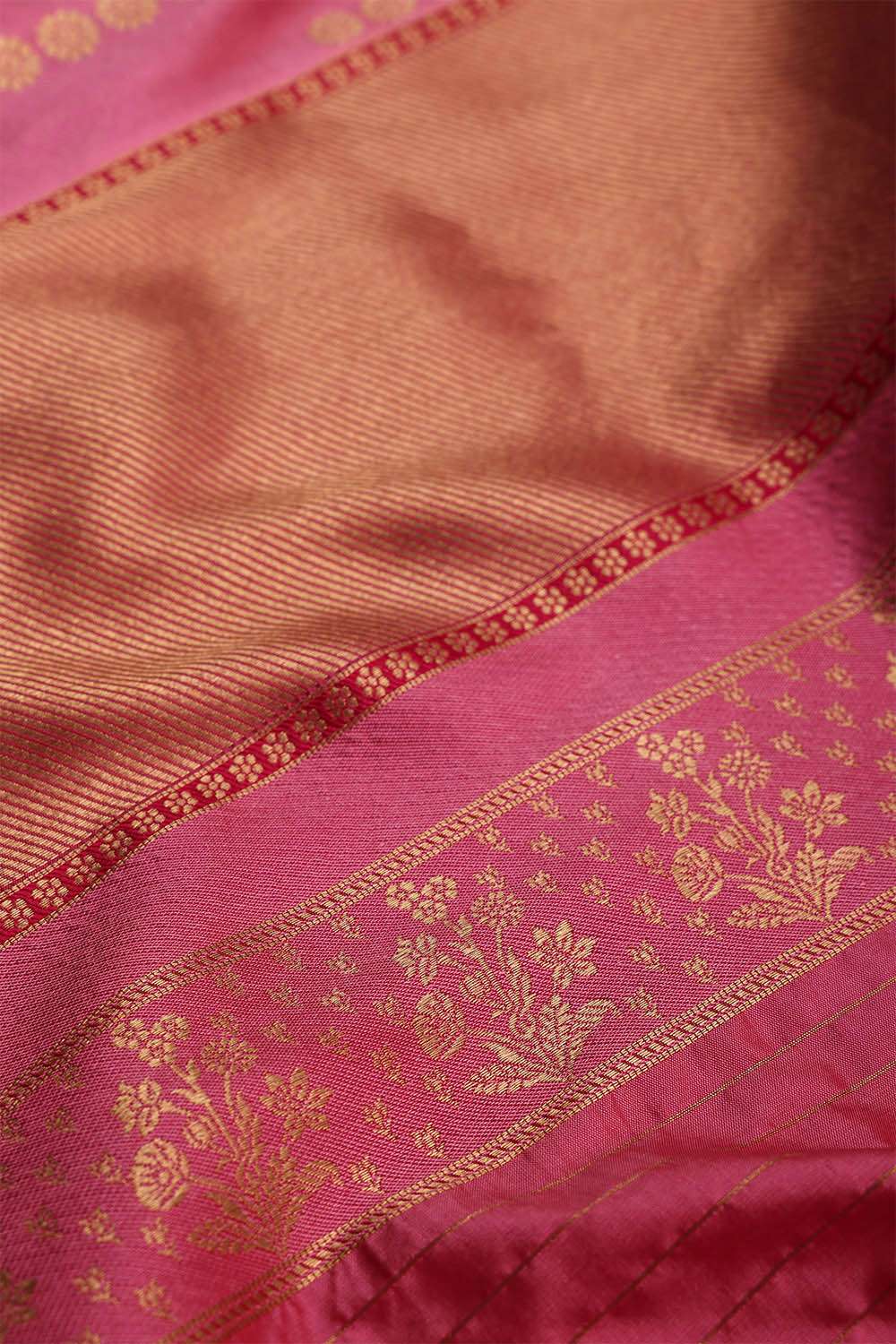
Pair it with a gold or pink blouse, gold jhumkas and a maang tikka for a new bride. A low bun with roses or jasmine finishes it.
And a Lighter Silk for a Long Day
For Hosting: Ochre Tussar with a Magenta Embroidered Pallu
A burnt orange, ochre-toned tussar silk with a magenta border and an embroidered magenta pallu. Tussar is a wild silk with a natural texture and a soft, matte glow, and it is far lighter than a Kanjivaram. If you are hosting, this is the silk to wear. See Taneira's tussar sarees.
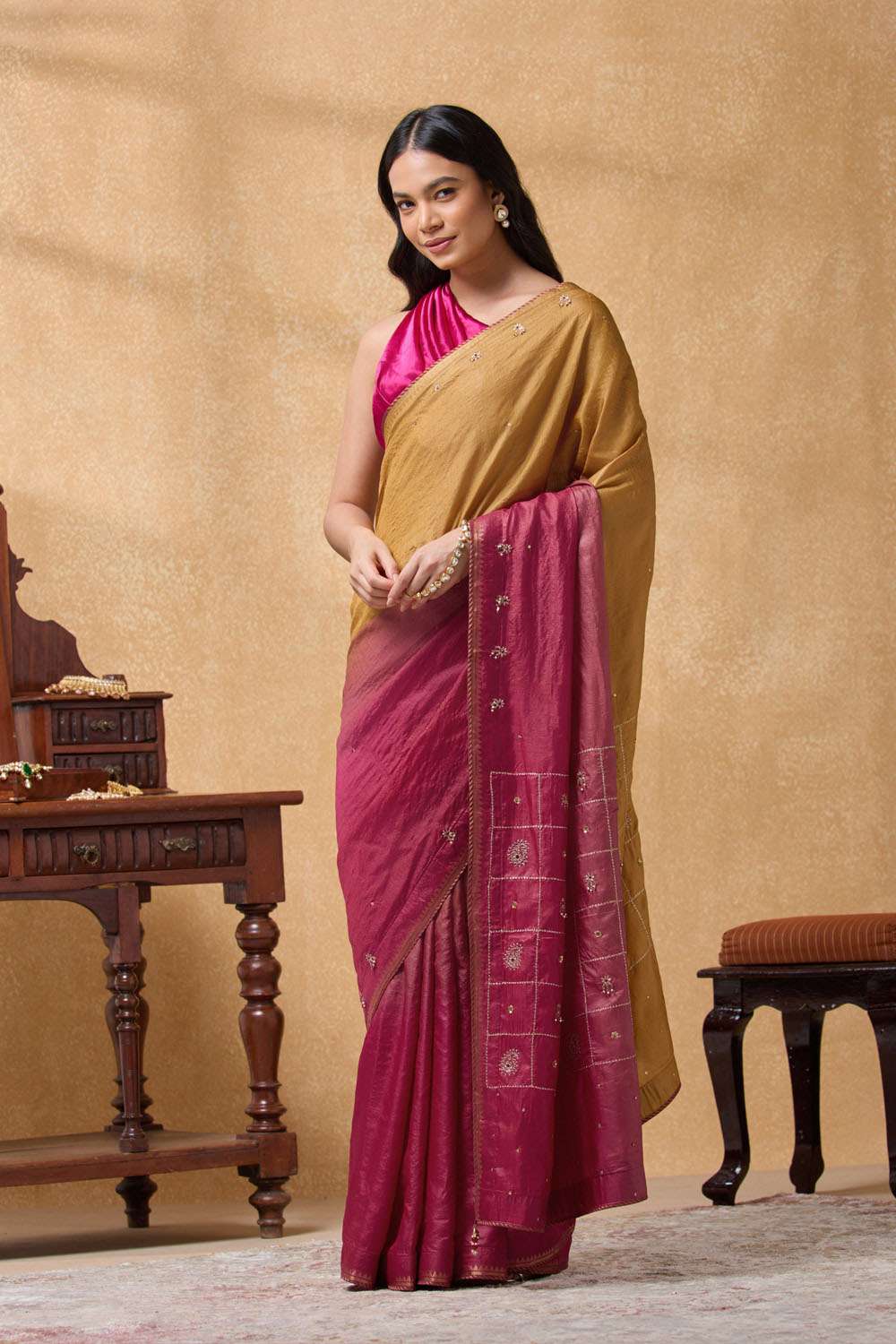
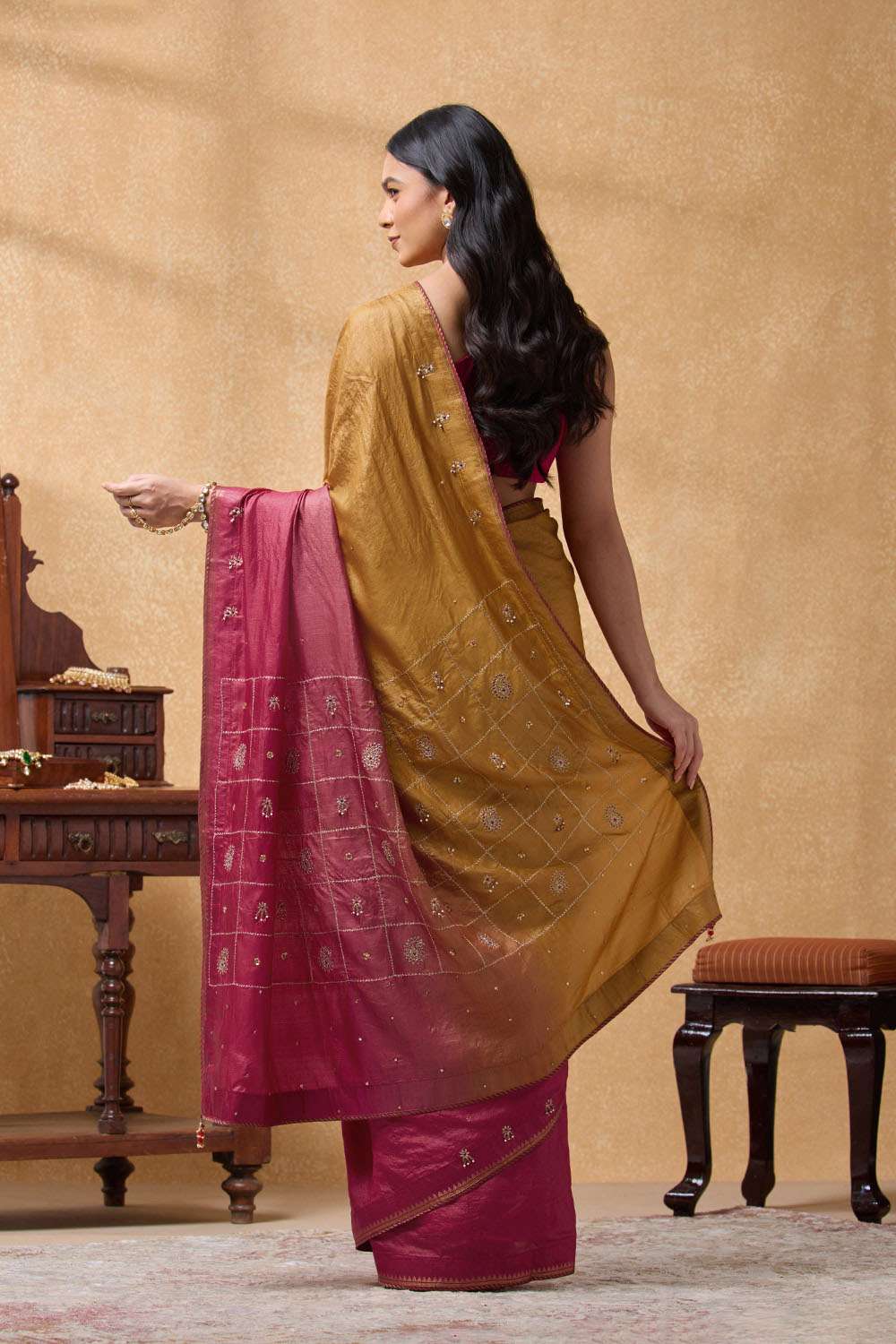
Wear it with the maroon blouse piece, gold earrings and a stack of bangles. It suits a relaxed drape with the pallu pinned at the shoulder.
Shop Festive Sarees
Kanjivarams, Banarasis and silks for the last day of Diwali and the weddings that follow.
Three Questions That Decide It
- Are you hosting or visiting? Hosting means hours on your feet; choose tussar or soft silk. Visiting means a few hours at a table; choose Kanjivaram or Banarasi.
- Morning or evening? A morning tilak suits lighter colours and lighter weaves. An evening dinner suits deep reds and heavy zari.
- How many photographs? If the family will be taking pictures all day, choose a Banarasi; the zari catches the light at every angle.
If you have already picked a Banarasi, our guide to styling a Banarasi saree for Bhai Dooj covers the blouse, drape and jewellery. If you want more silks to compare, see six silk sarees for Bhai Dooj.
Silk Saree Styles That Suit Each Weave
| Weave | Blouse | Jewellery | Hair |
|---|---|---|---|
| Kanjivaram | Contrast colour from the border, elbow sleeves | Temple gold, a haram, jhumkas | A long plait with jasmine |
| Banarasi | One colour from the body or the border | Gold or polki, matching the zari metal | A bun with a gajra |
| Tussar and other silks | Solid, often in a deeper shade | Gold earrings and bangles | Loose waves or a low bun |
For Bhai Dooj, red is the colour most families reach for. Taneira's pattu sarees include South Indian silks in deep reds, mustards and greens, if you want more Kanjivaram-style choices.
How to Spot the Real Thing
Turn the saree over before you buy. The back tells you more than the front.
- Kanjivaram border. In a traditional Kanjivaram, the border is often woven in a different colour from the body and interlocked with it, a technique called korvai. Look for a clean, firm join where the colours meet.
- Kadwa Banarasi. Each motif is woven on its own, so the back is neat, with no long threads running between motifs.
- Cutwork Banarasi. Extra threads float between motifs and are cut away, so you will see short cut ends at the back. That is normal, and it makes the saree lighter.
- Silk Mark. The Silk Mark label certifies that the fabric is pure silk. It does not certify the zari.
- The product page. Taneira lists fabric, origin, craft and zari for every saree, and some pages now list the loom. Read them before you buy.
Pick by Budget, Without the Price Tag
Prices change through the season, so think in fabric levels.
| Level | What to look at | Why |
|---|---|---|
| Everyday festive | Tussar, soft silk and printed silks | Light, wearable all year, gentle on the budget |
| Mid-range | Banarasi in tested zari, Maheshwari and Chanderi silks | Festive zari and colour at a moderate weight |
| Splurge | Kanjivaram with pure zari, kadwa Banarasi in pure silk | Heirloom pieces you will pass down |
If you are buying one saree for Bhai Dooj and the weddings that follow in November and December, a mid-range Banarasi or a red Kanjivaram will serve you longest.
Care for Each Weave
- Kanjivaram. Dry clean only. Store it folded in a muslin cloth and refold it every few months, since heavy zari cracks at fixed folds.
- Banarasi. Dry clean, and keep it away from perfume and damp. Wrap it in cotton with a few neem leaves.
- Tussar. Dry clean. Tussar can water-spot, so keep it away from drinks and spills.
Find Your Saree for Bhai Dooj
Kanjivaram, Banarasi and tussar silks for the tilak, the lunch and the evening.
Frequently Asked Questions
Which is better for Bhai Dooj, Kanjivaram or Banarasi?
A Kanjivaram suits a formal family gathering or an evening dinner. A Banarasi suits the tilak and photographs. For a long day of hosting, choose a lighter silk such as tussar.
Is a Kanjivaram saree heavy to wear?
Kanjivaram is one of the heavier silk sarees, with a firm, structured drape. It is best for a few hours at a gathering.
How can I tell a Kanjivaram from a Banarasi?
Kanjivarams usually have bold contrast borders and pallus with temple, check and stripe designs. Banarasis usually have floral jaals, buttis and Mughal-inspired motifs, with a more fluid drape.
What is the difference between pure zari and tested zari?
Pure zari is silver thread coated with gold. Tested zari is usually a copper thread plated with silver and gold. Taneira lists the zari on each product page.
What colour saree is best for Bhai Dooj?
Red, yellow and pink are the most traditional colours. A golden yellow Kanjivaram is a bright choice for a morning tilak.
Can I wear a silk saree to work and then to Bhai Dooj?
Yes, if you choose a lighter silk such as tussar or soft silk. Add jewellery and flowers before the tilak.

