The Connoisseur's Guide to Pure Garad Silk: Identifying Handwoven vs Powerloom Weaves
Hold a handwoven silk up to the window and you will see it: the faintest unevenness in the weave, a motif that is a fraction larger than its neighbour, a border that sits slightly proud of the body. A machine does not make those small choices. A weaver does, on every row.
Powerloom copies of Bengal's garad and of Banarasi silks are common, and some are good. If you are paying for a handwoven silk, you should know how to check, and what to ask. This guide starts with garad, then covers the techniques you will meet on red-bordered silks across India, with examples from Taneira's Bengali sarees.
What Pure Garad Is
Garad is silk woven from undyed yarn, so it keeps the natural off-white of the silk. It has a red or maroon border with a simple pattern, a pallu of red stripes and small motifs, often paisleys or tiny flowers, scattered across the body. It is woven mainly in Murshidabad, and in 2024 garad received a Geographical Indication registration for West Bengal.
Pure, in this context, means two things: the fabric is silk, and the saree is woven by hand. They are separate questions, and you should check both. For Bengal's silks, browse Taneira's Murshidabad sarees.
Handwoven or Powerloom: What to Look For
| Check | Handwoven | Powerloom |
|---|---|---|
| The weave up close | Tiny irregularities: slight variations in tension and thread thickness | Completely uniform across the whole length |
| The motifs | Each motif very slightly different in size or shape | Identical copies, repeated exactly |
| The back of the motifs | Extra-weft threads carried or tucked by hand, sometimes with small knots | Often clipped short and even |
| The selvedge (edges) | Slightly uneven, sometimes with small holes from the loom's temple | Dead straight and identical |
| Where border meets body | Follow the threads: a woven border is part of the fabric | Sometimes a separate strip, or a flat edge |
| The pallu end | Loose warp threads or a hand-finished fringe | Machine-finished edge |
No single check is proof. Look at three or four together; a handwoven saree will pass most of them.
Kadwa and Cutwork: Two Ways to Weave a Motif
Many red-bordered silks, Banarasi above all, carry woven motifs. How those motifs are woven tells you a great deal, and it is the easiest thing to check: turn the saree over.
| Kadwa | Cutwork | |
|---|---|---|
| How it is woven | Each motif is woven on its own with an extra weft that goes back and forth only within the motif | The extra weft runs across the full width, and the loose threads between motifs are cut away afterwards |
| The back | Neat, with no long floats or cut ends between motifs | Short cut ends visible around each motif |
| The finish | Defined, slightly raised motifs | Lighter fabric, crisp motifs |
Look at the Border: Beige Kadwa Banarasi with a Red Paar
A beige pure silk Banarasi woven in the kadwa technique, with a broad, densely patterned red border and a red pallu worked edge to edge with tested zari. Turn the pallu over and you should see each motif finished on its own, with no long threads floating between them. For more weaves of this kind, browse Taneira's Banarasi sarees.
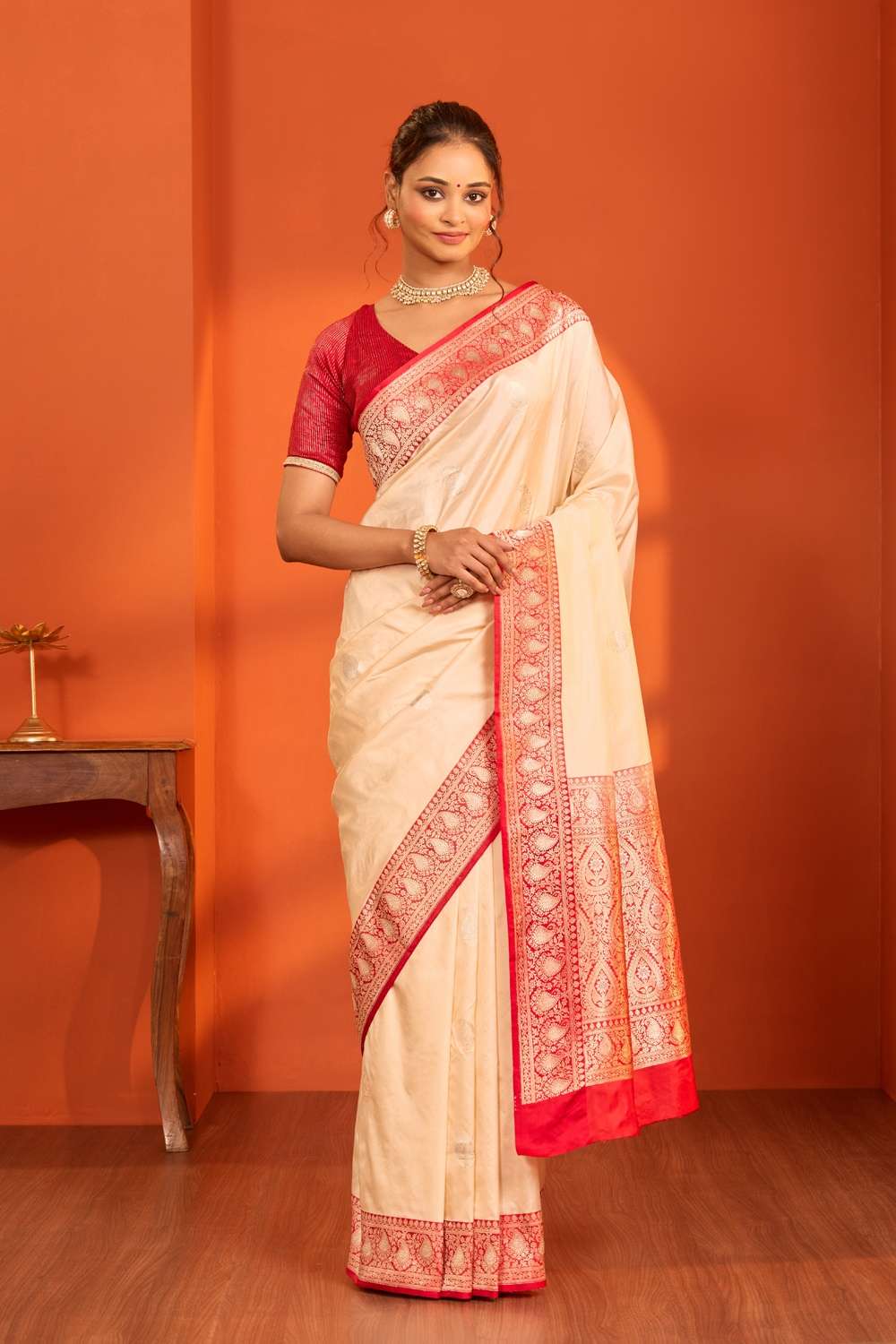
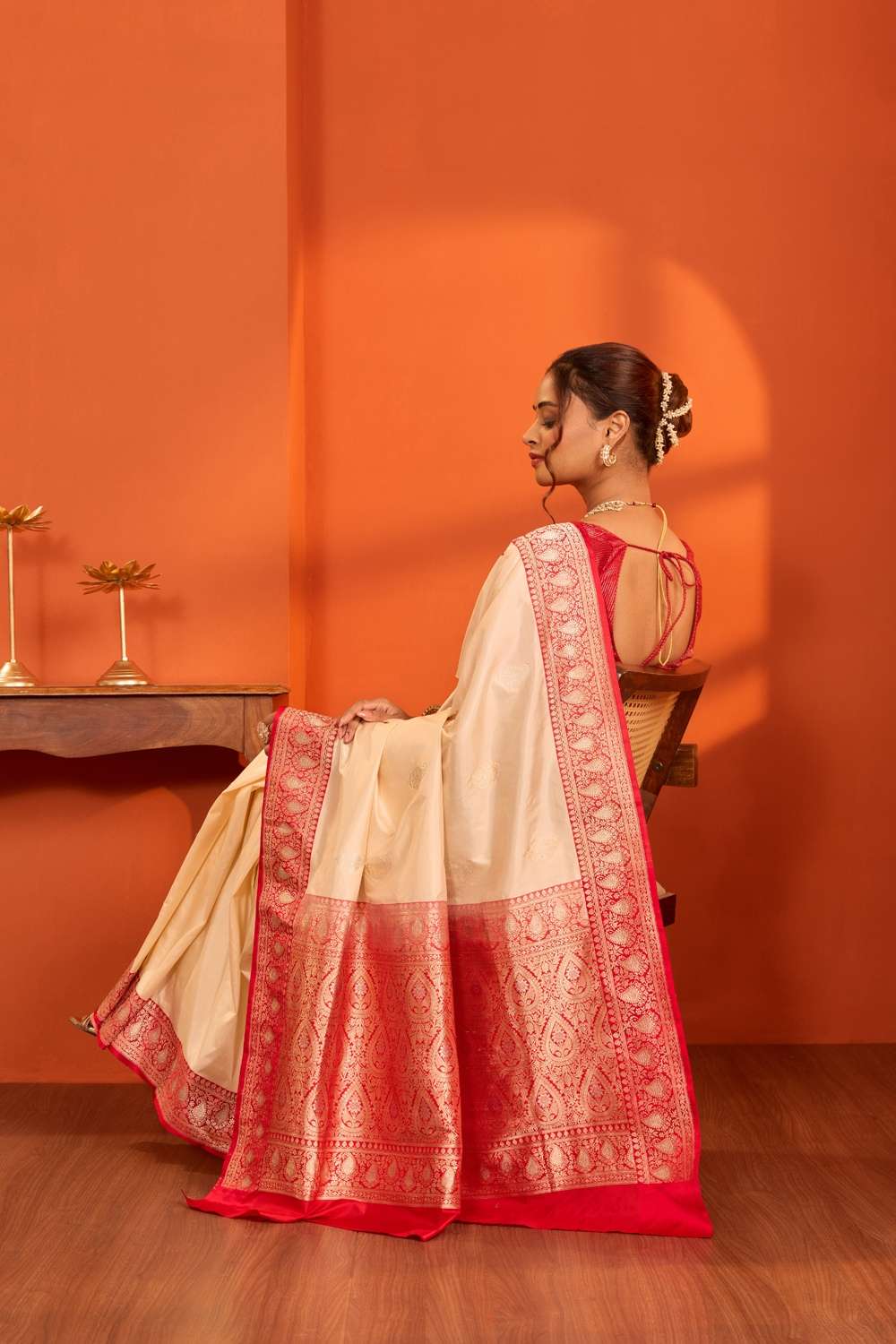
A red blouse, polki or gold jewellery and a red bindi. It suits a wedding ritual or the most formal puja.
Compare the Pallu: A Second Kadwa Banarasi
A sister piece with a beige silk body, a red woven border and a red pallu of floral and geometric motifs in tested zari. Put two kadwa sarees side by side and you will notice small differences in the motifs, exactly what you should expect from a woven piece. Both are listed with only one piece left.
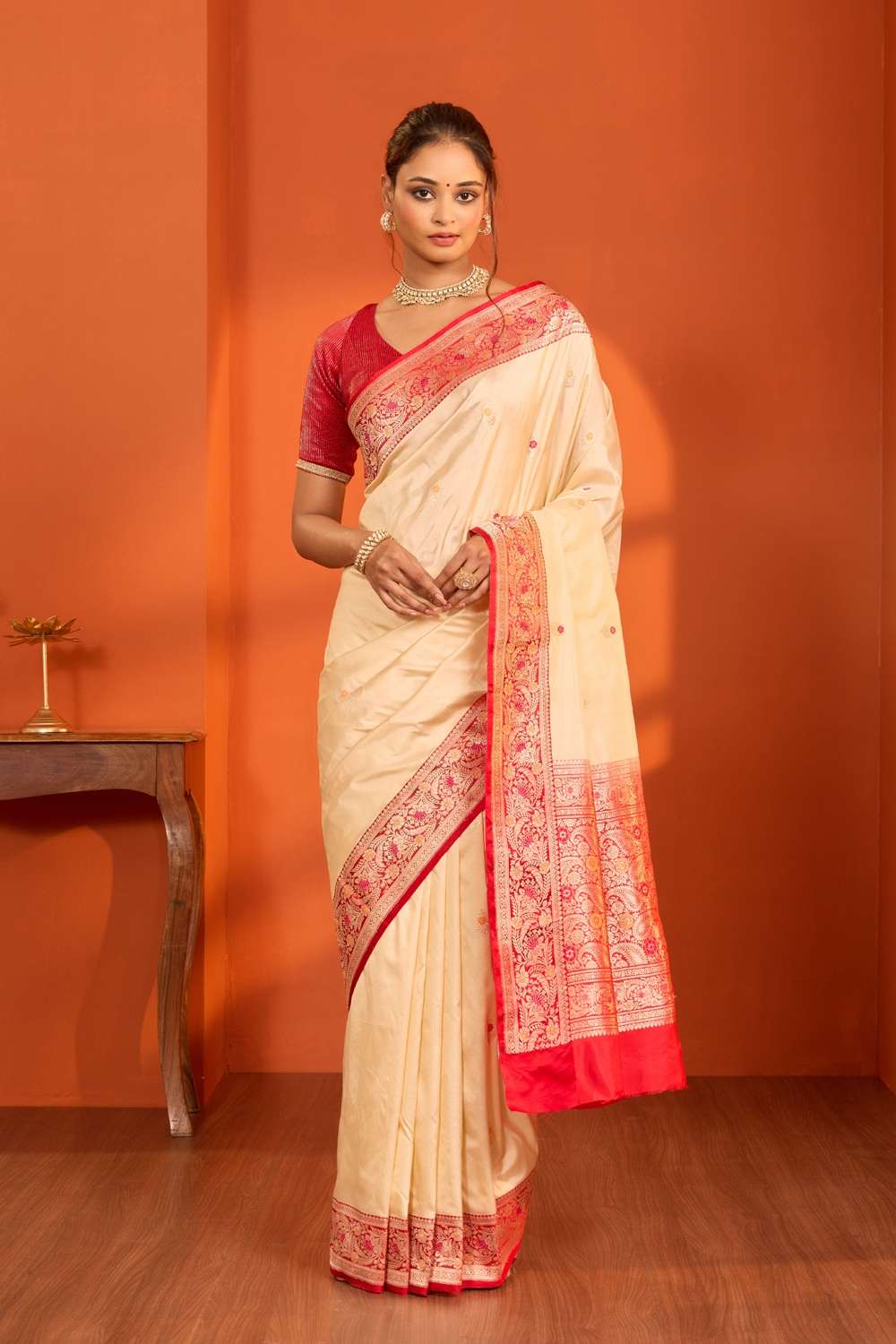
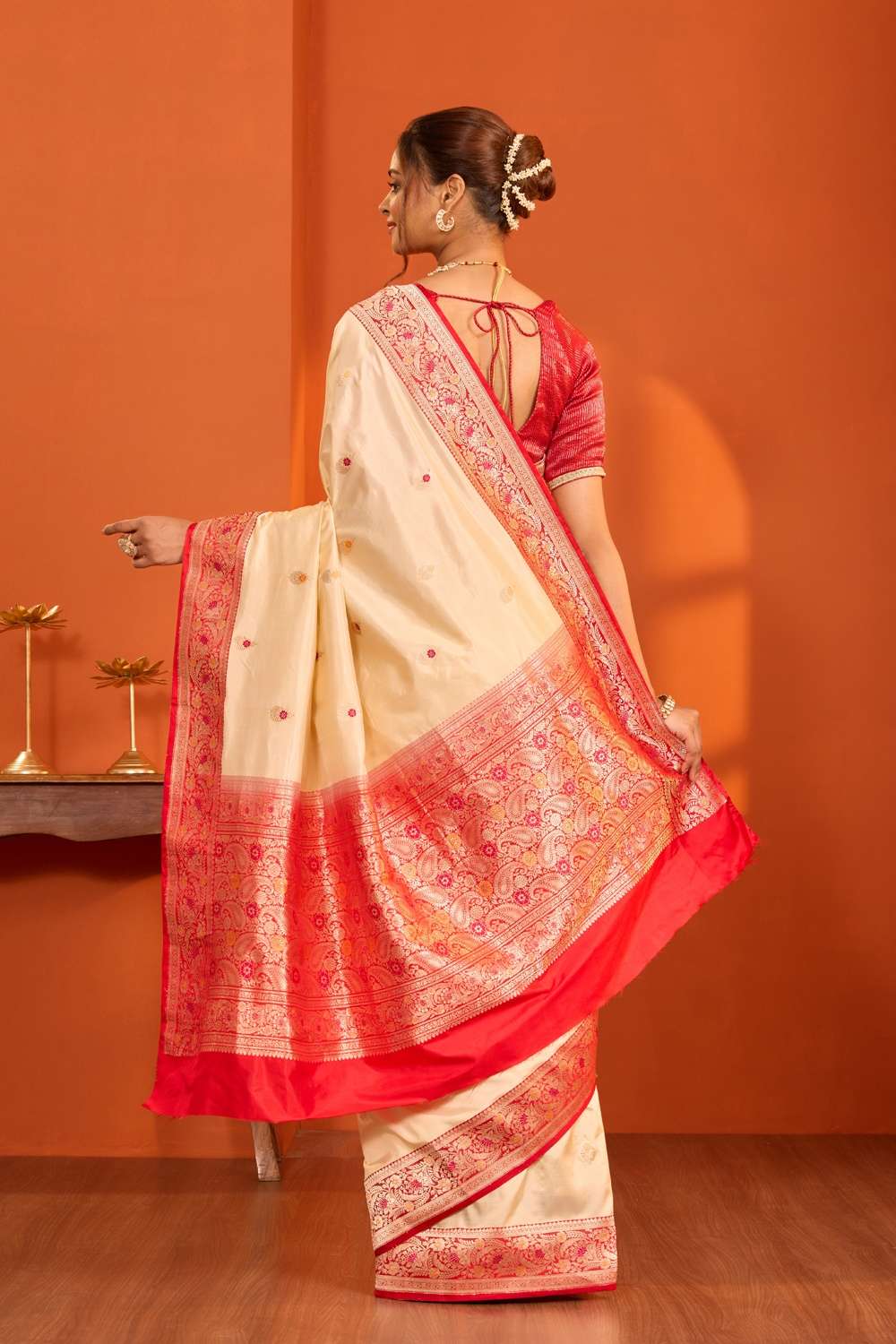
Temple or antique gold jewellery and the red blouse piece. Drape it in the Bengali style so the border frames you twice.
See the Technique: Off-White Cutwork Banarasi in Silk Georgette
An off-white silk georgette Banarasi in the cutwork technique, with soft gold and green motifs on the body, a red border and a red-orange pallu with gold medallions. Cutwork gives a lighter, more fluid saree, and on the back you can see where the floats were trimmed. The zari is listed as faux, which keeps it light and easy to care for.
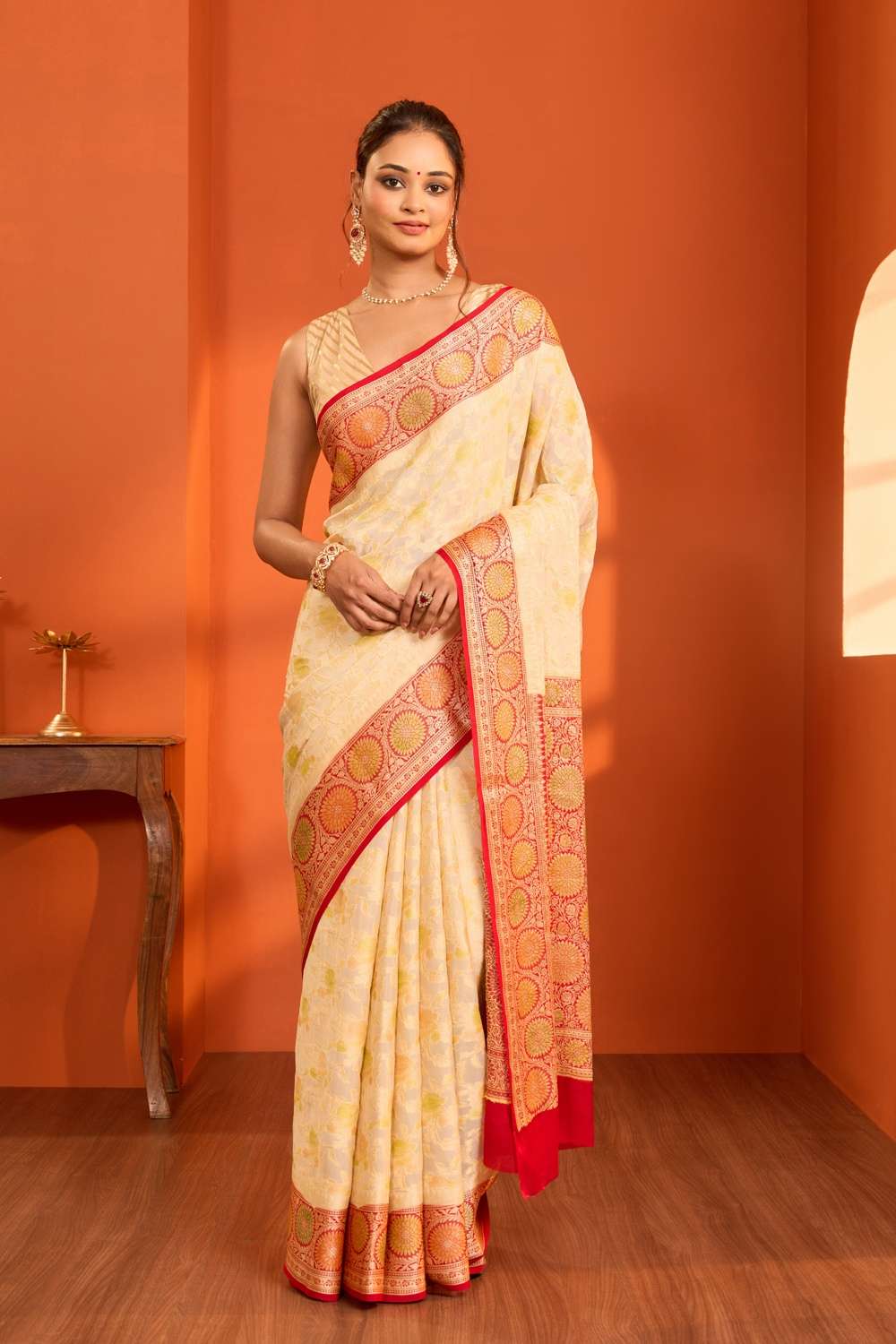
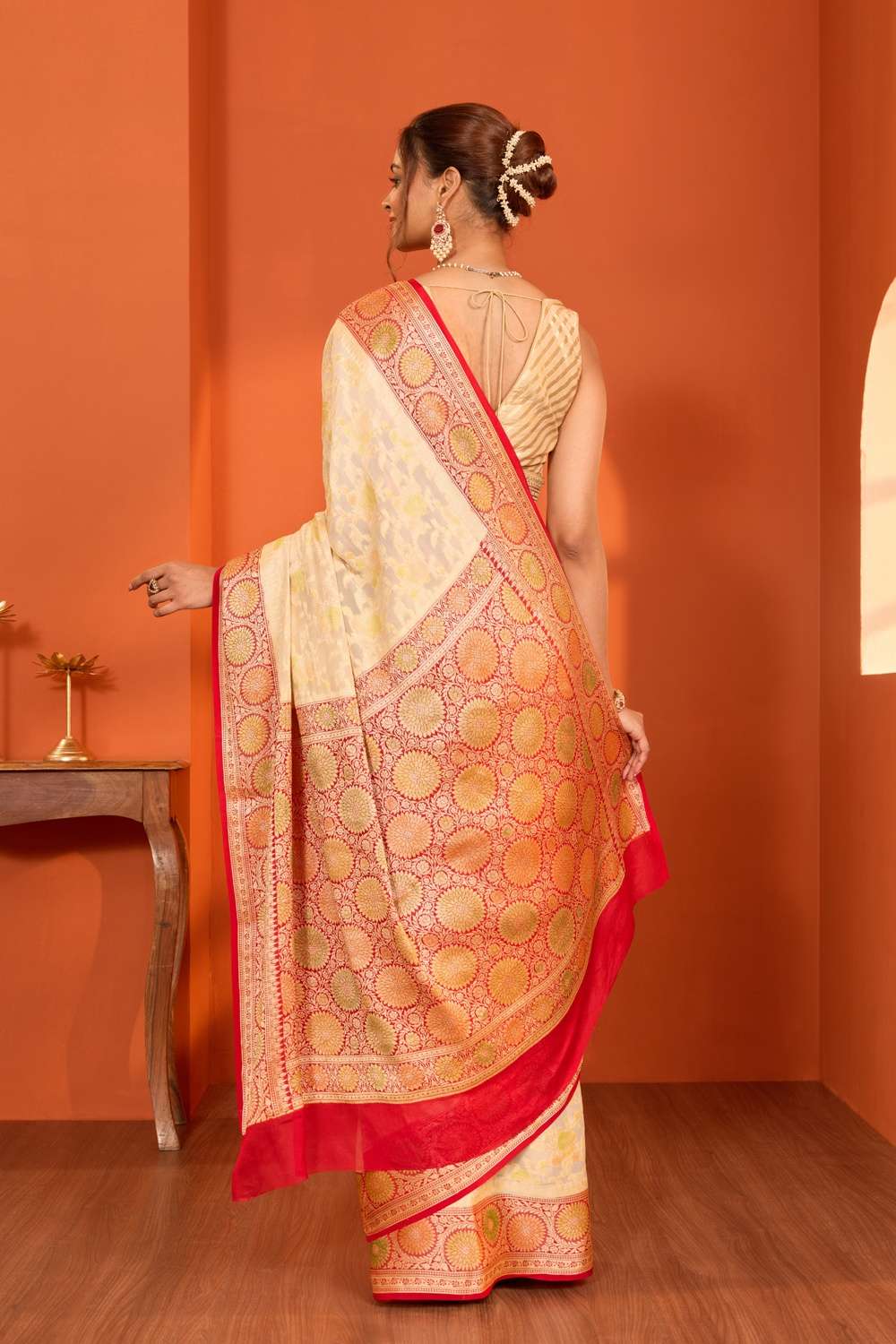
The red blouse piece, gold chandbalis and a small potli, for an evening function.
Hand Block Printing: Signs of the Hand
Many of Bengal's red-and-white silks are block printed. A hand block print has its own signs: a slight overlap or gap where two impressions meet, small variations in the depth of colour, and a repeat that is never quite identical. Screen and digital prints are even across the whole length. For more block prints, see Taneira's printed sarees.
Check the Repeats: Tree-Print Bengal Tussar
An off-white Bengal tussar block printed with red trees and small motifs, with bands of red geometric print at the border and pallu. Look along a row of trees and you will see small differences between them. Tussar's natural texture adds to the handmade feel; see more tussar sarees.
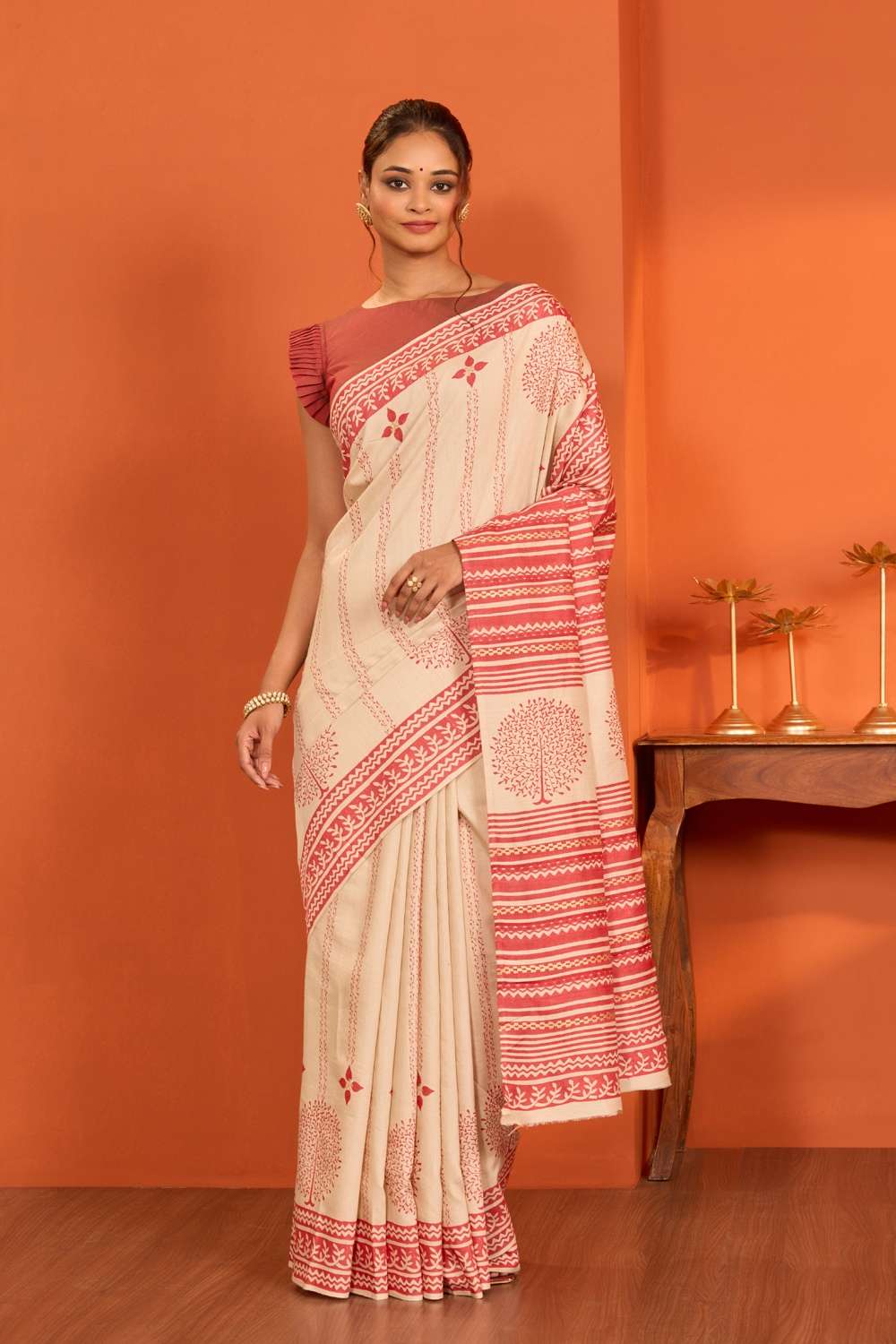
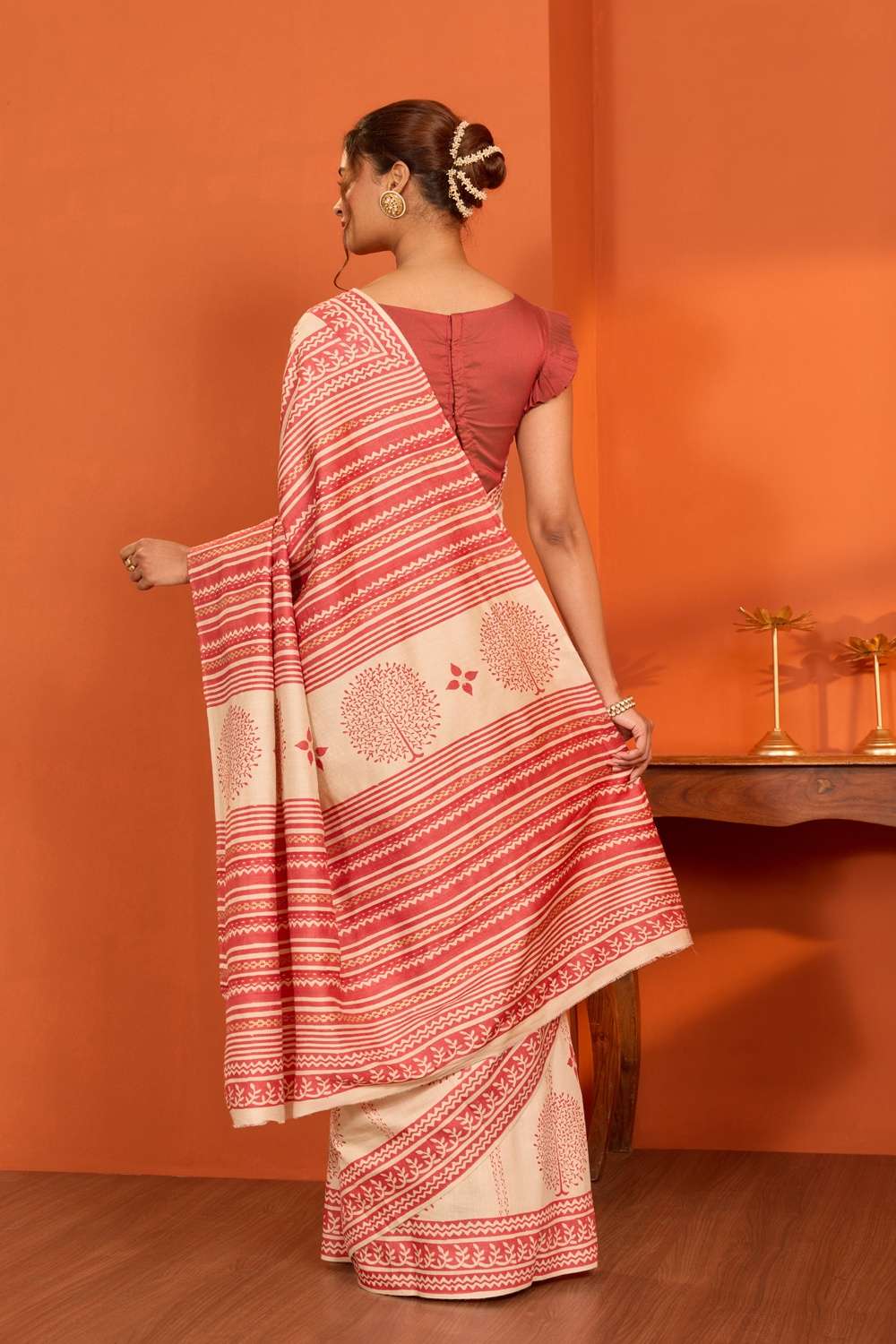
The red blouse piece, silver or terracotta jewellery and jasmine in a low bun. A Poila Baishakh favourite.
Explore Silk Sarees
Banarasi, tussar and Bengal silks with the fabric, origin and craft listed on every product page.
Three Common Myths
- Heavier means handwoven. Weight depends on the silk and the zari. A light Chanderi can be handwoven and a heavy saree can come off a powerloom.
- Uneven means faulty. Small irregularities are a sign of the hand, and most weavers would call them character.
- Shine means pure zari. Tested and faux zari shine too. Read the zari type on the product page, and ask.
Labels Worth Looking For
- Silk Mark. A label from the Silk Mark Organisation of India certifying that the fabric is pure silk. It certifies the fibre. Whether the saree was woven by hand is a separate question.
- Handloom Mark or India Handloom Brand. Government schemes that identify handloom products. Look for them on the tag, or ask whether the saree carries one.
- The product specifications. Read the fabric, origin, craft and zari listed on the product page, and ask the seller directly whether the saree is handwoven if it matters to you.
Checking the Silk Itself
If you are unsure whether the fibre is silk, the traditional test is to burn a single loose thread from the fringe, outdoors and over a non-flammable surface. Silk smells like burnt hair, stops burning when the flame is removed and leaves a soft ash that crumbles. Polyester melts into a hard bead and smells of plastic. Never burn the saree itself, and only test a stray thread you can spare.
Why Handwoven Costs More
A handwoven silk can take a weaver days or weeks, depending on the motifs and the border, and every pass of the shuttle is made by hand. A powerloom can produce the same length far faster. That difference in time is most of the difference in price. You are paying for a saree whose small irregularities are the record of how it was made, and for a craft that keeps a weaving family working.
Buying Online: What to Check
- Zoom into every photograph. Look at the border, the motifs and the pallu end.
- Read the specifications. Fabric, origin, craft and zari tell you most of what you need.
- Look for a back view. A photograph of the pallu from behind shows how the motifs are finished.
- Check the return policy. Some sarees cannot be returned; know before you buy.
- Ask the seller. If handwoven matters to you, ask the question directly.
Questions to Ask Before You Buy
- Is it handwoven or powerloom?
- Is the silk mulberry or tussar, and is it undyed?
- Where was it woven?
- Does it carry the Silk Mark or a handloom label?
- Is the zari pure, tested or faux?
- Is the red border woven into the saree or attached?
A seller who knows the saree will answer all six easily. If the answers are vague, take your time; a good silk is worth a second look before you buy. Buying from a brand that lists fabric, origin, craft and zari on every product page saves you most of these questions.
Caring for Fine Silk
- Dry clean only. Undyed silk marks easily, and water can leave rings.
- Store it in muslin. Keep it away from plastic, damp and direct light, which can yellow undyed silk over time.
- Refold it. Every few months, air it and fold it along new lines so the zari does not crack.
- Keep perfume away. Let itra and deodorant dry on your skin before you drape.
For how garad compares with korial, tant and today's red-bordered weaves, read how to choose the right laal paar saree.
Find Your Red-Bordered Silk
Bengal silks, tussars and Banarasi weaves for puja mornings and weddings.
Frequently Asked Questions
How can I tell if a silk saree is handwoven?
Look for small irregularities in the weave, motifs that vary slightly, hand-finished threads on the back of the motifs, an uneven selvedge and a hand-finished pallu end. Check several signs together, and ask the seller.
Does the Silk Mark mean a saree is handwoven?
No. The Silk Mark certifies that the fabric is pure silk. Handloom labels such as the Handloom Mark or India Handloom Brand identify handwoven products.
What is the difference between kadwa and cutwork?
In kadwa, each motif is woven on its own, so the back is neat with no long floats. In cutwork, the extra weft runs across the width and the threads between motifs are cut away afterwards.
Is garad silk always undyed?
Traditionally, yes. Garad is woven from undyed silk so it keeps its natural off-white, with a red or maroon border.
Where is garad silk woven?
Mainly in Murshidabad, West Bengal. Garad received a Geographical Indication registration for West Bengal in 2024.
How do I care for a fine silk saree?
Dry clean only, store it wrapped in muslin away from damp and light, and refold it every few months.

