Lightweight Festive Sarees for Bhai Dooj: Elegant Styles for Daytime Celebrations
By eleven the kitchen is the warmest room in the house. The puri dough is resting, the kheer is on the stove, and your brother is somewhere on the road with a box of sweets. You will do the tilak when he arrives, serve lunch, clear up and still be in the same saree when the cousins drop in at five.
For a day like that, the saree has to be light. This guide picks six Chanderi sarees for a daytime Bhai Dooj, explains why Chanderi is the fabric to reach for, and shows how to keep the look festive without the weight.
The short answer
A silk cotton Chanderi with gold buttis and a zari border looks festive at the tilak and stays comfortable through a long, warm day.
Choose a brighter colour for the photographs and a softer one if you are hosting and cooking.
Why Chanderi Works for a Daytime Bhai Dooj
Chanderi comes from the town of Chanderi in Madhya Pradesh, where weavers have worked for centuries. Most Chanderi today is silk cotton: a silk warp with a cotton weft, woven so fine that the fabric is slightly sheer. The result is a saree that weighs very little, lets air through and still carries a gentle sheen from the silk and the zari.
| What you need on the day | What Chanderi gives you | What to check when you buy |
|---|---|---|
| Comfort over six or seven hours | A light, breathable silk cotton | Fabric listed as silk cotton on the product page |
| A festive look for the tilak | Gold buttis and a zari border | Where the zari sits: border only, or across the pallu too |
| Easy movement in the kitchen | A soft drape that does not stiffen | A pallu you can pin in narrow pleats |
| Something you will wear again | Colours that suit office, pujas and weddings | A blouse piece in a colour you already own |
If you like the feel but want a different weave, Taneira's silk cotton sarees include Maheshwari and other light silk cotton weaves. For more sheen and the same easy weight, look at lightweight silk sarees in soft silk.
Six Chanderi Sarees for the Day
For the Tilak: Red Chanderi with Wavy Gold Stripes
A red silk cotton Chanderi scattered with small gold buttis, finished with a gold border and a pallu of wavy gold stripes. Red is the classic tilak colour, and in Chanderi it looks festive without the weight of a red silk. The sheer fabric catches the diya light around the thali.
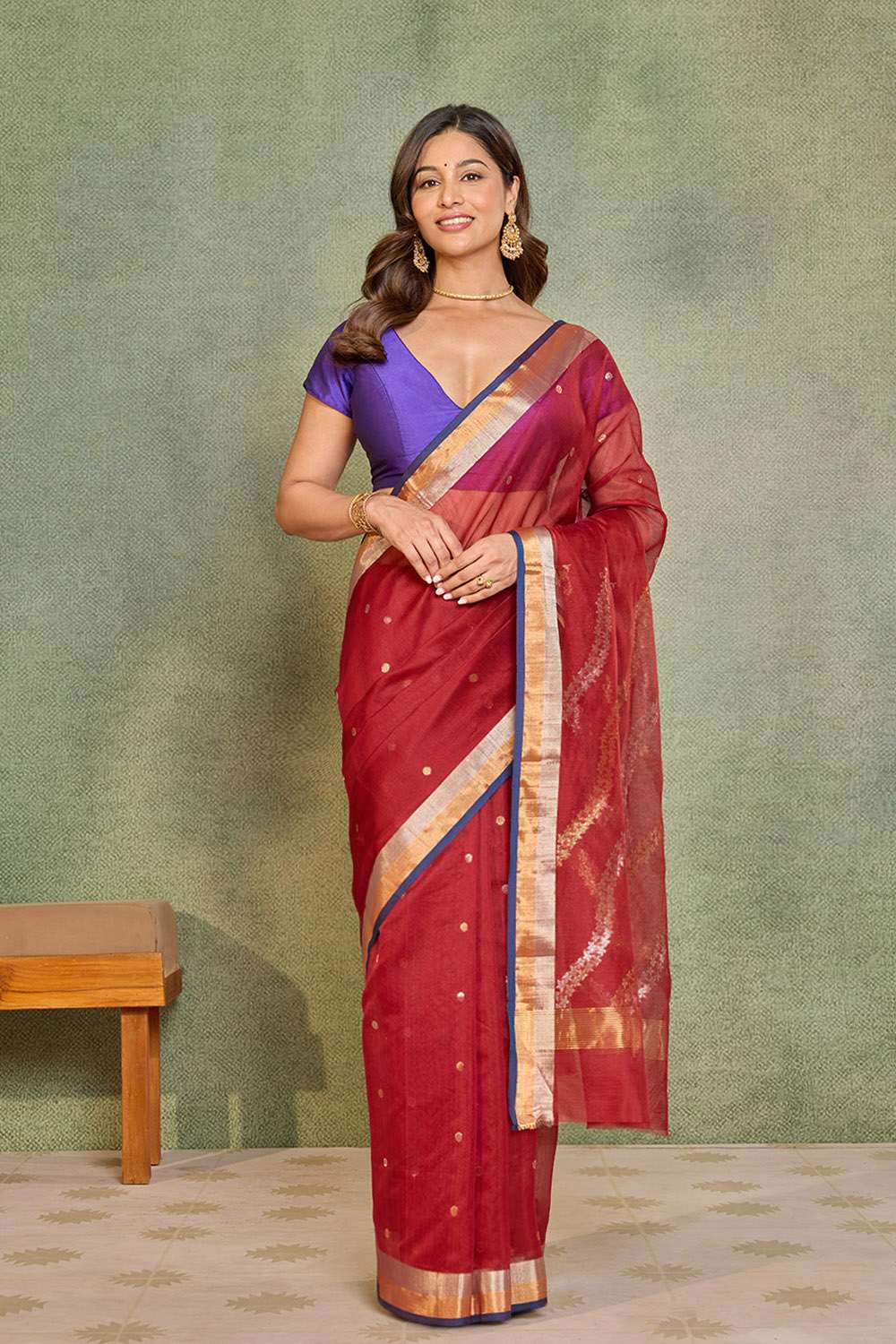
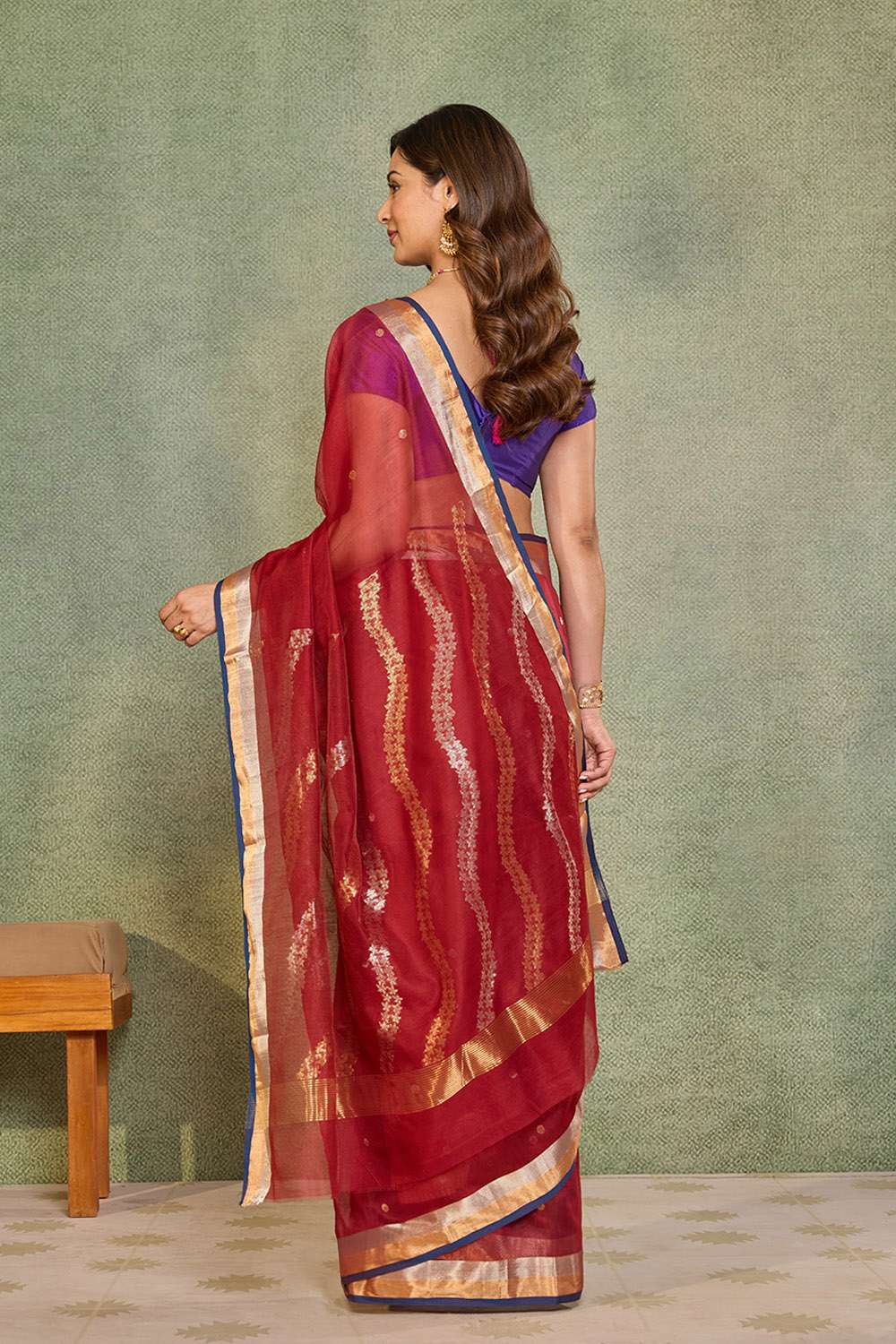
The blouse piece is purple, as in the product photos, which gives the red a richer edge. Add gold jhumkas, a red bindi and glass bangles.
For the Morning Puja: Peach Pink Chanderi with Gold Buttis
A soft peach pink with small gold buttis across the body, a gold border and a pallu banded in gold. It is listed as casual wear, and it is that easy, but the zari gives it enough sparkle for the tilak. See more pink sarees in silk and cotton.
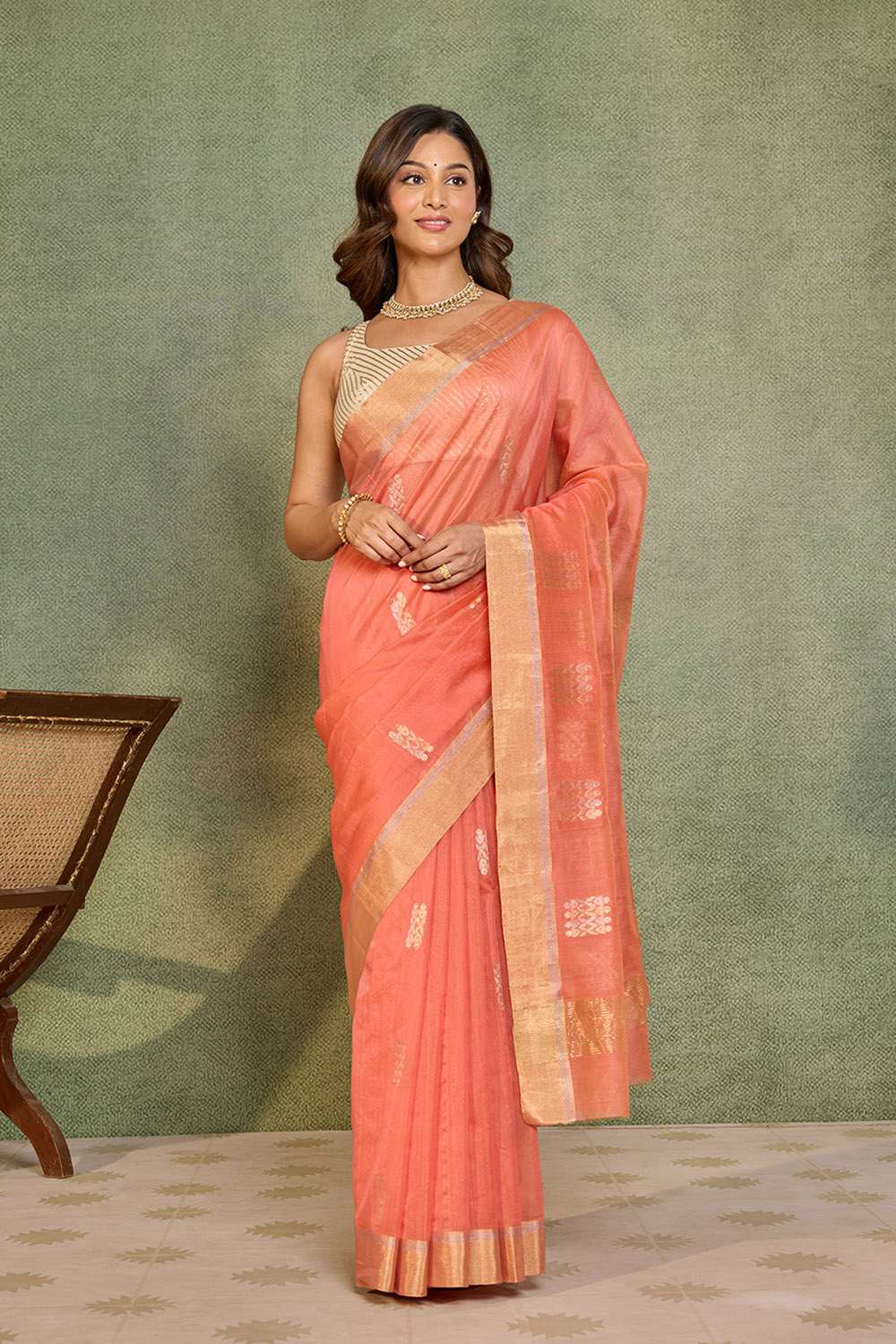
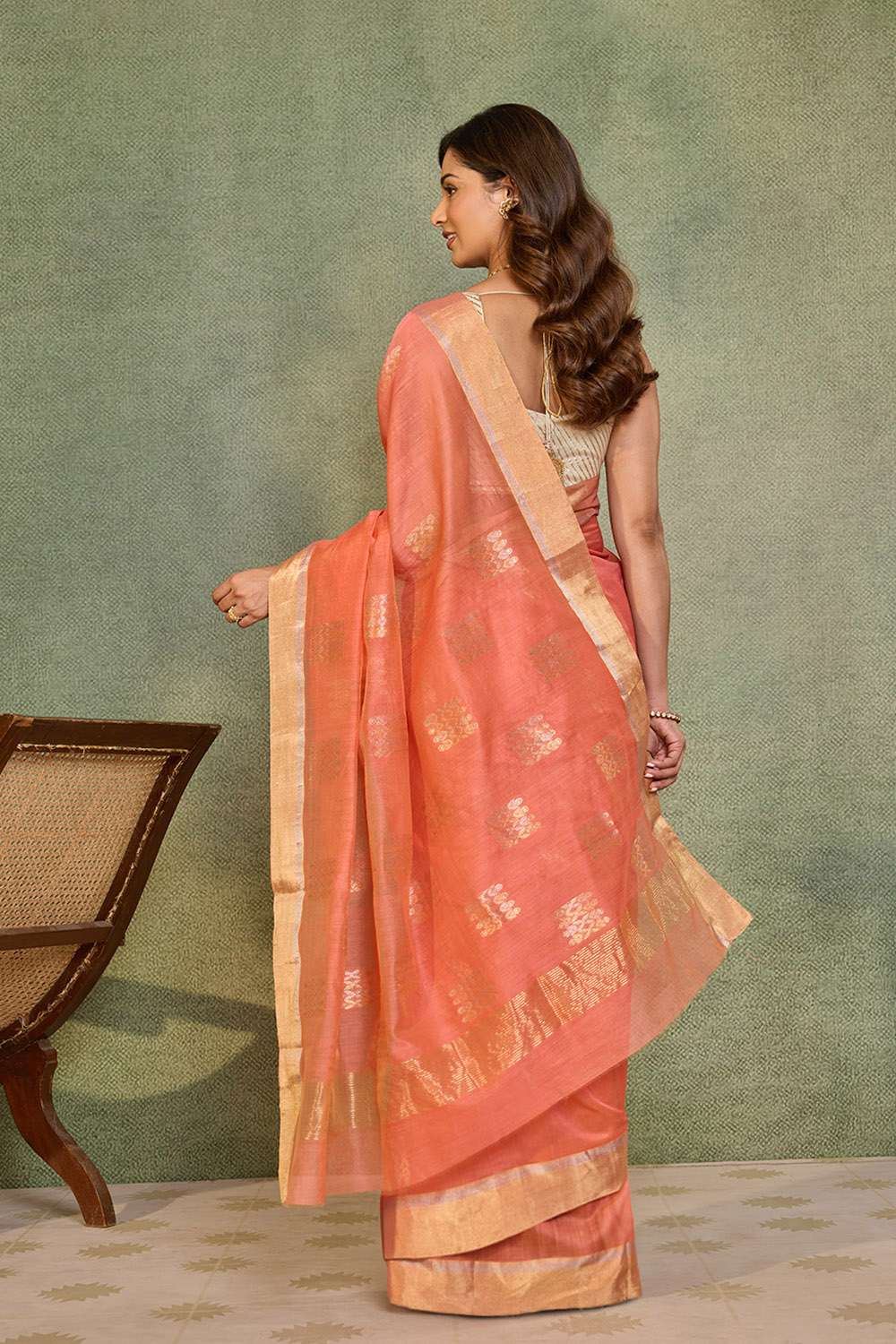
Wear it with the light pink blouse piece, pearl studs and a thin gold chain for a simple festive saree look. A string of jasmine in a low bun finishes it.
For a Brighter Look: Teal Chanderi with Large Gold Buttas
Turquoise teal Chanderi with large gold buttas across the body and a gold border. It is the boldest of the six, and the one to choose if the family photographs matter to you. Teal also looks fresh against all the reds and oranges at a festival.
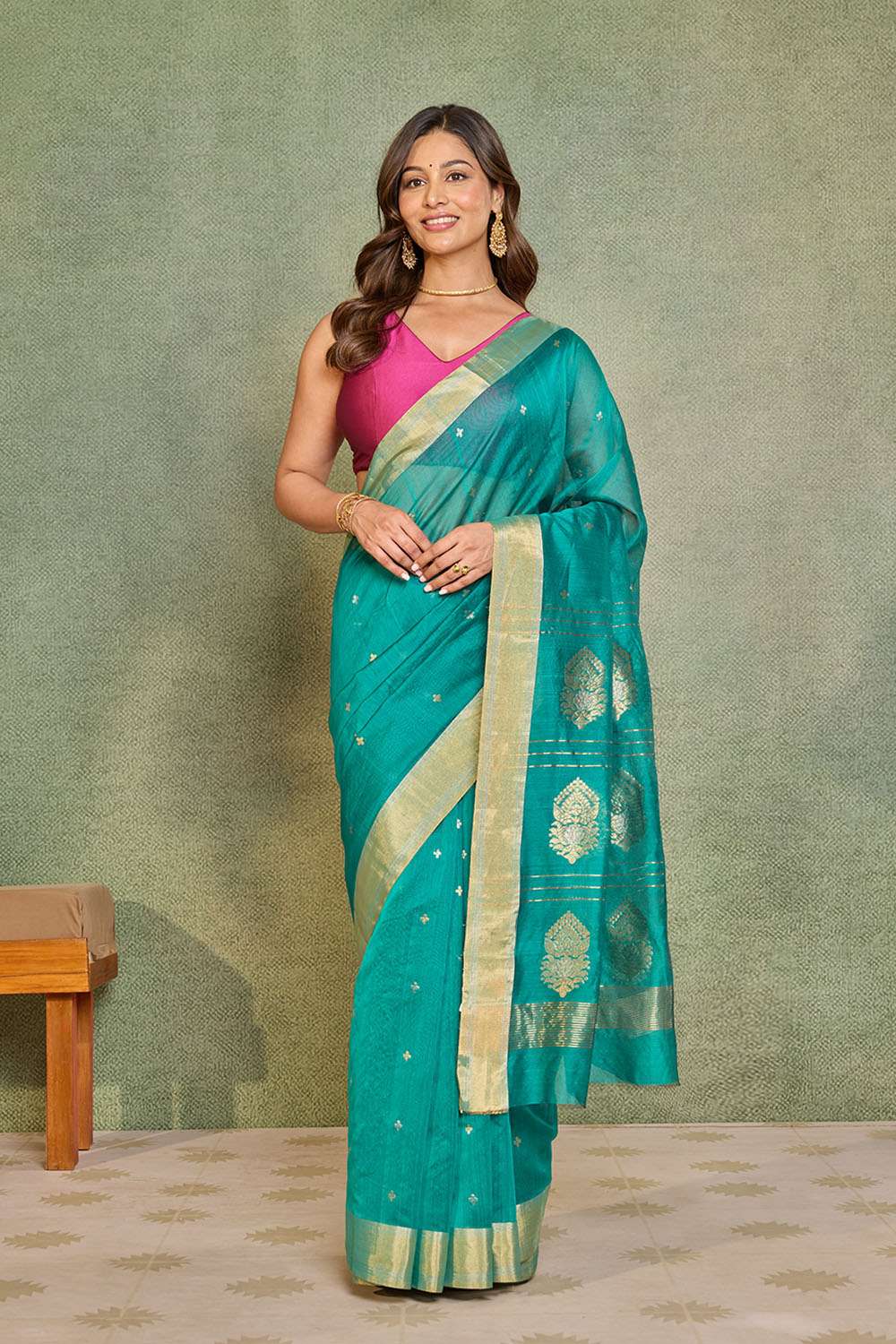
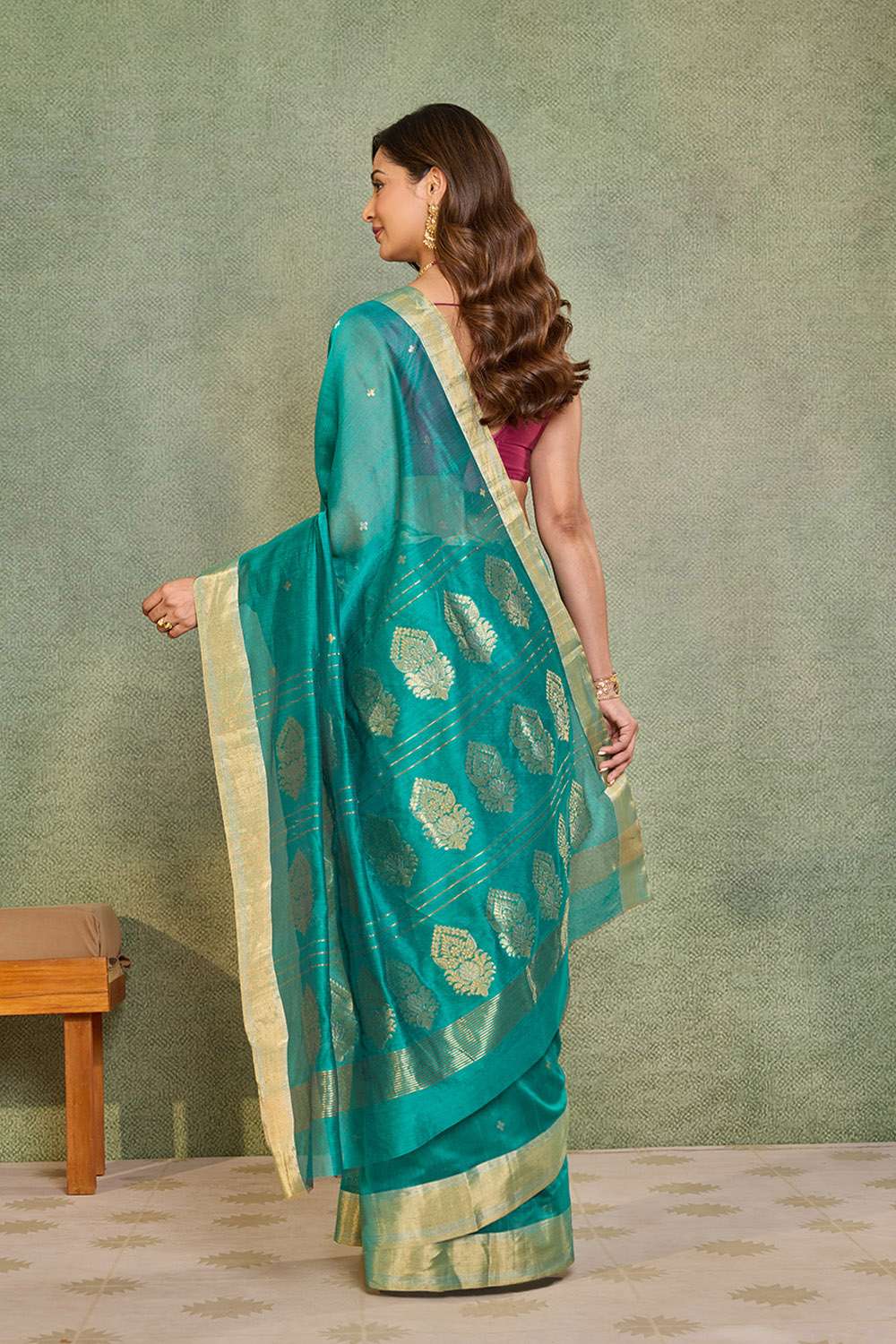
The product photos pair it with a pink blouse; the listed blouse piece is black, which gives a sharper, more modern look. Gold or kundan earrings suit either.
For the Sister Who Cooks: Coral Eknaliya Chanderi with a Purple Border
A coral pink Chanderi listed in the eknaliya craft, with a deep purple border and a pallu woven in silver and gold. The contrast border makes the saree look dressed up even with very little jewellery, which helps when you are in the kitchen and do not want bangles near the stove.
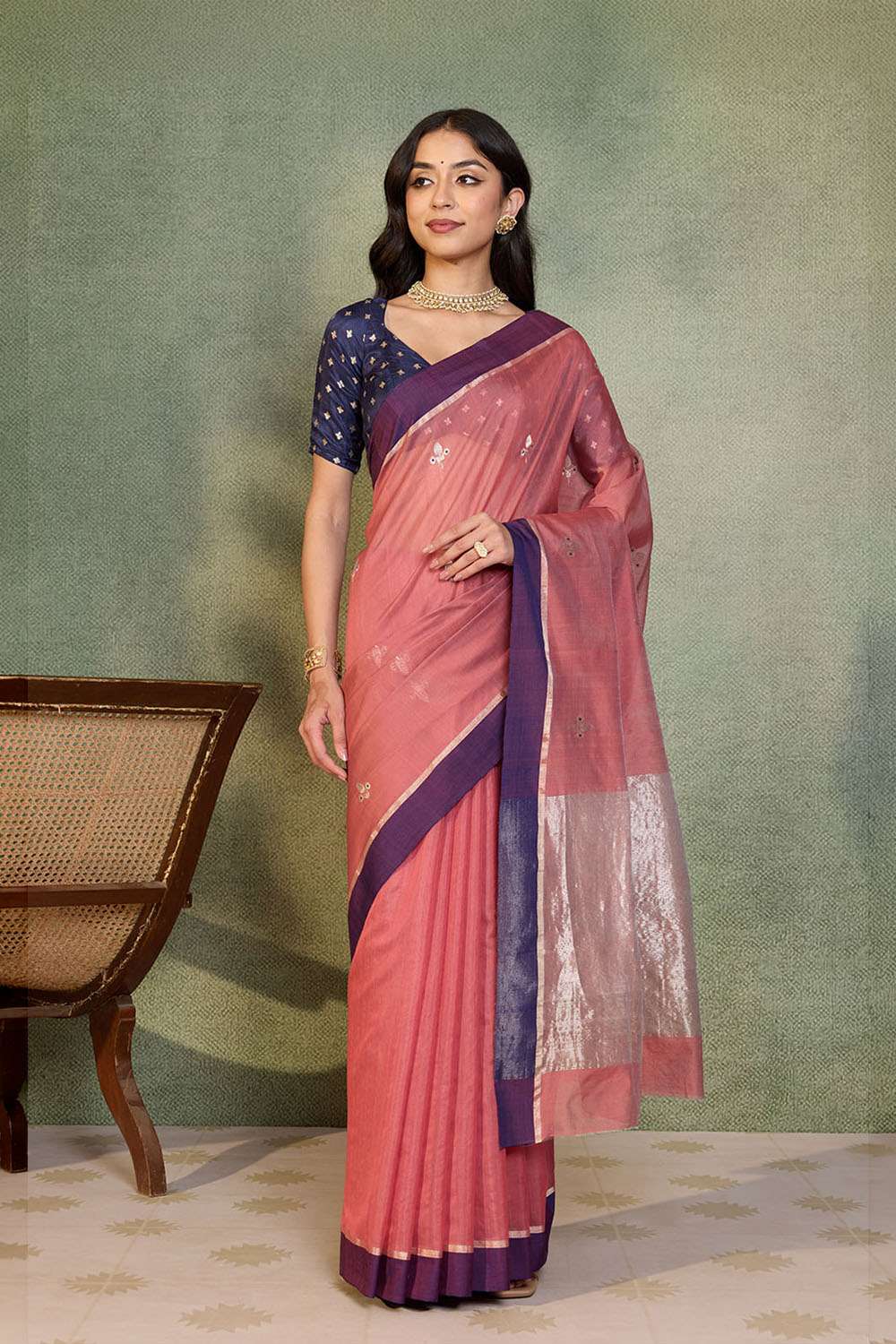
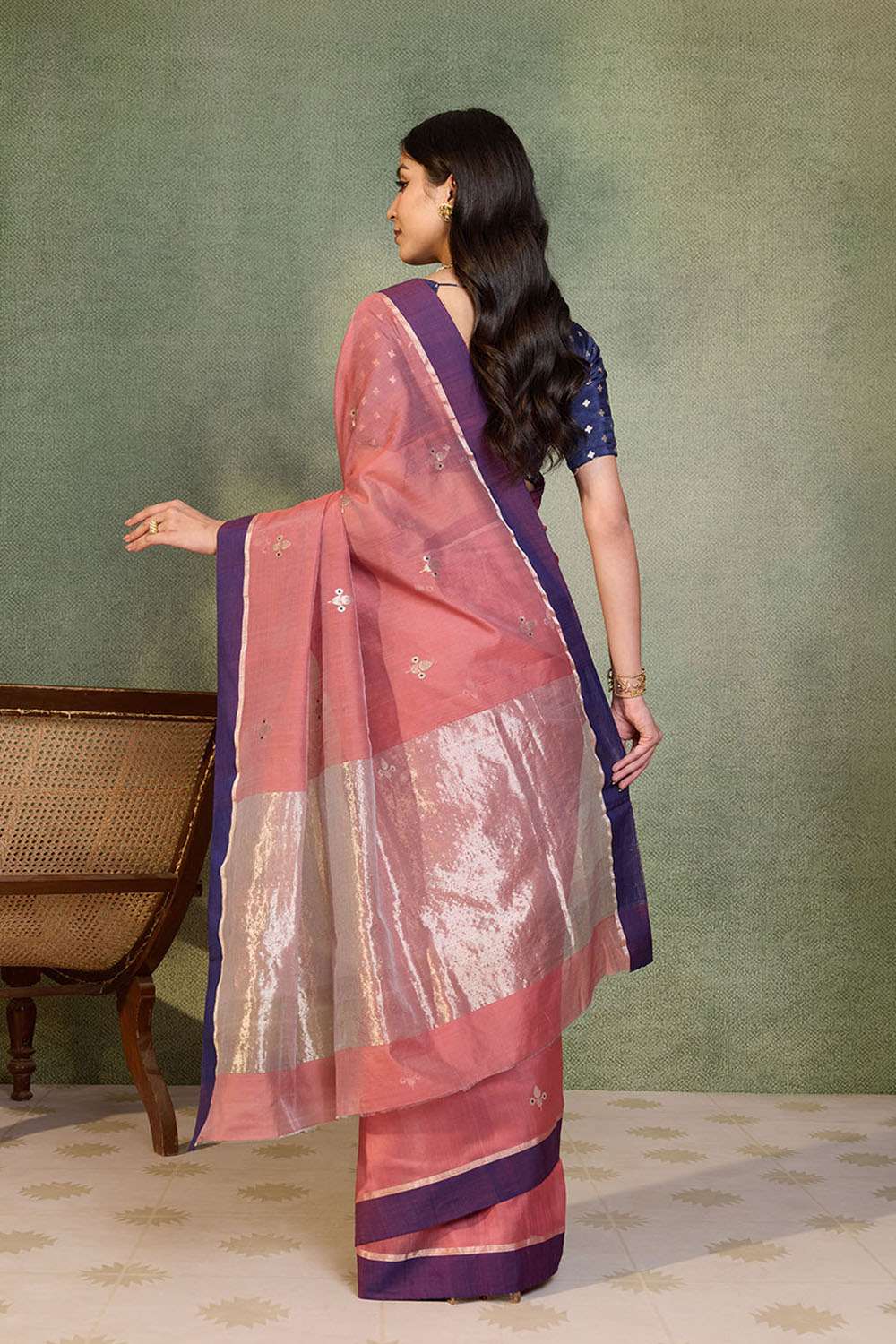
Wear it with a navy or purple blouse and small gold studs. Tuck the pallu at the waist while you cook, then let it out for the tilak.
For the Family Lunch: Sage Green Chanderi with Gold Stripes
A sage green Chanderi with fine gold stripes and buttis, a gold border and a gold-banded pallu. Green is calm and fresh in daylight, and this shade suits a long lunch at the table. It is also one of the easiest colours to wear again for office celebrations.
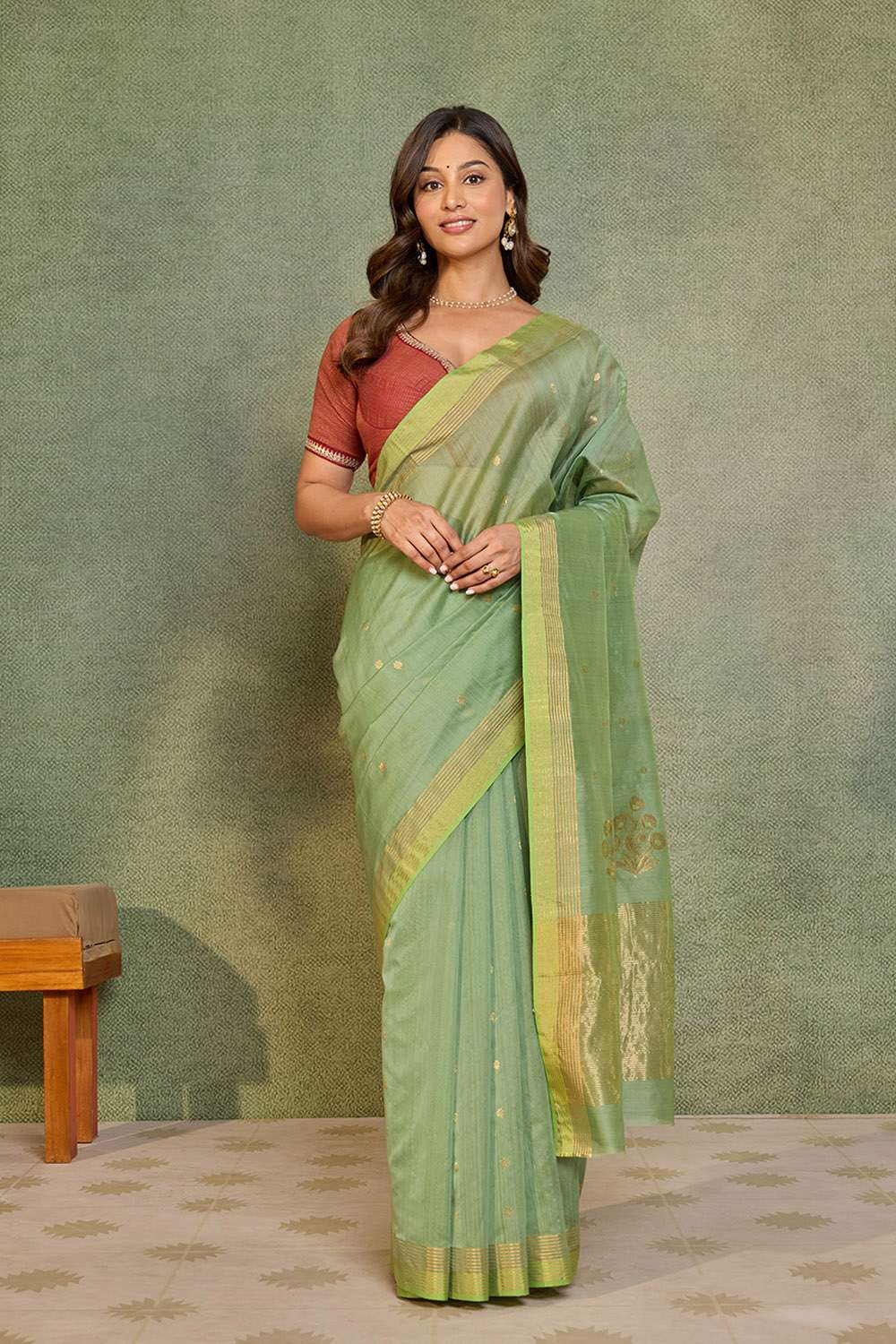
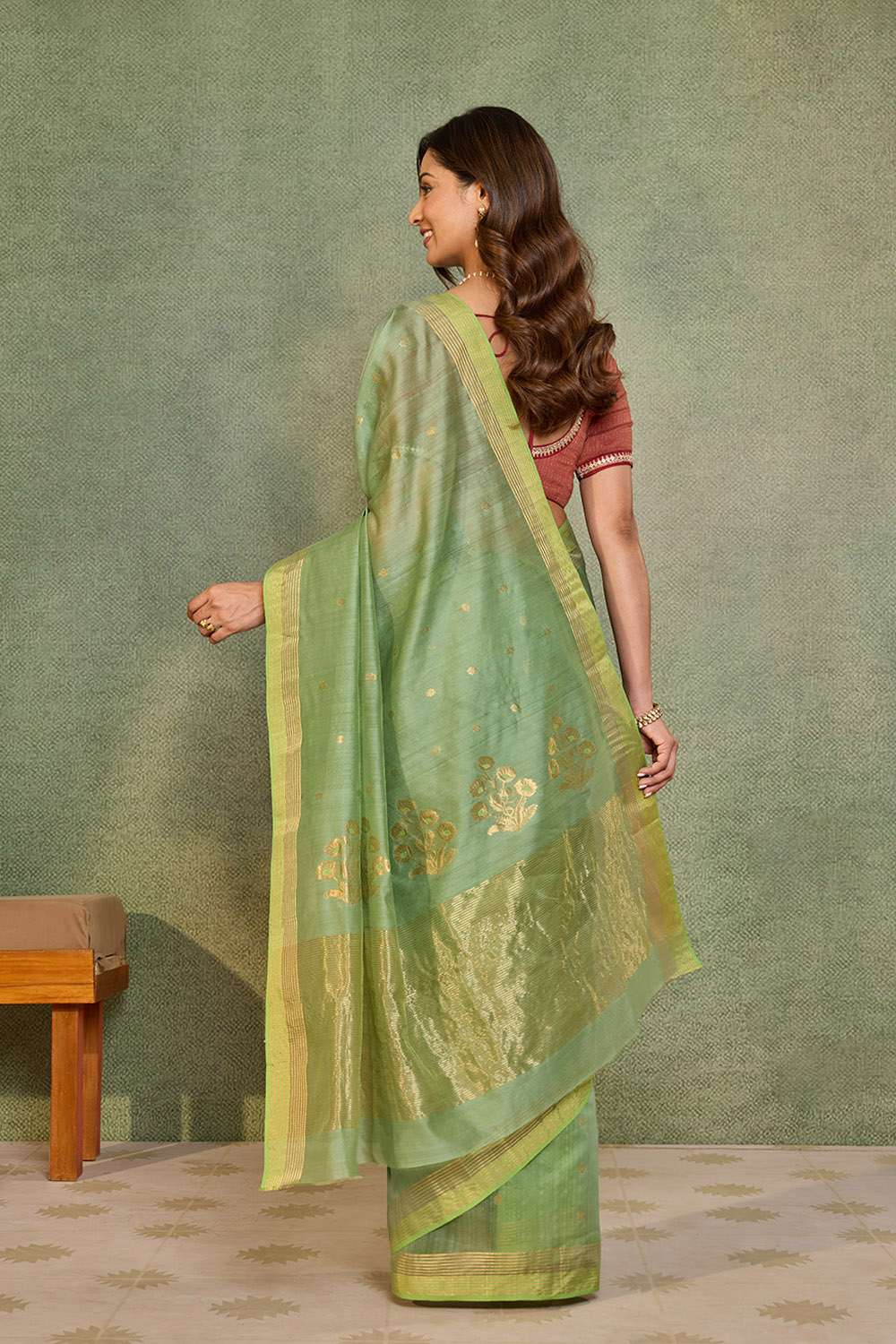
The photos style it with a red blouse, a classic festive contrast. The listed green blouse piece gives a quieter, tone-on-tone look. Pair it with gold hoops.
For the Evening Visits: Coral Chanderi with a Checked Pallu
A coral Chanderi with a pallu of woven checks and stripes, and a matching orange blouse piece. The checked pallu adds interest without heavy zari, so it looks right for evening visits to cousins and in-laws. Browse Taneira's sarees for family gatherings for more pieces in this mood.
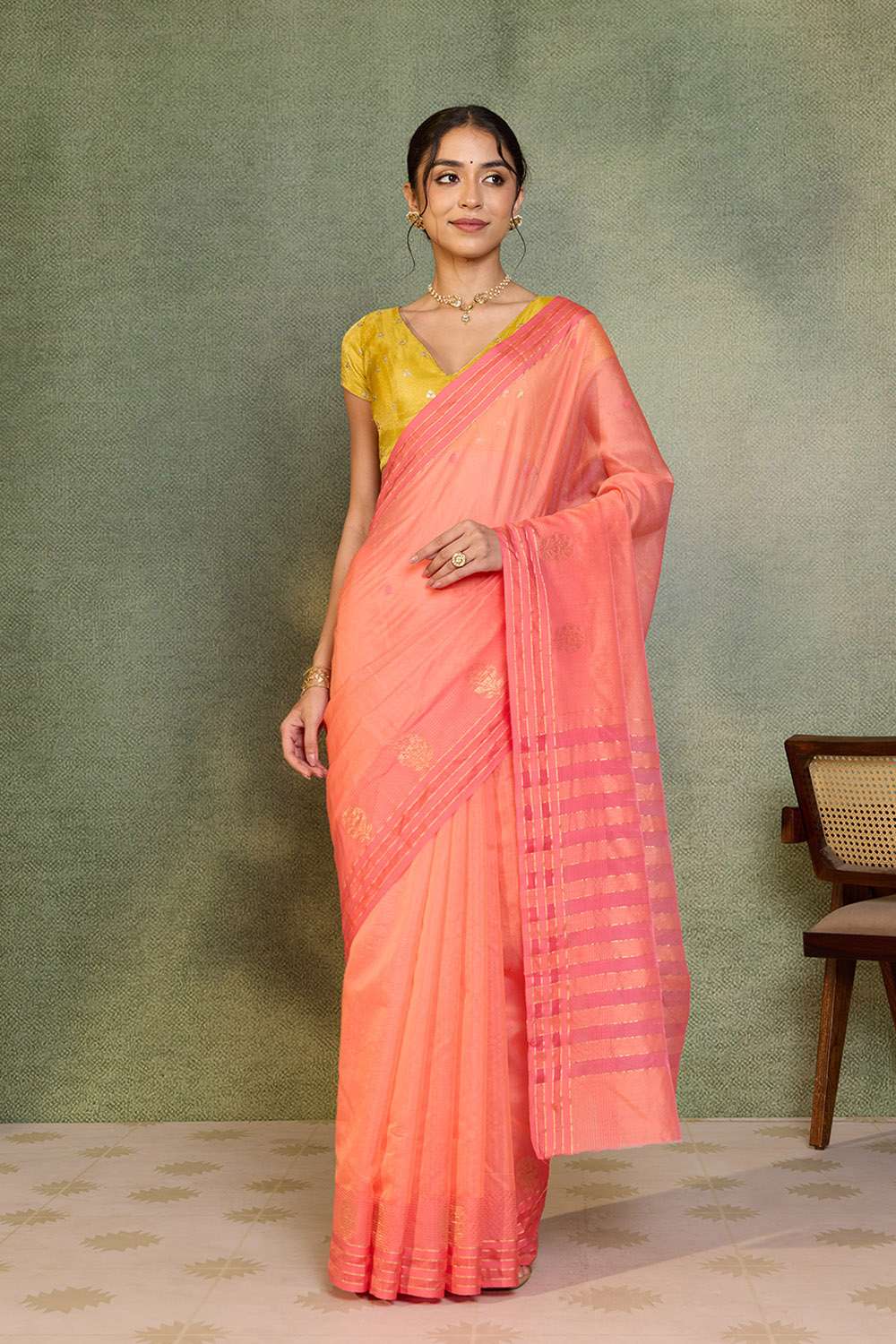
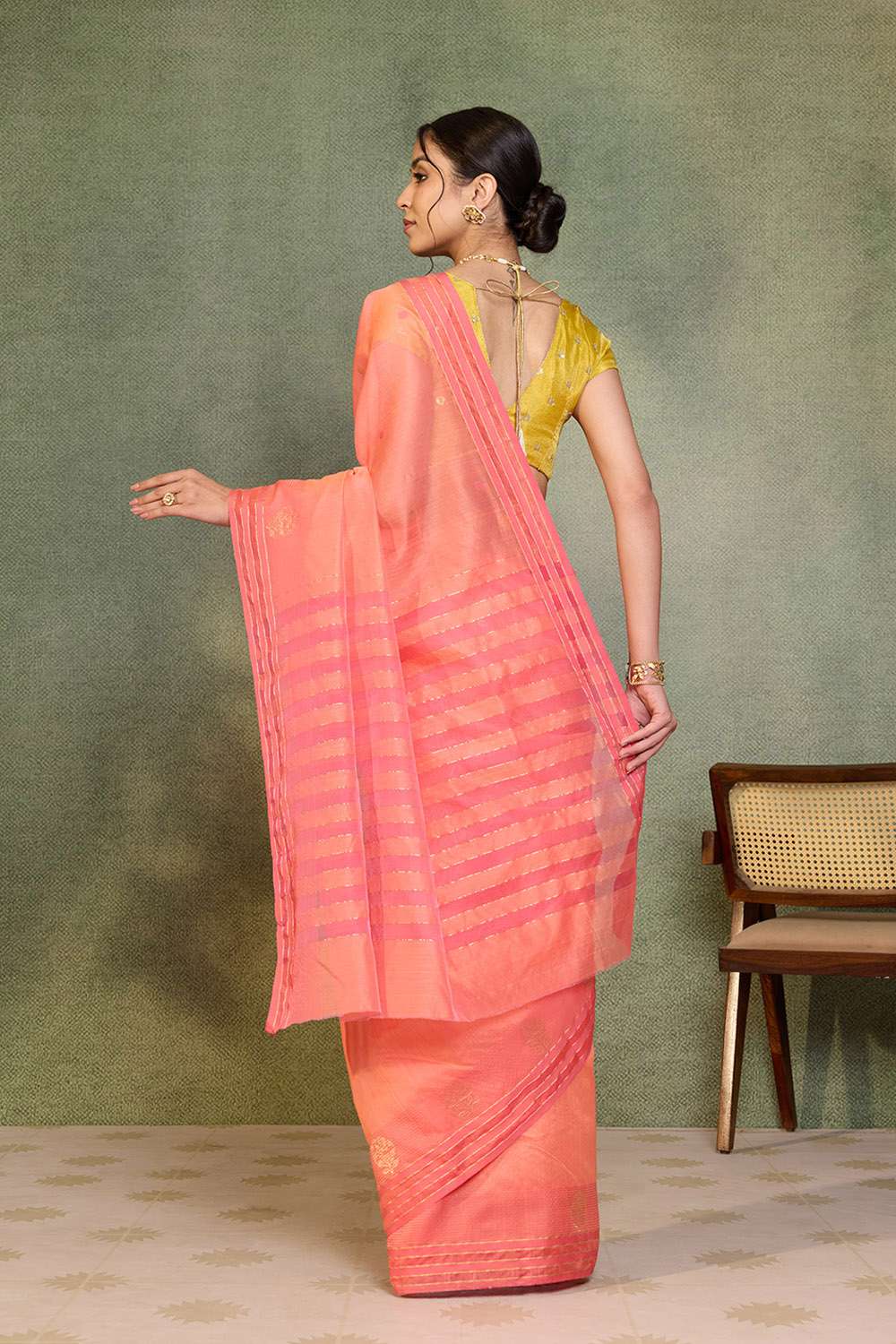
A mustard blouse, as in the product photos, warms it up. Add gold jhumkas and a small potli bag for the evening.
Shop Festive Sarees
Light Chanderis, soft silks and Banarasis for the last of the Diwali days.
Pick by How You Spend the Day
| Your Bhai Dooj | Choose | Why |
|---|---|---|
| The tilak is the main event | Red Chanderi | Traditional colour, light weight |
| A quiet morning puja at home | Peach pink Chanderi | Soft colour with just enough zari |
| Lots of family photographs | Teal Chanderi | A bold colour that stands out in a crowd |
| You are cooking and hosting | Coral eknaliya Chanderi | Looks dressed up with little jewellery |
| A long lunch in daylight | Sage green Chanderi | Calm and fresh for hours |
| Visits in the evening | Coral Chanderi | Checked pallu, light on zari |
How to Keep a Light Saree Looking Festive
Lightweight sarees for festivals sometimes look plain next to heavy silks. A few small changes fix that.
- Starch the pleats lightly. Ask for a light starch when you have it pressed. The pleats stay crisp and the drape looks fuller.
- Choose a structured blouse. A blouse with elbow sleeves or a high back gives a light saree more presence.
- Let the jewellery carry the weight. A choker or temple necklace makes a Chanderi look as festive as a silk.
- Wear the pallu open for photographs. Pin it at the shoulder so the zari pallu falls in one sheet.
- Add flowers. Marigold or jasmine in the hair is the quickest festive touch there is.
Draping Chanderi for a Long Day
- Use a cotton petticoat. Chanderi is slightly sheer, so a petticoat in the saree's colour matters.
- Make six or seven pleats. Fewer pleats than a silk, since the fabric is light. Pin them at the waist.
- Pin the pallu in narrow pleats. It stays in place through cooking and serving.
- Tuck the pallu end at the waist when you work. Let it out again for the tilak and the photographs.
- Keep a safety pin in your bag. Light fabric slips more easily than heavy silk.
When the Afternoon Turns Cool
Bhai Dooj falls in November, and in much of North India the evenings are already cool. A light saree needs a plan for that. Keep a fine wool or silk shawl by the door, in a colour picked from the border: gold with the red Chanderi, purple with the coral one. Drape it over both shoulders and let the pallu show in front. A full-sleeved blouse in raw silk is the other answer, and it suits the light fabric well. In the South and on the coasts the day stays warm, so the light saree is all you need.
A Chanderi as a Bhai Dooj Gift
Brothers give the gifts on Bhai Dooj, and a saree is one of the oldest choices. A Chanderi is an easy one to get right. It suits most ages, the light fabric fits most climates, and the colours are wearable beyond the festival. If you are buying for a sister, pick a colour she already wears, keep the zari modest, and check the blouse piece colour on the product page, so she can have it stitched in time for the next family occasion. Peach, sage and coral are safe picks if you are unsure of her taste.
Comfortable Festive Sarees That Earn Their Place
The best comfortable festive sarees are the ones you wear again. A Chanderi bought for Bhai Dooj will see office Diwali lunches, summer weddings, pujas and dinners. Dry clean it after the festival, store it folded in cotton, and keep it away from damp.
If you want something lighter still, read about simple cotton sarees for Bhai Dooj. For an evening-heavy day, Taneira's organza sarees are sheer and light with more sparkle. And if a relaxed family Bhai Dooj calls for a saree you can wear on any day, browse Taneira's casual sarees.
Find Your Saree for Bhai Dooj
Chanderis in red, pink, teal, green and coral, light enough for a full day of cooking, tilak and family lunch.
Frequently Asked Questions
Which saree is comfortable for a daytime Bhai Dooj?
A silk cotton Chanderi is light and breathable and still looks festive. A red Chanderi with gold stripes suits the tilak.
Are Chanderi sarees good for festivals?
Yes. Chanderi has gold buttis and zari borders that look festive, in a fabric light enough for a long day. It suits pujas, family lunches and office celebrations.
What is the difference between Chanderi and silk?
Most Chanderi is silk cotton, a silk warp with a cotton weft. It is lighter and more sheer than pure silk, with a softer sheen.
How do I make a simple saree look festive for Bhai Dooj?
Add a structured blouse, a choker or temple necklace, flowers in your hair and a red bindi. Pin the pallu open for the photographs.
Can I wear a light saree for the Bhai Dooj tilak?
Yes. A light saree in red, pink or yellow with a zari border is fine for the tilak. A peach pink Chanderi is a soft choice.
How do I care for a Chanderi saree?
Dry clean it, store it folded in a cotton cloth and keep it away from damp. Refold it along different lines every few months.

