Simple Yet Elegant Cotton Sarees for Bhai Dooj: Traditional Looks for Everyday Celebrations
Not every Bhai Dooj is a big one. Sometimes your brother drops in on his way to work, you do the tilak at the door with the thali your mother used, and he leaves with a box of kaju katli and a promise to come back on Sunday. Sometimes it is a video call and a tilak on the screen. The ritual is the same. The saree can be simpler.
This guide is for those days. It picks five cotton sarees that look traditional enough for the tilak and feel easy enough to wear from breakfast to bedtime, with styling notes for each.
The short answer
A woven Bengal cotton or a block-printed cotton in red, yellow or orange is festive enough for the tilak and comfortable for the whole day.
Add gold earrings, glass bangles and a red bindi, and the cotton looks dressed for the occasion.
Why Cotton Belongs on Bhai Dooj
Bhai Dooj is a family festival, and for many sisters it is a home day: cooking, serving, washing up and sitting on the floor with nieces and nephews. Cotton breathes, takes a crisp pleat and does not mind a little turmeric. Traditional cotton sarees also carry centuries of regional craft, from Bengal's jamdani to Madhya Pradesh's Bagh prints, so a cotton saree can be as rooted in tradition as any silk.
| Cotton type | What it looks like | Best for on Bhai Dooj |
|---|---|---|
| Jamdani | Motifs woven into a fine, light cotton by hand-inlaid extra threads | The tilak, if you want something woven and delicate |
| Bengal woven cotton | Crisp body, contrast border, striped pallu | A Bengali Bhai Phonta at home |
| Bagh block print | Fine block-printed patterns, traditionally in red and black | A relaxed lunch with family |
| Dabu | Mud-resist printing, with motifs left pale against the dyed ground | A daytime visit or a quiet morning |
| Kalamkari | Block-printed florals and paisleys from Machilipatnam | An evening with cousins |
Five Cotton Sarees for Bhai Dooj
For the Tilak: Light Yellow Jamdani with a Green Border
A pale yellow Bengal cotton jamdani with small woven motifs across the body, a green border and a pallu striped in green. Jamdani is woven with extra threads inlaid by hand, motif by motif, so the patterns sit inside the cloth. Yellow is auspicious, and this soft shade looks fresh in morning light. See more jamdani sarees.
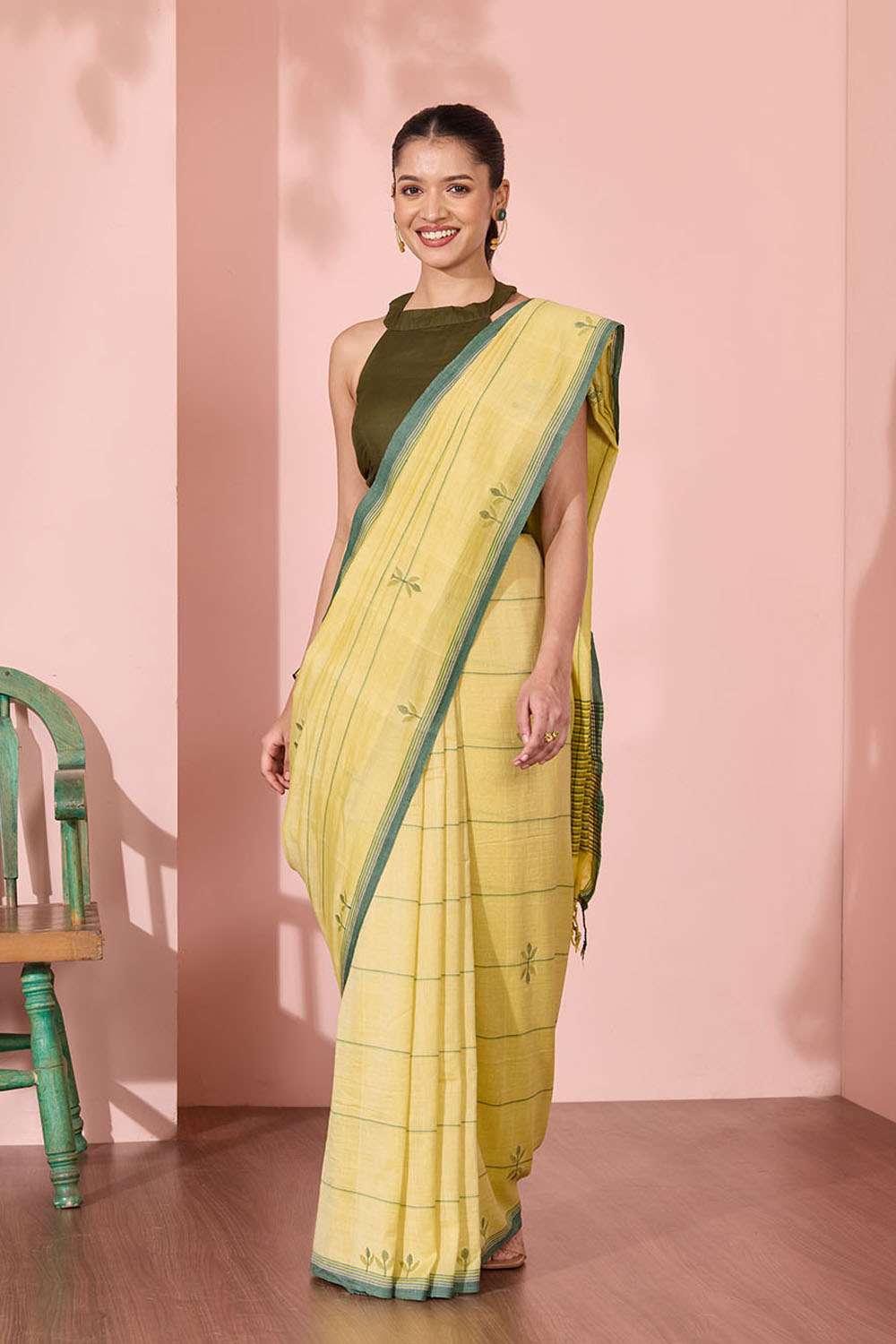
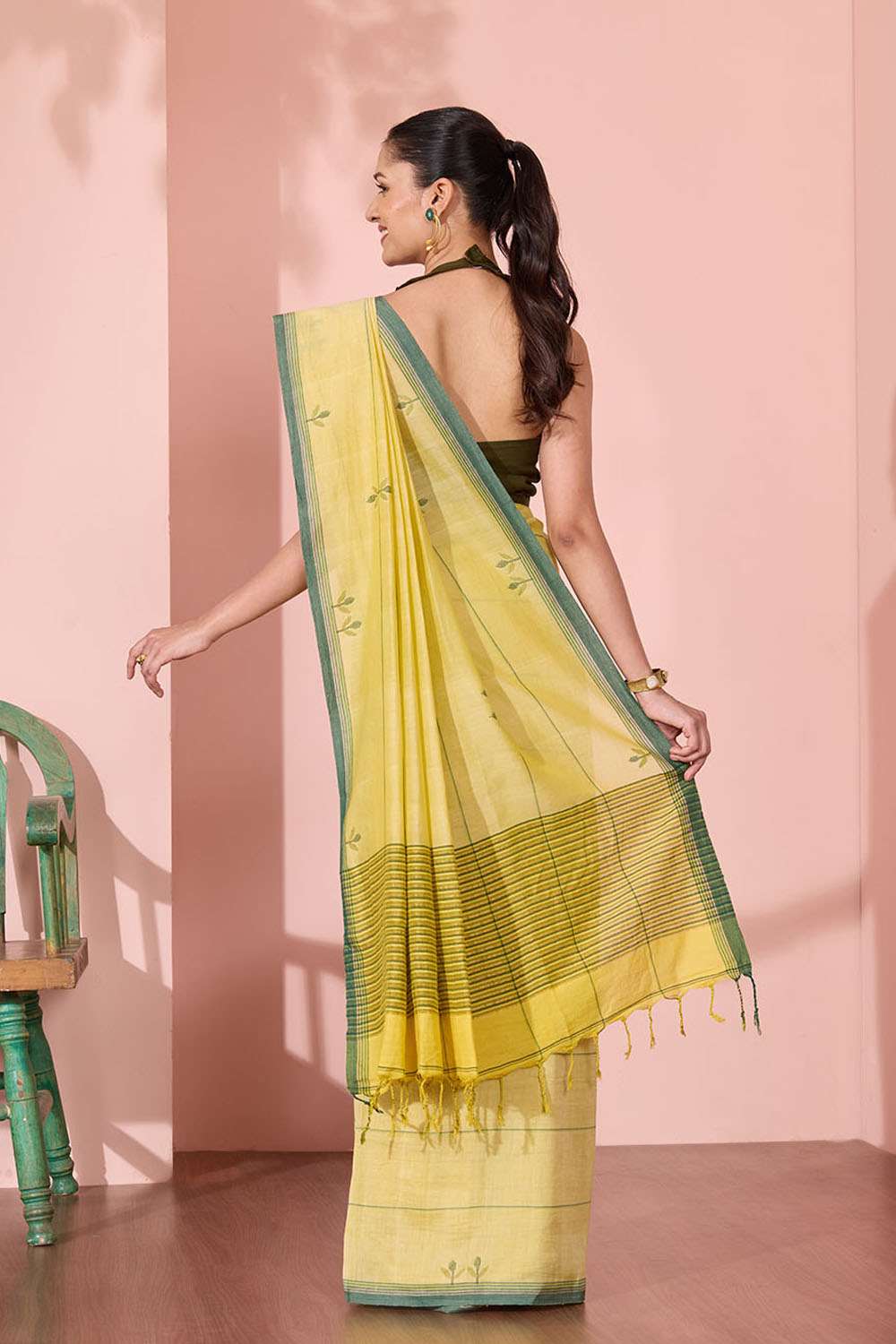
Wear it with the yellow blouse piece or an olive blouse as in the photos. Small gold jhumkas, a green bindi and a few green glass bangles pick up the border.
For a Bengali Bhai Phonta: Marigold Bengal Cotton with a Red Border
A marigold orange Bengal cotton with small woven checks across the body, a red border and a red-striped pallu, made without zari. It is crisp, bright and unmistakably Bengali, the kind of saree that suits a phonta of sandalwood paste and a plate of mishti. Browse Taneira's Bengali sarees for more in this style.
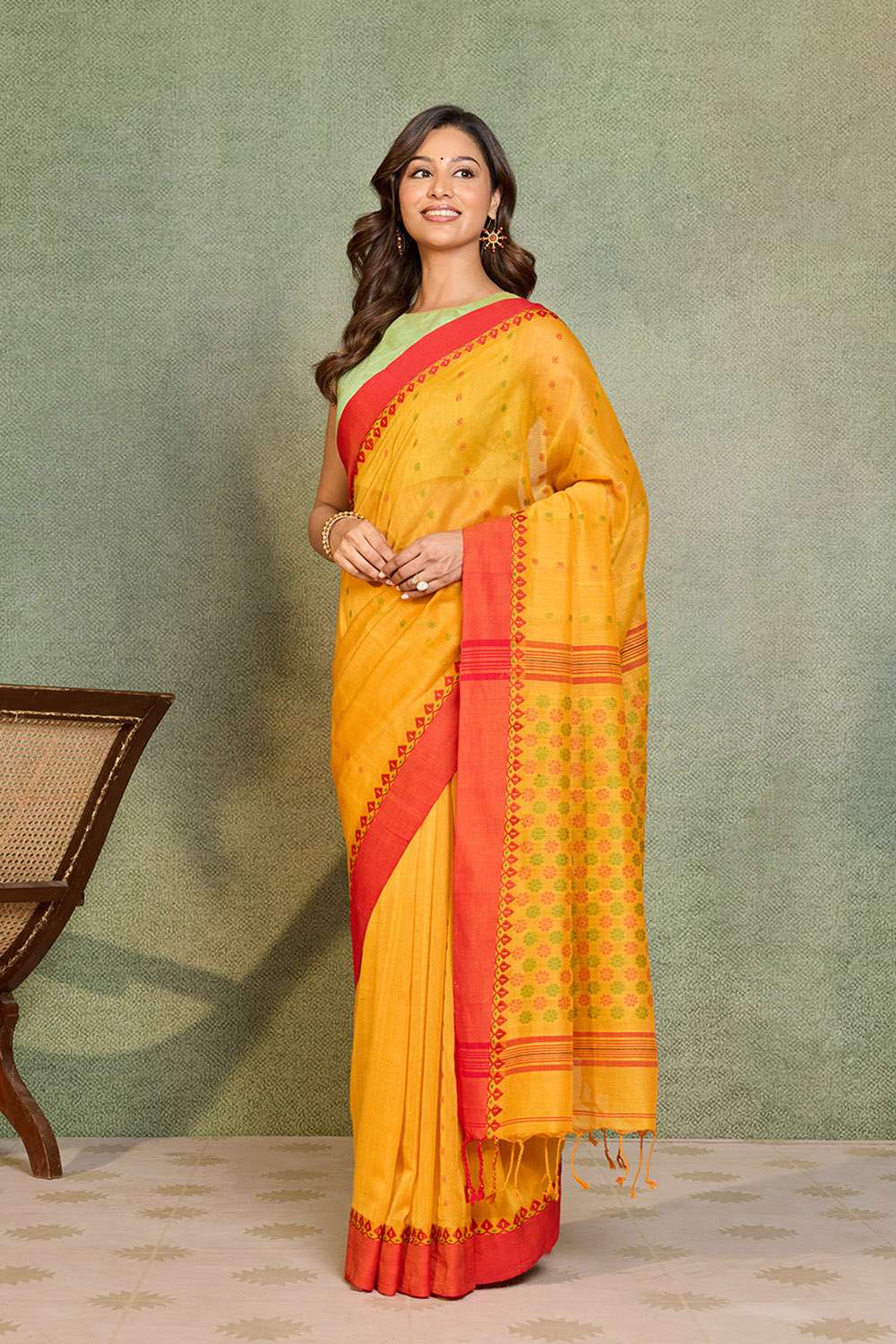
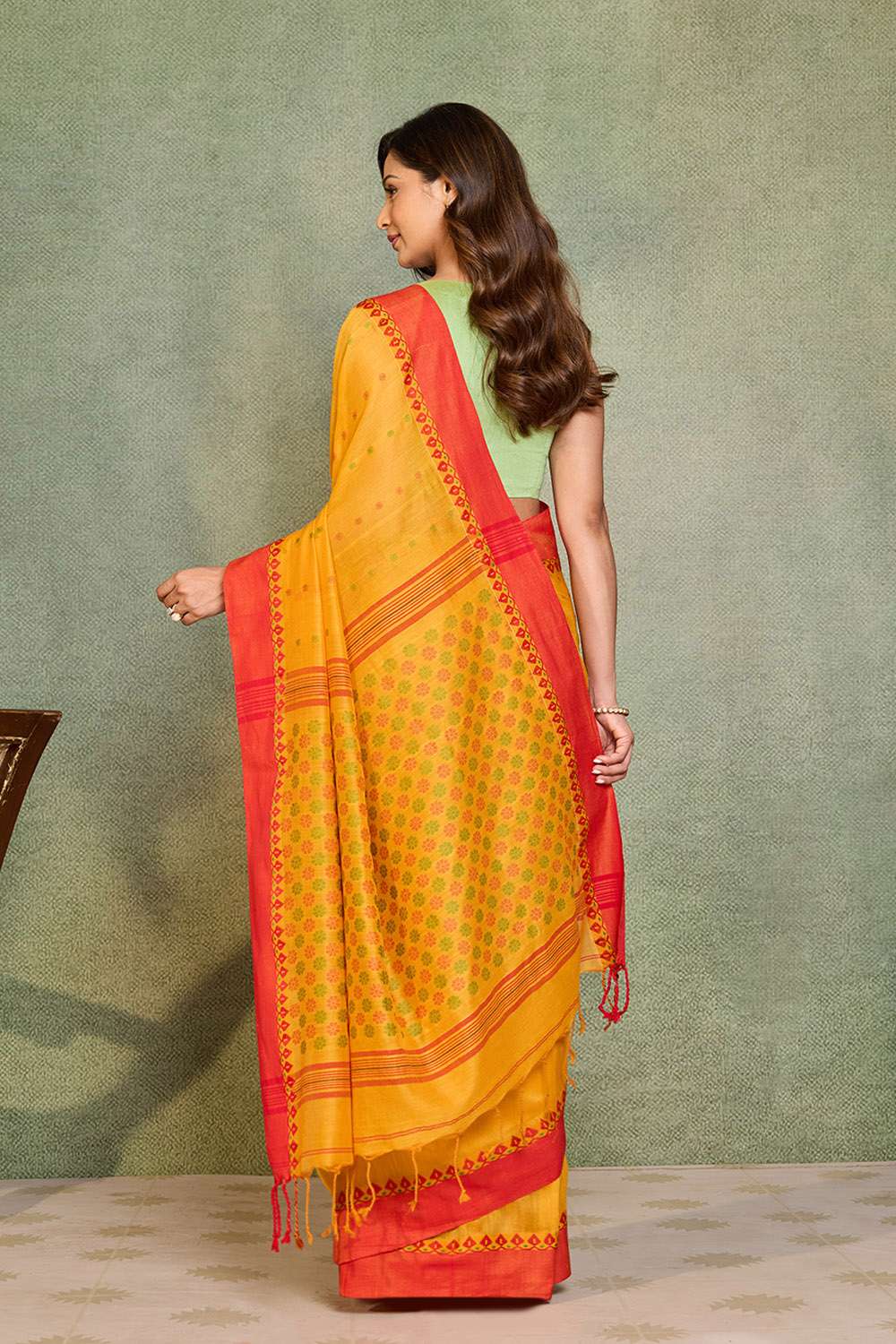
Pair it with a green or red blouse, a large red bindi, a shankha-pola if you wear them and gold studs. Drape it Bengali-style, with the pallu over the left shoulder and brought round.
For the Family Lunch: Red Bagh Block Print
A deep red cotton with a fine Bagh block print, a darker red border and a striped pallu. Bagh printing comes from the village of Bagh in Madhya Pradesh, where the craft has traditionally used natural dyes in reds and blacks. A red cotton gives you the tilak colour without the weight of silk.
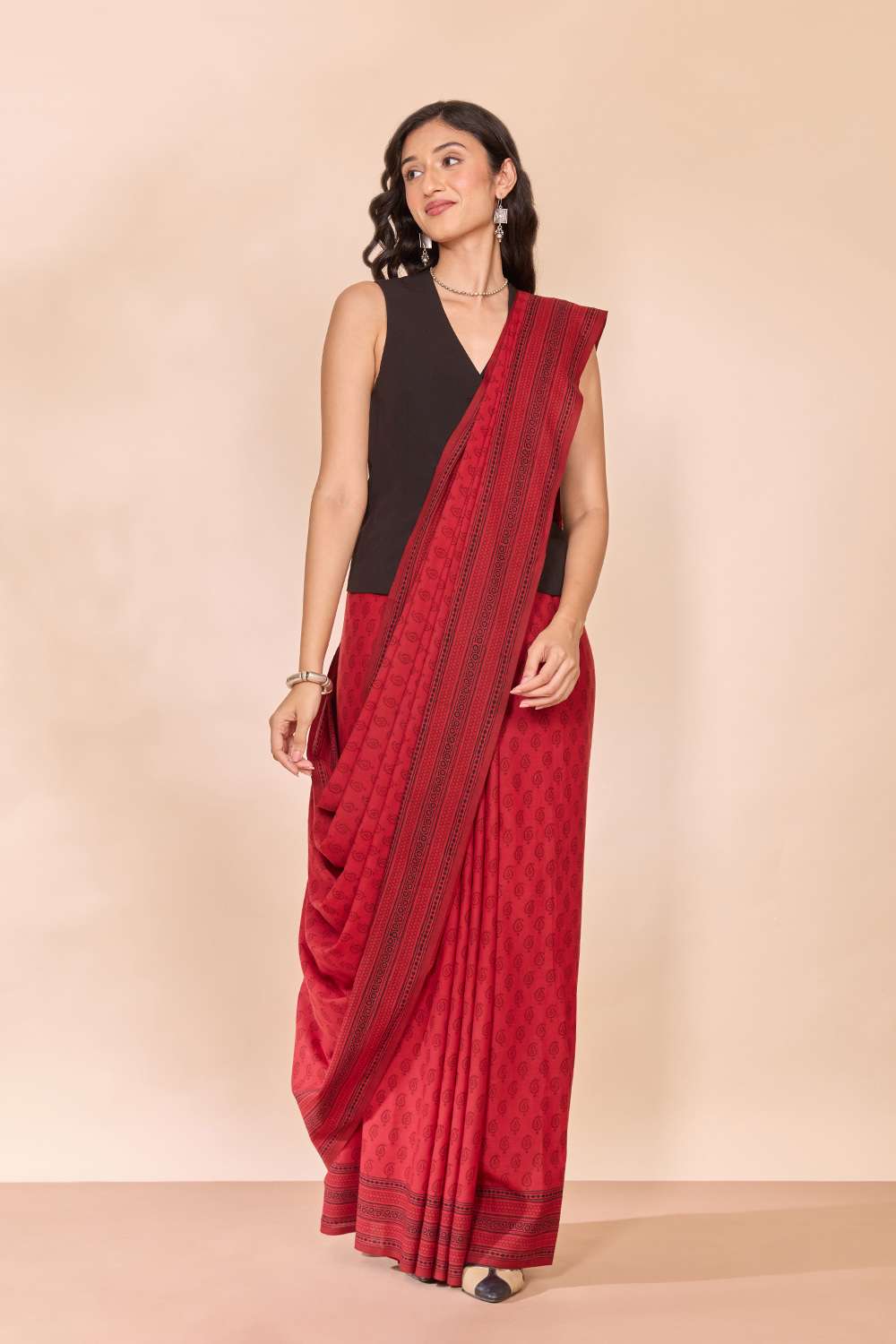
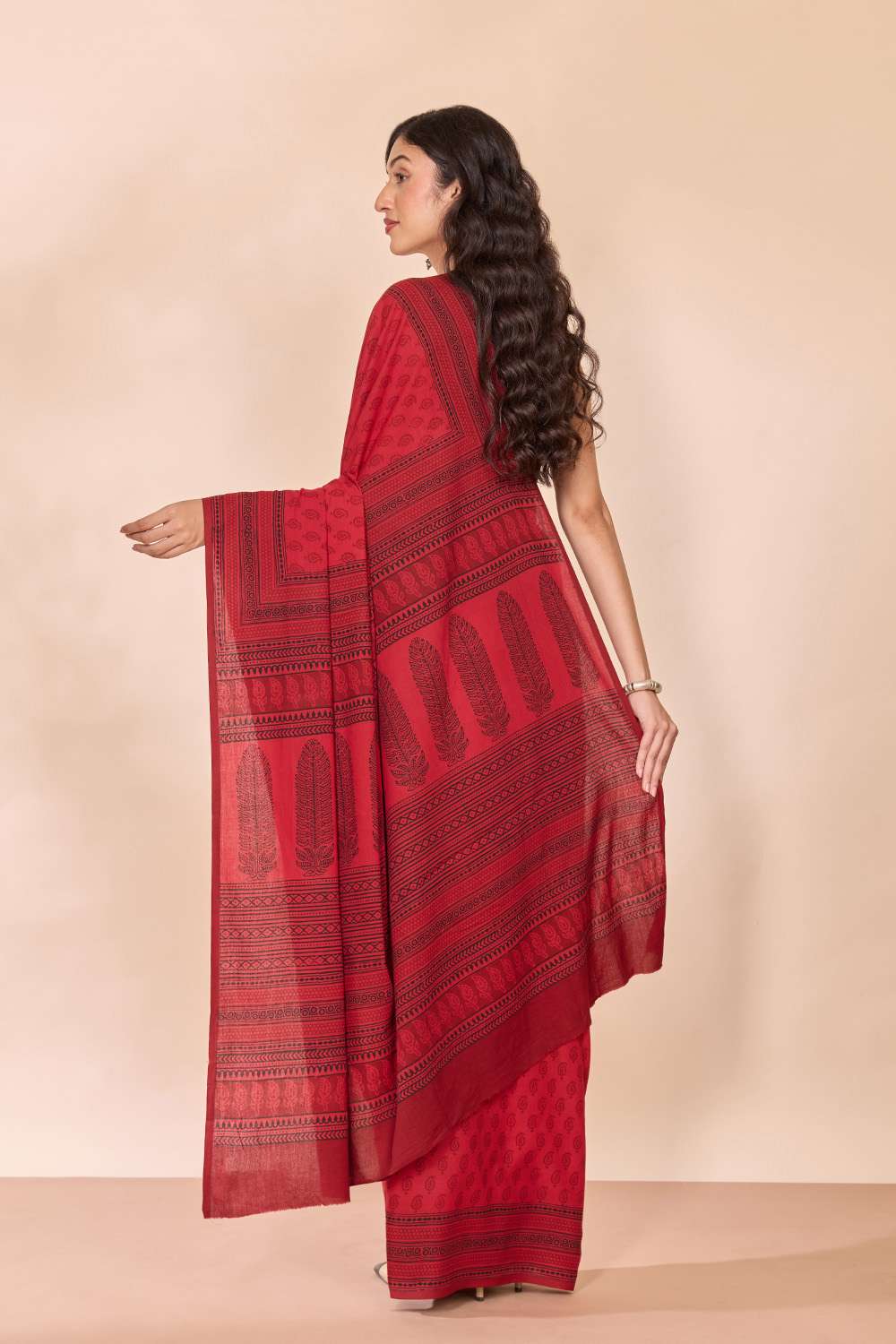
The red blouse piece keeps it traditional; a black blouse, as in the photos, makes it sharper. Silver jhumkas and a black bindi suit the black version; gold suits the red.
For a Quiet Morning: Pink Dabu Block Print
A pink cotton from Rajasthan with white dabu motifs across the body and white bands on the pallu. Dabu is a mud-resist print: a paste of mud is printed on the cloth, so the dye cannot reach those areas, which stay pale. The result is soft and slightly uneven, which is the charm. Taneira's printed sarees cover more block-print traditions.
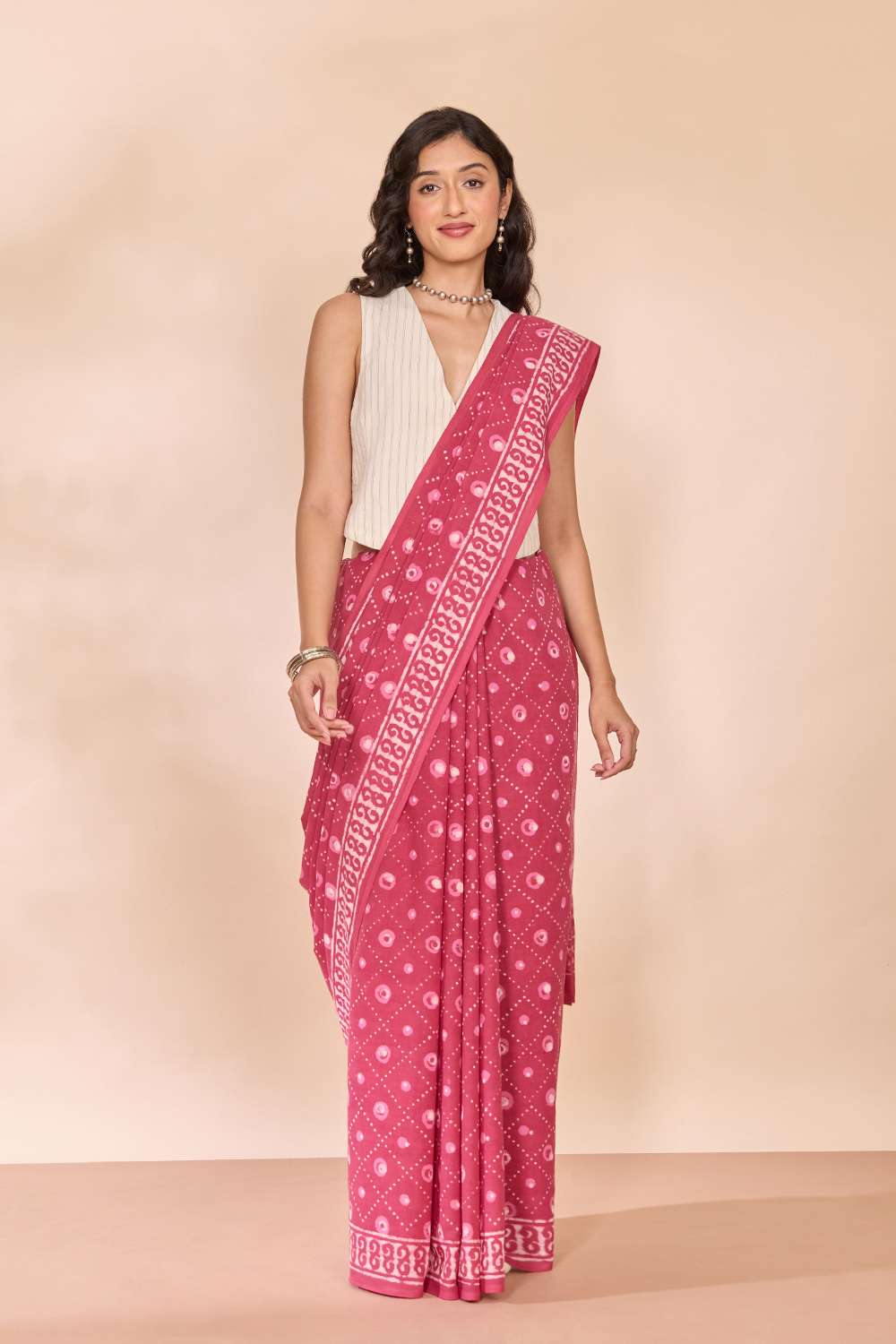
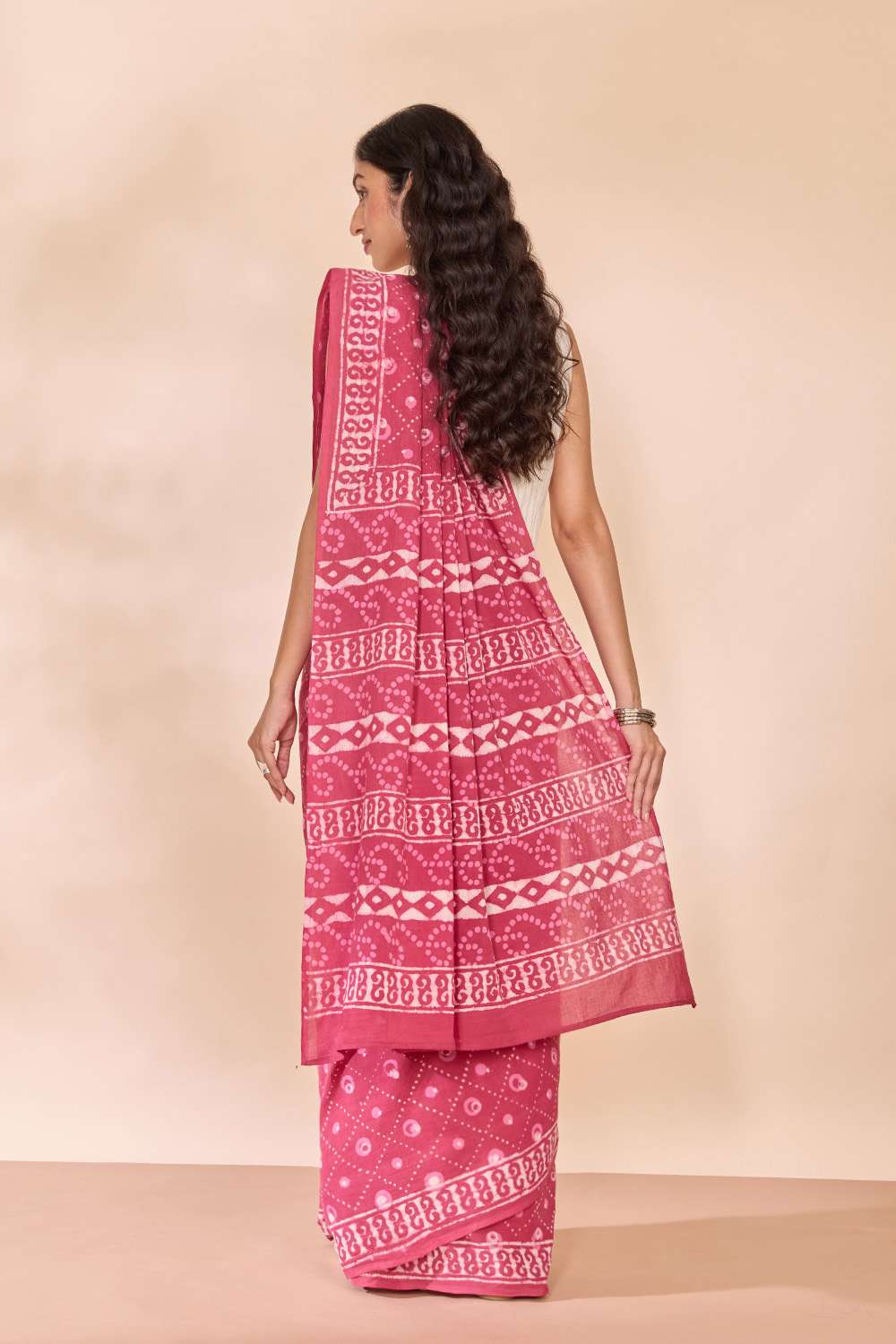
Wear it with the pink blouse piece or a white blouse as in the photos. Oxidised silver earrings and a slim silver anklet keep it relaxed. A simple saree for Bhai Dooj that still looks put together.
For the Evening with Cousins: Maroon Kalamkari from Machilipatnam
A maroon cotton printed with Kalamkari florals, with an off-white pallu of large paisleys. Machilipatnam Kalamkari is block printed, unlike the pen-drawn style of Srikalahasti, and it carries Persian-influenced motifs from the town's trading past. It is the most dressed-up of the five and suits an evening visit.
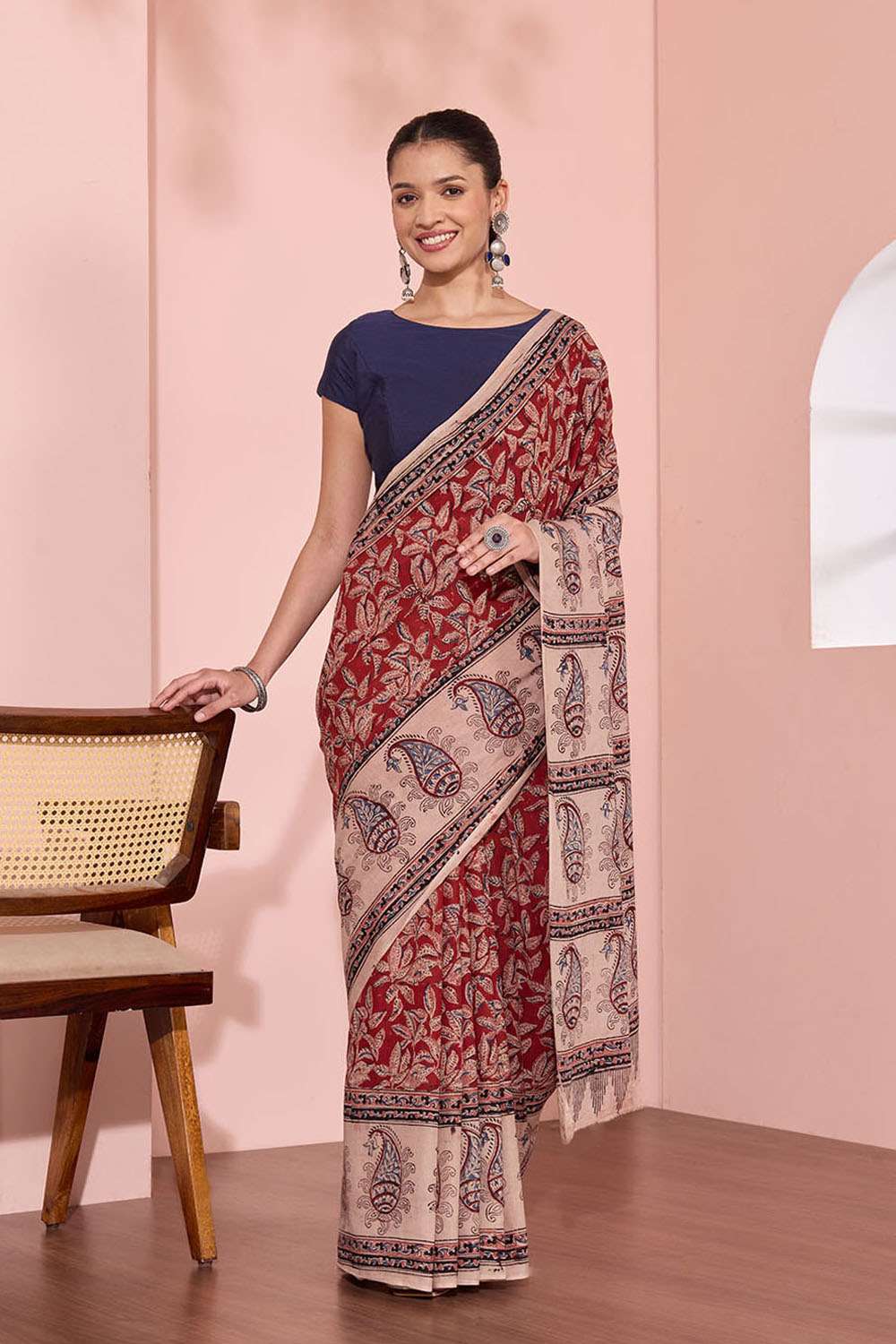
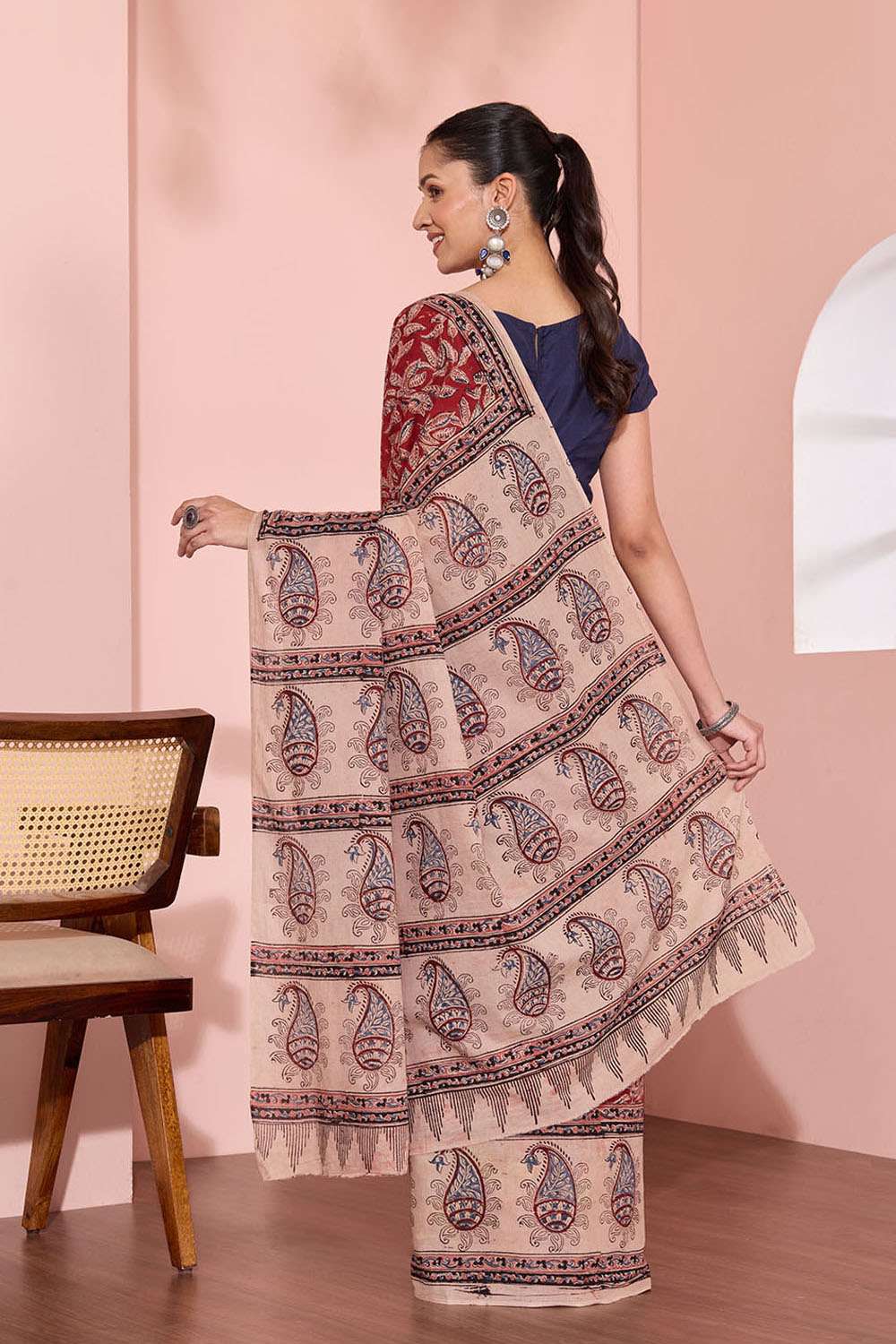
The product photos style it with a navy blouse; the listed blouse piece is multi-coloured. Gold or brass jewellery, a red bindi and a low bun complete it.
Shop Puja and Ritual Sarees
Sarees chosen for tilaks, aartis and home pujas, in silk and cotton.
Pick by the Kind of Day You Are Having
| Your Bhai Dooj | Choose | Why |
|---|---|---|
| A quick morning tilak | Yellow jamdani | Auspicious colour, woven motifs, light to wear |
| A Bengali Bhai Phonta | Marigold Bengal cotton | Crisp, bright and traditional |
| Lunch with the whole family | Red Bagh print | The tilak colour in an easy cotton |
| A calm day at home | Pink dabu | Soft and relaxed |
| An evening visit | Maroon Kalamkari | The richest of the five |
One Festival, Many Names, and a Cotton for Each
Bhai Dooj is kept across India under different names, and the cotton that suits it changes with the region.
- Bhai Phonta in Bengal. The sister puts a phonta of sandalwood paste, kajal and curd on her brother's forehead. A crisp Bengal cotton or jamdani with a red border is the natural choice.
- Bhau Beej in Maharashtra. The brother sits on a low stool and the sister performs aarti; a meal of basundi-puri often follows. A bright cotton with a contrast border suits the day.
- Bhai Dooj in the North. Tilak of roli and rice, aarti, sweets and gifts. Red, yellow and orange block prints carry the festival colours in an easy cotton.
- Bhai Tika in Nepal. A tika of seven colours and a garland of makhamali flowers. A cotton with a printed pattern suits the many colours of the ritual.
Every family keeps its own version of the day, so take these as a starting point and ask the elders how your family does it.
Dressing Three Generations in Cotton
Cotton works for every age at a family festival. For a mother or grandmother, a jamdani or a fine woven Bengal cotton in a soft colour, worn with her own gold, looks graceful and stays comfortable through the day. For sisters, a block print in a bold colour with a contrast blouse. For a teenage niece, a dabu or a light printed cotton with silver earrings and kolhapuris. Matching colours across the family makes for a lovely photograph, and cotton makes it easy, since it comes in so many prints.
Make a Cotton Saree Look Festive
Comfortable sarees for festivals can still look special. The difference is in the finish.
- Starch and press. A crisp cotton looks formal. Ask for a light starch so the pleats stand out.
- Pick a blouse with a detail. Contrast piping, a tie at the back or elbow sleeves lift a plain cotton.
- Wear gold. Gold earrings and a chain make a cotton saree look festive in seconds.
- Add alta or mehendi. A red line around the feet or a small mehendi pattern on the palms says festival.
- Flowers and a bindi. Marigold or jasmine in the hair and a red bindi finish the look.
Draping Cotton for a Busy Day
- Press it the day before. Cotton creases; a fresh press makes all the difference.
- Tuck firmly. Use a petticoat with a firm drawstring, since cotton is lighter and can slip.
- Seven pleats, pinned. Cotton holds pleats well once they are pinned at the waist.
- Pin the pallu at the shoulder. Then tuck the end at the waist when you are in the kitchen.
- Carry a spare safety pin. For when the nephews pull at the pallu.
Lightweight Cotton Sarees for the Rest of the Year
Lightweight cotton sarees are the most useful sarees you can own. The ones above will come out again for office days, summer pujas, a friend's haldi and lazy Sunday lunches. They are everyday ethnic wear with a story behind each weave. If you want to support the weavers behind them, Taneira's handloom sarees are a good place to start.
Care is simple. Wash block-printed cottons separately in cold water the first few times, since natural dyes can bleed. Dry them in the shade, inside out, to protect the colour. Jamdani and fine woven cottons are best dry cleaned or hand washed gently. Store them folded in a cotton bag, with a few neem leaves for insects.
Want something a little lighter and shinier? Read our guide to lightweight Chanderi sarees for Bhai Dooj. For a cotton you can wear any day of the week, browse Taneira's casual sarees.
Find Your Cotton Saree for Bhai Dooj
Jamdani, Bengal, Bagh, dabu and Kalamkari cottons for an easy, traditional festive day.
Frequently Asked Questions
Can I wear a cotton saree for Bhai Dooj?
Yes. A cotton saree in red, yellow or orange is traditional and comfortable for the tilak and the family lunch. A yellow jamdani suits the morning ritual.
Which cotton saree looks most festive?
A woven cotton such as jamdani, or a rich print such as Kalamkari, looks the most festive. Add gold jewellery and a red bindi. The maroon Kalamkari is the richest of the five above.
What colour cotton saree should I wear on Bhai Dooj?
Red, yellow, orange and pink are traditional festival colours. Pastels are fine for a quiet home celebration.
How do I stop a cotton saree from creasing?
Ask for a light starch when you have it pressed, pin the pleats at the waist and avoid sitting on the pallu.
Are cotton sarees suitable for everyday wear?
Yes. Cotton is breathable and easy to care for, so it suits office days, pujas and home festivals all year.
How do I wash a block-printed cotton saree?
Wash it separately in cold water the first few times, since the colour can bleed. Dry it in the shade, inside out.

