Beginner’s Guide to Banarasi Sarees
30 September, 24
 5 min read
30
Sep, 24


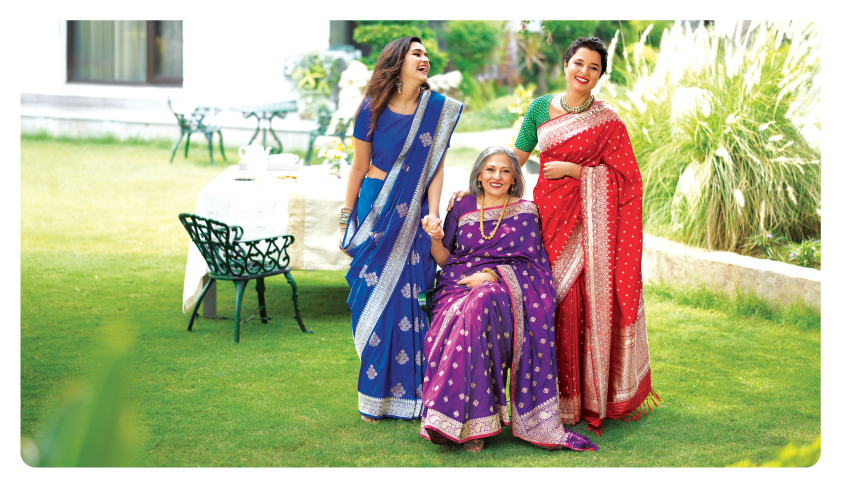
Banarasi sarees are timeless masterpieces, celebrated for their intricate weaving techniques and luxurious fabrics. Originating from Varanasi, India, these sarees embody rich heritage and exquisite craftsmanship. Often chosen for weddings, festivals, and special occasions, Banarasi sarees hold deep cultural significance in India.
Origin
The legacy of Banarasi sarees dates back to the Mughal era, where the blend of Persian influences and Indian artistry birthed a weaving tradition like no other. These sarees, originating from the ancient city of Varanasi, were once favoured by royalty and the nobility, symbolising status and wealth. Varanasi, a spiritual and cultural hub, played a crucial role in developing these exquisite textiles. Located along ancient trade routes, the city facilitated a rich exchange of artistic techniques, including intricate weaving patterns and motifs. Over the centuries, Banarasi sarees have evolved, but their essence remains rooted in tradition, artistry, and unparalleled elegance.
Making
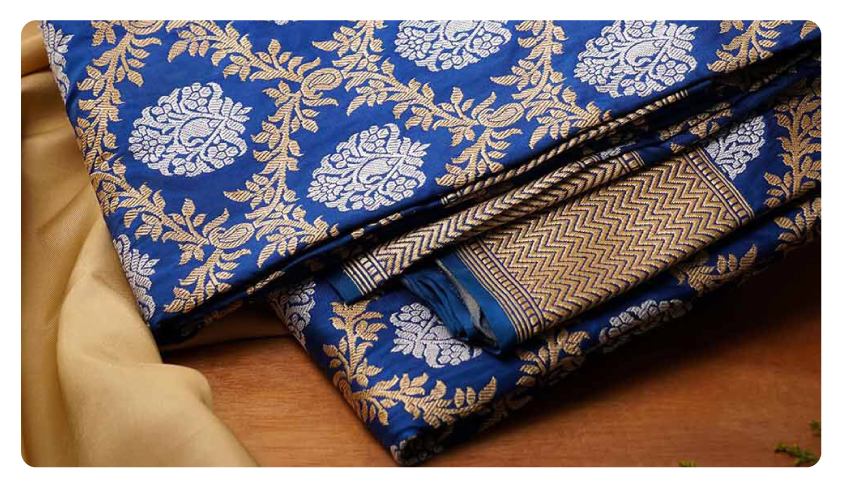
The creation of a Banarasi saree is a journey of artistry and patience. It begins with the design phase, where artisans choose motifs inspired by nature, mythology, or Mughal architecture. These patterns, from delicate florals to grand mythological scenes, are paired with a carefully curated colour palette, setting the aesthetic tone. The next step is yarn preparation, where fine silk and zari threads are dyed and wound onto looms, forming the warp.
Weaving, the most intricate process, sees skilled artisans interlace warp and weft threads on handlooms, crafting mesmerizing designs. This can take several weeks or months, depending on the complexity. After weaving, finishing touches like embroidery or beadwork are added, followed by paddling to give the saree a lustrous finish. Finally, each saree undergoes rigorous quality checks, ensuring that only the finest creations reach the market.
Popular Banarasi Weaving Techniques
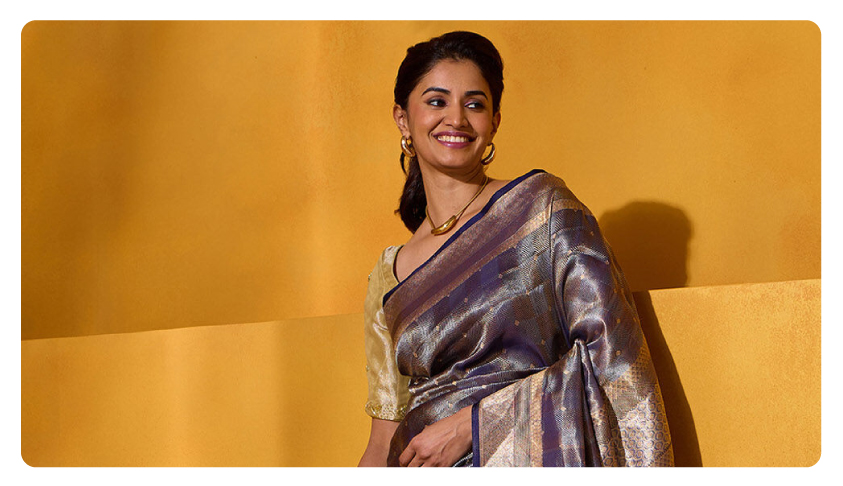
Brocade: Brocade sarees feature Jacquard weaving, which creates raised, textured patterns. Intricate floral or geometric designs are common, and the rich, opulent fabric—often silk or cotton—makes these sarees ideal for weddings or formal events. Pairing with delicate jewellery for formal settings or traditional gold jewellery for weddings complements their luxurious feel.
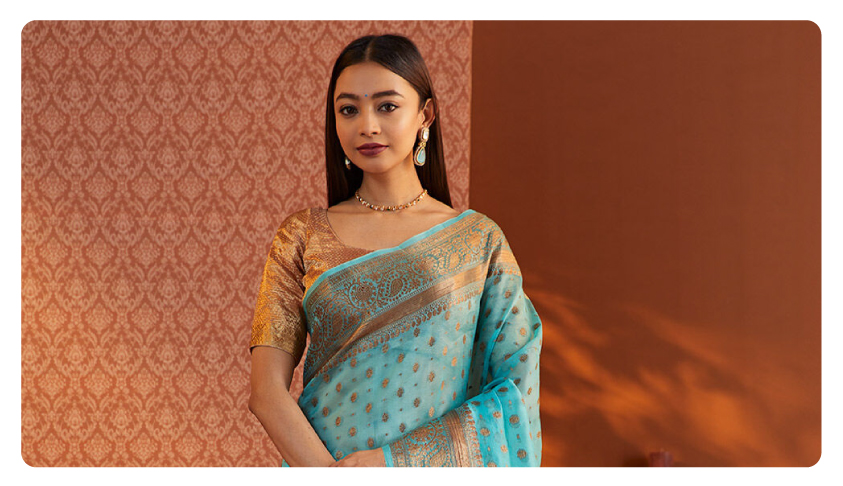
Cutwork: Known for their airy and feminine aesthetic, cutwork sarees feature intricate cutouts forming floral or geometric patterns. Made from silk or cotton blends, they’re perfect for intimate gatherings. Elevate the look by pairing them with bold jewellery like chunky necklaces or jhumkas.
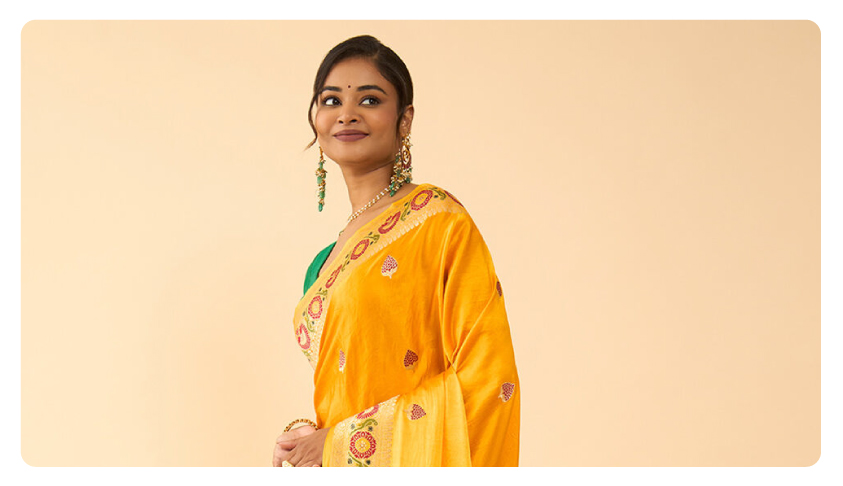
Kadwa: Kadwa sarees stand out for their fine embroidery using zari or silk threads. Featuring motifs like flowers or geometric patterns, these pure silk sarees are perfect for festive occasions and formal events. Opt for minimal gold jewellery for a sophisticated look, or go bold with statement pieces during festive celebrations.
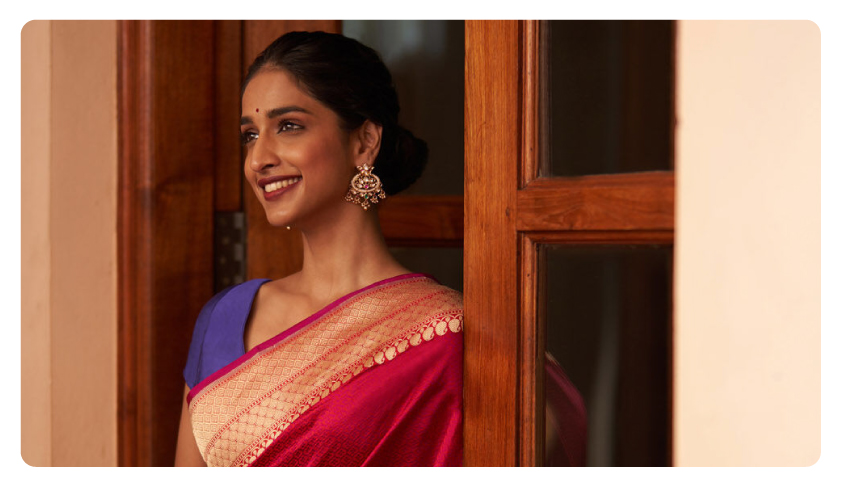
Tanchoi: Tanchoi sarees are recognized for their bold geometric patterns like stripes and checks, enhanced with contrasting colours. Typically woven with thicker zari, these modern, striking sarees are ideal for special occasions. For styling, choose between statement jewellery for a bold look or minimalist pieces for a contemporary twist.
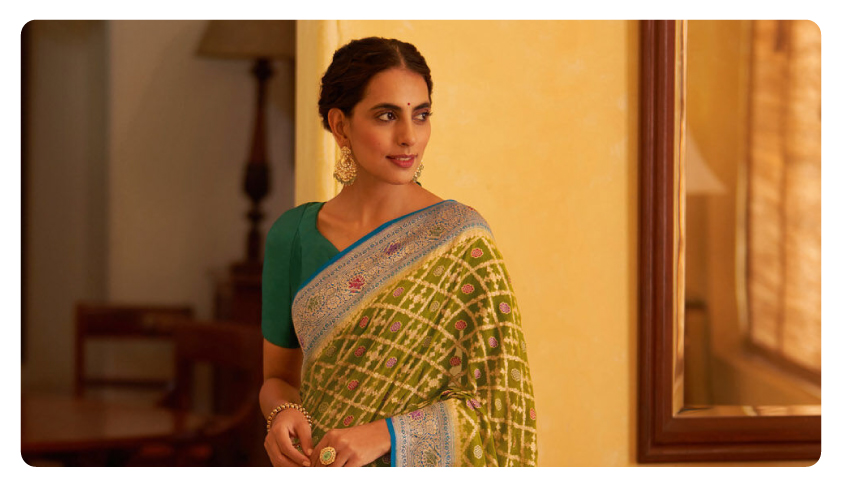
Woven: Traditional weaving techniques, such as plain, twill, or satin weave, result in a wide range of designs. Woven Sarees are versatile, made from silk or cotton, and suitable for various occasions. For a traditional look, pair with gold temple jewellery, or choose contemporary pieces for a more modern appeal.
Care Tips
Maintaining the elegance of your Banarasi saree requires special care. Always consult the care label for specific instructions. For the first wash, it's recommended to dry clean the saree to remove chemicals or impurities. If hand washing, use lukewarm water and a mild detergent, and avoid rubbing or twisting the fabric. Lay the saree flat to air dry in a shaded area, as direct sunlight can fade its vibrant colours. When ironing, use a low-heat setting with a cotton cloth between the saree and the iron. To store, fold carefully to avoid creases and place the saree in a cotton bag or soft fabric cover, protecting it from dust and moisture.
Banarasi sarees are far more than just garments; they are woven symbols of India’s rich cultural heritage, seamlessly blending tradition, artistry, and luxury. Whether adorned with intricate brocade patterns, delicate cutwork, or striking Tanchoi designs, each Banarasi saree tells a story of master craftsmanship passed down through generations. Their timeless beauty and elegance make them not only an investment in style but also in cultural history. For those who appreciate the finer things in life, owning a Banarasi saree is an embrace of regal charm and artistic mastery—an heirloom that transcends time.
Explore Taneira’s exquisite collection of Banarasi sarees, where we offer a wide range of timeless pieces for you to choose from. Shop online or visit a store near you and indulge in the elegance of this enduring tradition.

