


A Journey Through South Indian Cotton Weaves
16 April, 25
 5 min read
16
Apr, 25


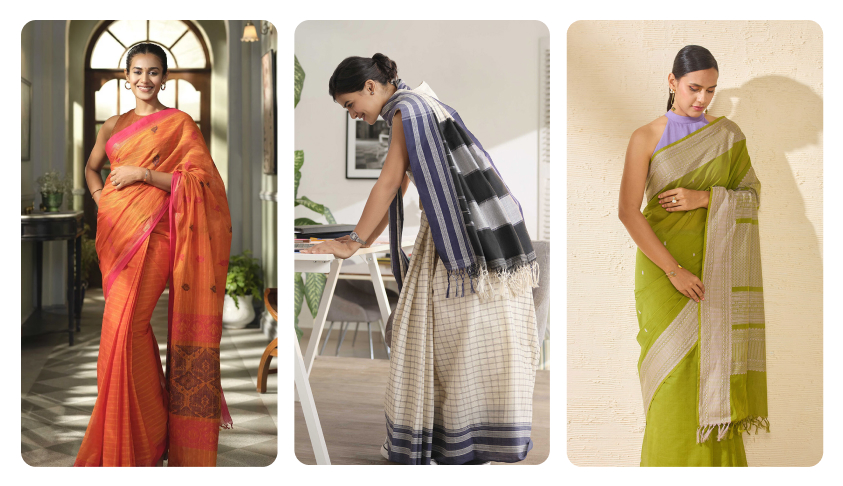
India's affair with fabric is as old as civilization itself and nowhere is this union more apparent than in the southern states of the subcontinent. Draped in history, soaked in culture, and woven with unparalleled artistry, South Indian cotton weaves represent not just the mastery of handloom artisans but also the very soul of a people who have cherished tradition for centuries. From the majestic Kanchi cottons to the bold Chettinad, every weave is a testament to its land, its people, and their unrelenting devotion to craft.
The Looms That Whisper History
South India has long been a bastion of exquisite cotton weaving, dating back to the Sangam period (circa 300 BCE–300 CE). References in ancient Tamil literature sing praises of the fine, translucent muslin that adorned kings and courtiers alike. The natural suitability of the region for growing cotton, combined with an inherent artistic sense, has produced a variety of characteristic weaves that have endured until the present time.
Kanchi Cotton: The Lesser-Known Cousin of the Silk Icon
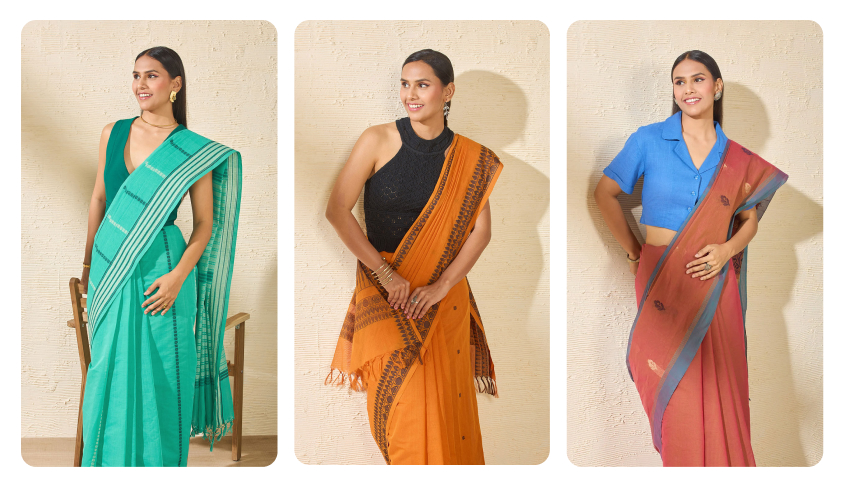
Kanchi cotton sarees embody an understated elegance that is both breathable and luxurious. Woven in the temple town of Kanchipuram, these cotton drapes are known for their striking borders, intricate temple motifs, and contrasting pallus. While they carry the essence of their silk counterparts, their lightweight texture makes them perfect for warm climates and long hours of wear. The fine cotton weave ensures comfort without compromising on grandeur, making them a versatile choice for both everyday elegance and festive occasions. Whether adorned with zari or intricate threadwork, Kanchi cotton sarees seamlessly blend tradition with ease, offering a timeless appeal.
Khadi Cotton Ponduru: The Handspun Treasure
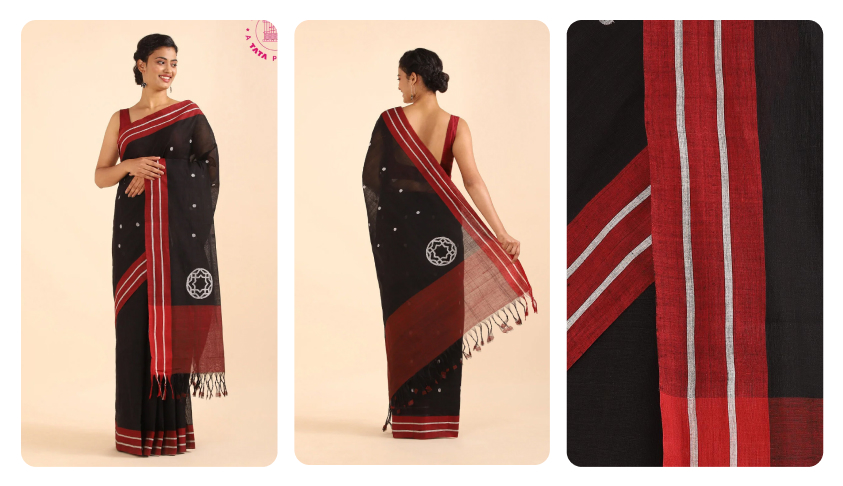
Ponduru, a small town in Andhra Pradesh, is synonymous with the finest handspun Khadi cotton. This fabric is painstakingly woven by artisans using traditional techniques, including three-shuttle weaving that have remained unchanged for centuries. The uniqueness of Ponduru khadi lies in its raw, unbleached texture and its ability to become softer with every wash. Spun from high-quality desi cotton, this weave was once a favorite of Mahatma Gandhi himself. Today, Ponduru khadi stands as a symbol of sustainable fashion, championing the ethos of slow, ethical textile production while offering unmatched comfort and breathability. The fusion of handspun Ponduru khadi and Jamdani weaving in this saree elevates this drape to a celebration of the different art forms in the country.
Pochampalli Ikat: The Dance of Colours and Geometry
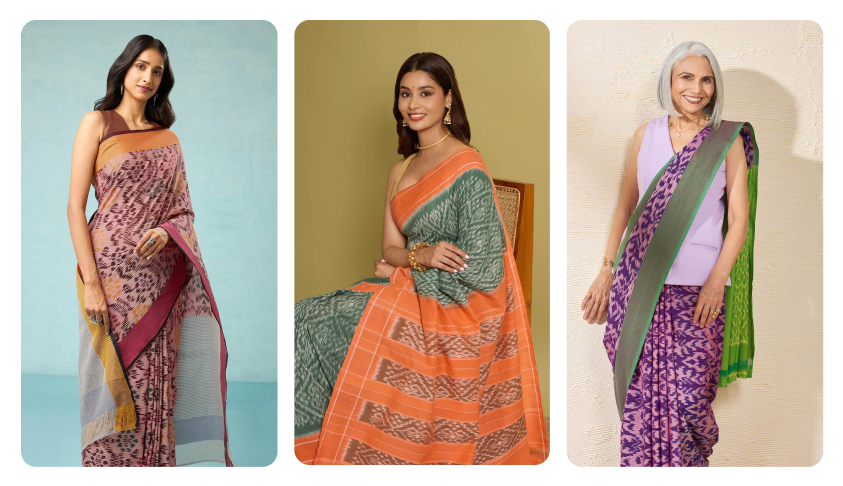
Hailing from the town of Pochampalli in Telangana, this iconic weave is a marvel of mathematical precision and craftsmanship. The Pochampalli Ikat is known for its distinctive geometric patterns, created using a complex resist-dyeing technique before the threads are woven. This intricate process, where the yarn is dyed in a predetermined pattern, results in a mesmerizing play of colours and designs that are never perfectly aligned, giving the fabric its characteristic blur effect. The vibrant hues and unique motifs of Pochampalli saris make them a timeless favourite for those looking for a great day outfit, while the geometric patterns are a huge hit with the office girls!
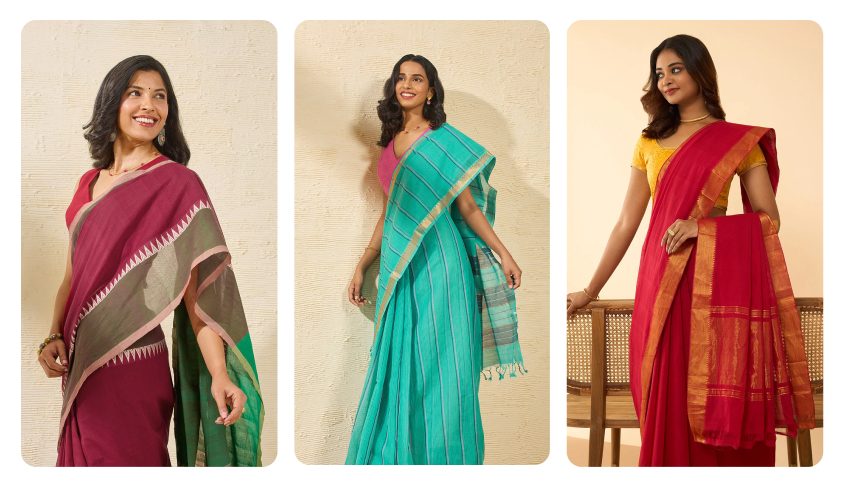
Mangalagiri Cotton: The Weave of Timeless Simplicity
Originating from the town of Mangalagiri in Andhra Pradesh, this cotton weave is celebrated for its durability, simplicity, and finesse. Mangalagiri sarees are woven with a characteristic tight weave, giving them a crisp texture. They often feature zari or Nizam borders with a plain or small-check body, embodying an understated elegance that makes them suitable for both everyday wear and festive occasions. The age-old weave, more than 500 years old, is a reflection of the longevity of South Indian craftsmanship's appeal.
A Weave Beyond Fabric: Preserving the Heritage
The art of South Indian weaving is not merely about fabric, it is about a way of life, an ecosystem of artisans, dyers, spinners, and weavers who keep this legacy alive. However, with the rise of power looms and mass-produced textiles, handloom weavers have faced challenges that threaten their very existence. At Taneira, we proudly pay tribute to India’s rich textile heritage through our initiative, Weavershalas—established across the country to nurture and support diverse weaving crafts. Efforts by government initiatives, designer collaborations, and the resurgence of sustainable fashion have brought renewed interest in these heritage weaves, ensuring that they continue to adorn generations to come. The Fabric of the Future: Why South Indian Cotton Weaves Still Matter
In a world moving towards fast fashion, South Indian cotton weaves stand as an antithesis to fleeting trends. They embody sustainability, craftsmanship, and cultural heritage— values that resonate with the modern consumer seeking authenticity and longevity in their wardrobe. Beyond their aesthetic appeal, these weaves represent a commitment to ethical fashion, supporting artisans and ensuring that centuries-old traditions do not fade into oblivion.
To own a South Indian cotton weave is to own a piece of history, a whisper of the past woven into the present. Whether it is the bold strokes of a Chettinad saree, the regal allure of a Mangalgiri drape, or the ethereal charm of a Narayanpet weave, each thread tells a tale of its origin, its maker, and its wearer. As we embrace these textiles, we do not merely wear fabric— we wear a legacy, a story, and a piece of art that transcends time.
Explore the finest handloom collections for your summer wardrobe at www.Taneira.com or at a Taneira store near you.

